Nederlands
AI steers a blind man's brain implant more precisely
Researchers let an AI model choose how an implant in a blind man's brain delivers electrical current. This produced the desired brain activity more precisely, using less current. The man saw spots of light and shapes; real sight is the next step.
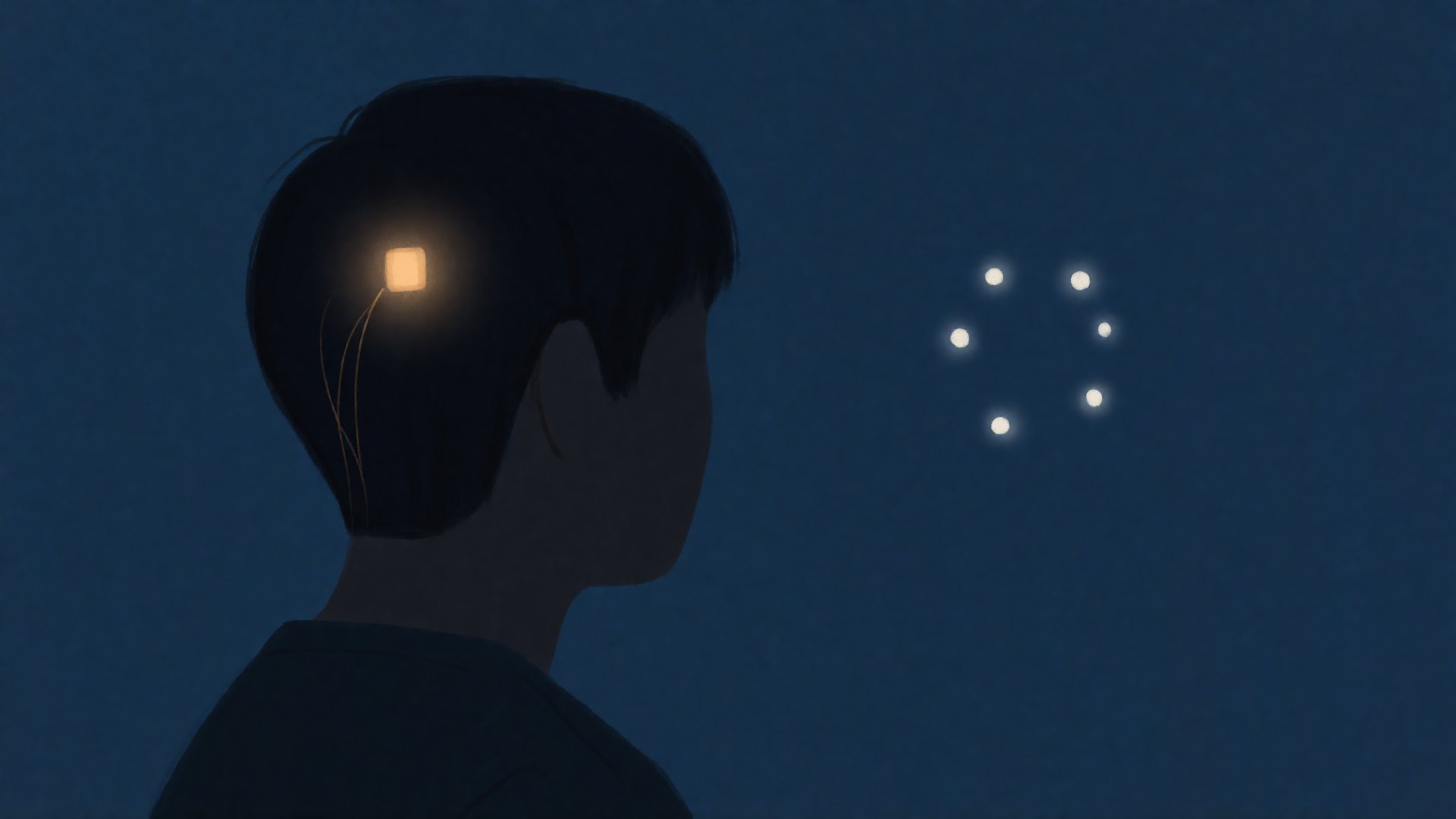
Helping blind people see something again by stimulating the part of the brain that creates images directly with electrical current: researchers have been working on this for years. One big problem is that the brain does not always react in the same way. Researchers from Spain, Switzerland and the United States therefore let an AI model work out which small pulses of current work best. Their study appeared in August 2026 in the scientific journal Neuron.
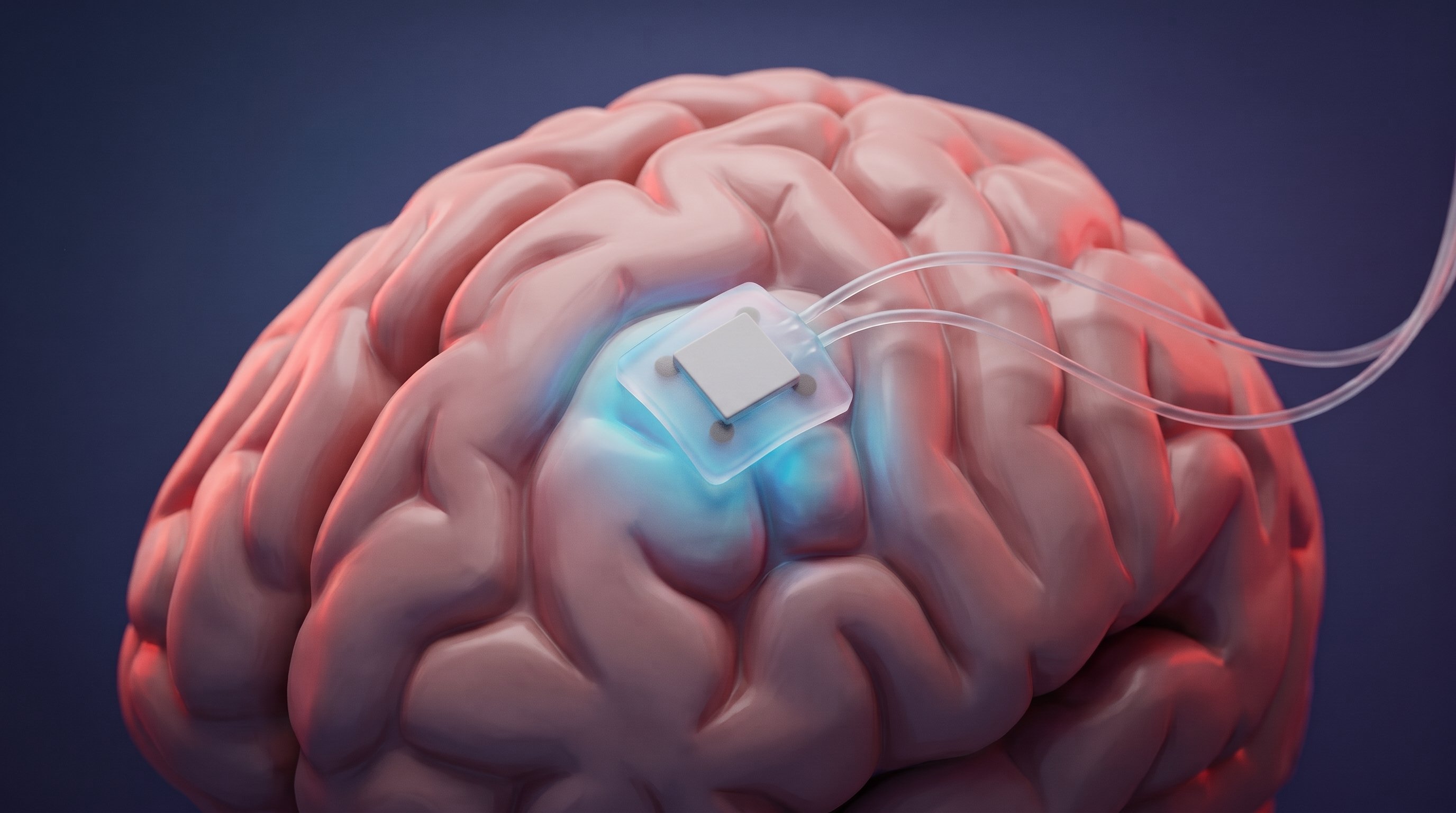
The tests took place in 2024 at the IMED Elche hospital in Spain. The participant was a 27-year-old man who had gone blind because of a brain injury. He was given a temporary implant with 96 electrodes, tiny contact points that can deliver current and pick up signals. It sat in the visual cortex, the area at the back of the brain that processes what we see. After six months it was to be removed again.
Spots of light that are not always the same
When an electrode delivered current, the man saw a phosphene: a spot of light, a flash or a small shape, sometimes compared to a little star or fireworks. But the same current did not produce the same response every time. Electrodes influence each other, and the brain reacts differently from moment to moment. Because of this, the spots of light cannot be used like pixels on a screen, which are switched on one by one to make a picture.
The model learns how the brain reacts
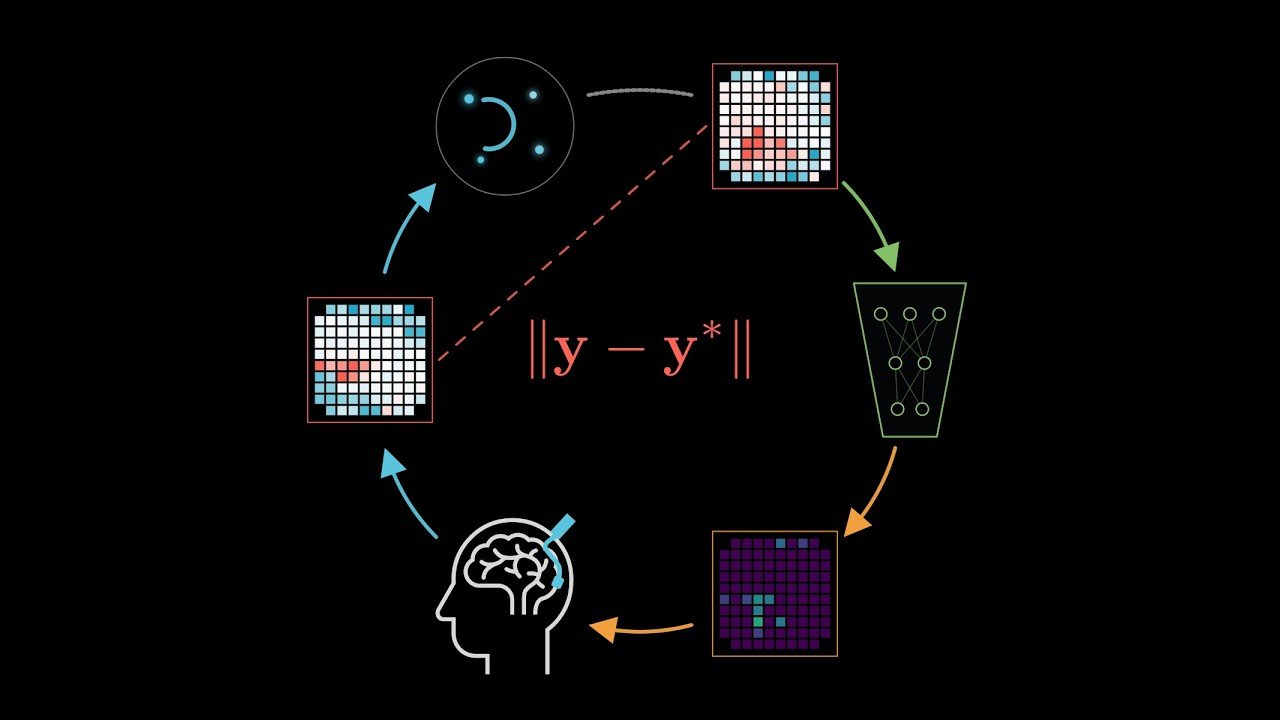
The implant could not only deliver current, but also measure how the brain cells reacted to it. With those measurements the team trained a neural network, an AI model that learns patterns from examples. The model was also shown how active the brain already was just before each test. In this way it learned to predict which combination of pulses produces which brain activity. The researchers then used the model to choose the pulses that produce a desired pattern as closely as possible.
The pulses the model chose reproduced the desired pattern of brain activity more precisely than the other methods the team tried, and they needed less current. In every test the man said whether he saw something, and sometimes also its shape, size, brightness and colour. What the implant measured in his brain predicted what he saw better than the current settings themselves. That matters, because it means an implant can adjust itself to what the brain is really doing.
Co-author Pehuén Moure explains the research in a video:
Playing loads YouTube, which may set cookies. More information
This is a first test with one participant, as part of a larger study in Spain into whether such implants are feasible. The man saw spots of light and shapes, not yet a useful image. That is what follow-up research is working towards.
What does this mean for the road to the singularity?
It has been known for years that an implant in the brain can create spots of light. What is new is that an AI model learns how the brain of this one person reacts at this moment, and adjusts the current to match. Such an implant then no longer works with fixed settings, but like a conversation: it gives a stimulus, measures the response and adjusts.
If this approach takes hold, an implant could readjust itself every day to a brain that never reacts in exactly the same way. For someone who has gone blind, that could make the difference between scattered flashes of light and shapes reliable enough to recognise a door or the edge of a pavement, for example. The same idea could also help with implants that let people with paralysis move an arm or operate a computer. The better AI understands what the brain is really doing, the better humans and machines can work together.
What is the technological singularity? Read the explanation →