Nederlands
Alan Turing describes a machine that can carry out any calculation
The British mathematician Alan Turing shows that a single imaginary machine can take over any calculation that a person does with pen and paper by following fixed rules. In doing so, he also proves that not every mathematical question can be solved with a fixed method.
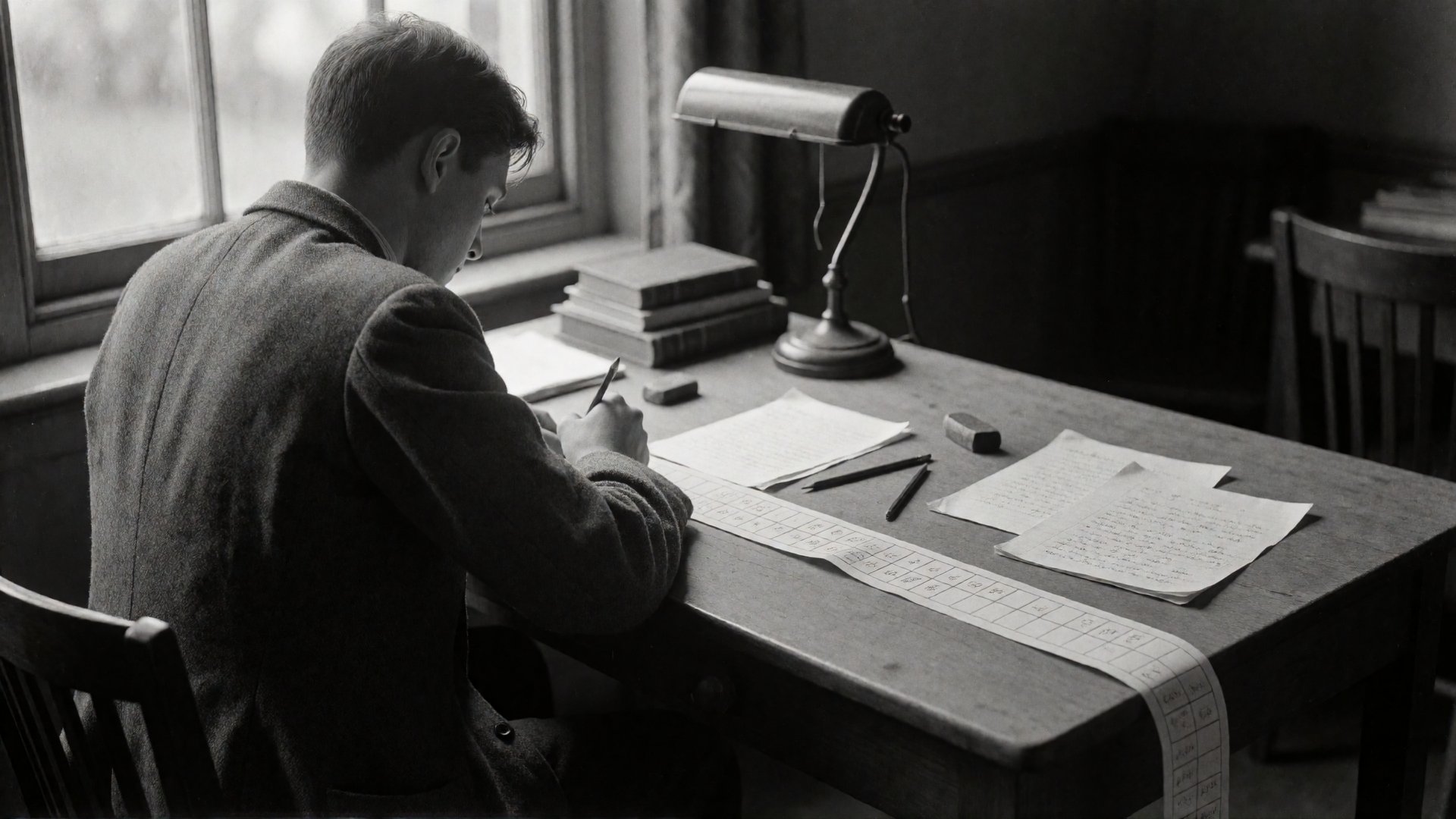
LONDON, NOVEMBER 1936 - On 12 November, the London Mathematical Society discussed a remarkable paper by the 24-year-old mathematician Alan Turing from Cambridge. The title, On Computable Numbers, sounds dry, but the content is not. Turing wants to know what calculating actually is, and to find out he invents a machine that does not exist.
The computer at his desk
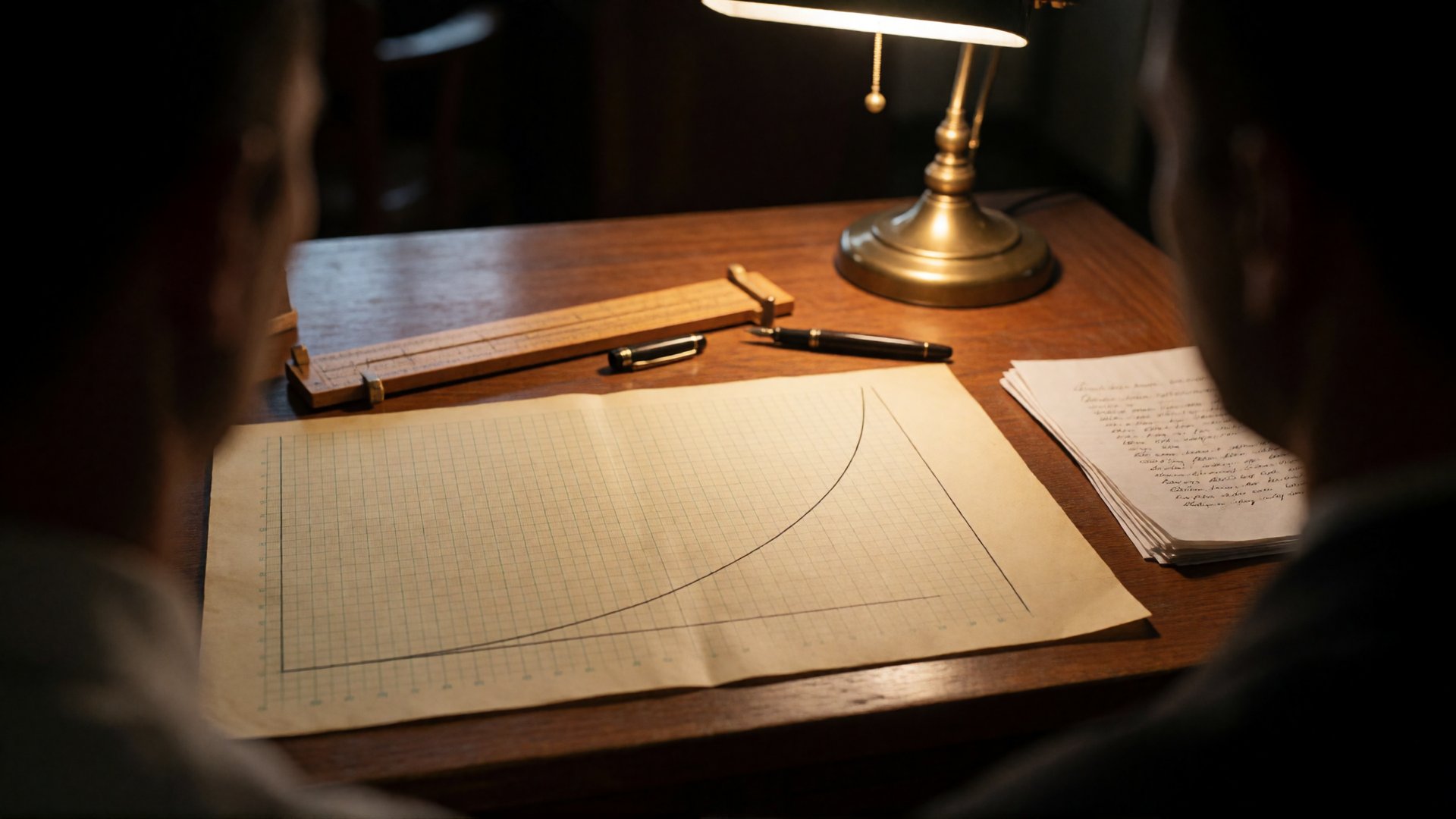
Anyone who thinks of a computer thinks of a person. Observatories, insurance companies and government ministries have whole rooms full of people who calculate tables all day, often without knowing the mathematics behind them. They are given a set of instructions and follow it step by step.
That leads Turing to his question. If someone without any understanding can follow a set of instructions, what is that person actually doing? He looks at what is on the paper, keeps track in his head of where he is in the instructions, writes something down and looks at the next bit. Nothing more.
A strip of paper and a few rules
Turing reduces this to the very simplest form. His machine has a strip of paper divided into squares. It sees one square at a time. It can write a symbol in it or erase one, and move the strip one square along. It also has a small number of states, just as the human computer remembers where he is. A table tells the machine what to do for each state and each symbol.
An example: state 1 and the symbol 0 means "write a 1, move to the right and go to state 2". It looks like a toy. Yet Turing is convinced that such a machine can carry out any calculation that a person can do with pencil and paper by following fixed rules.
One machine for everything
Then comes his most important step. Every calculation needs a different table, and so it seems to need a different machine. But the table of a machine is also just a row of symbols, and that row can be written on the strip. Turing describes a machine that reads such a table and then does exactly what the described machine would do. So a single machine can take over the work of all the others. He calls it the universal machine.
What cannot be done
Turing uses his idea to answer a famous question from the German mathematician David Hilbert: is there a fixed method to decide, for every mathematical statement, whether it can be proved? He shows that there are numbers and questions that no machine can handle, so the answer is no. The American Alonzo Church reached the same result this year by a different route.
Looking back from 2026
Turing's universal machine is the idea behind every computer: one device that can do anything, as long as it is given the right rules. Today we call those rules software, and the word computer moved from the person at the desk to the machine. Fourteen years later, Turing asked the next question: can machines think?
Everything that runs on a chip today, including a large language model, could in principle be carried out by Turing's strip of paper. It would just take an unimaginably long time.