Nederlands
Amazon takes over technology and team of Israeli AI start-up Decart
Amazon is buying the technology Decart uses to make AI software work better with chips, and is hiring its founders and their team. Amazon wants to make AI on its own Trainium chips faster and cheaper. Regulators still have to approve the deal.
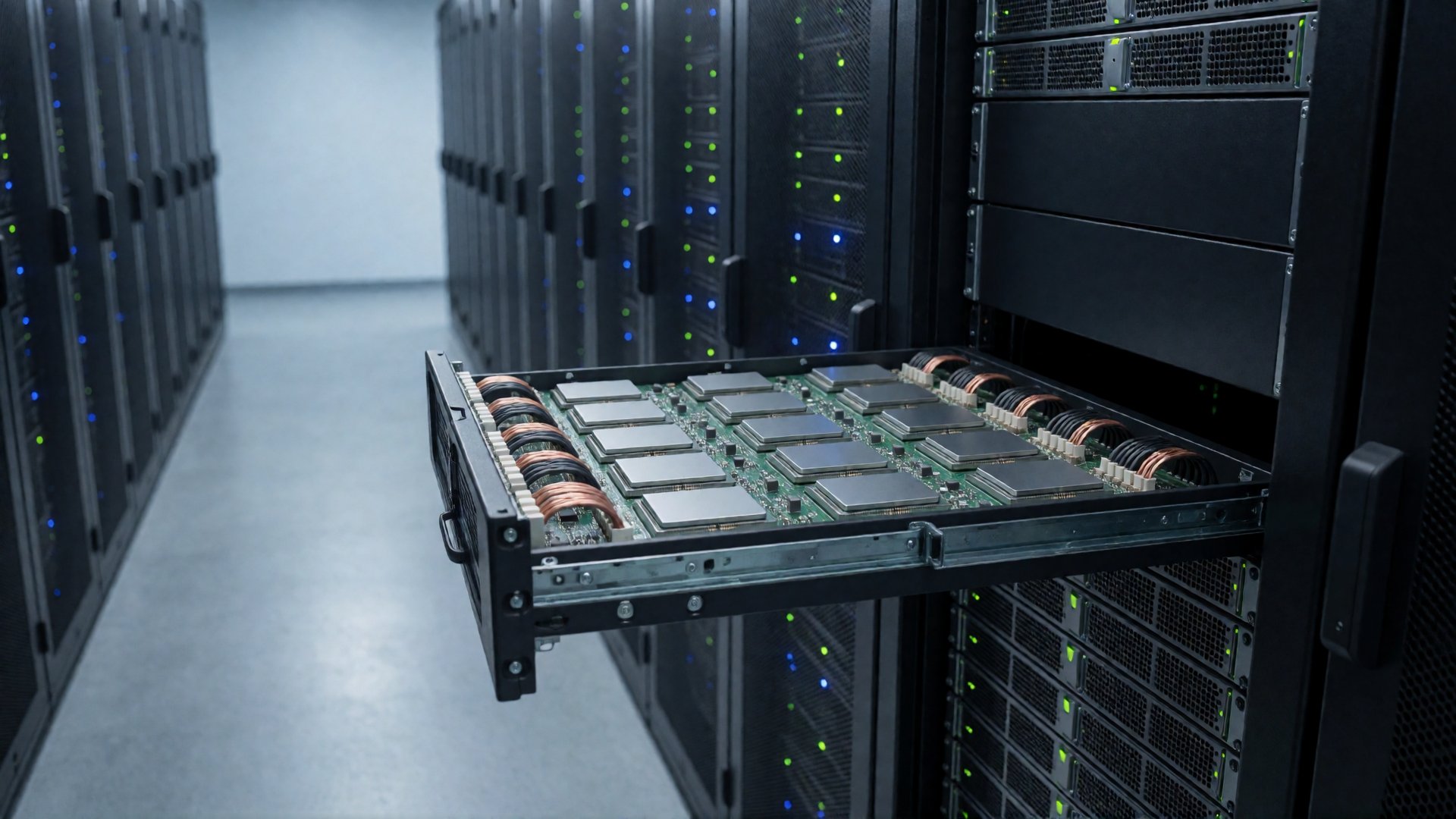
Amazon has signed an agreement to buy the technology behind the Decart Optimization Stack (DOS). The three founders of the Israeli company Decart, Dean Leitersdorf, Moshe Shalev and Orian Leitersdorf, will join Amazon with their team of AI researchers and engineers. Amazon announced the deal . Regulators still have to give their approval.
Amazon has not named a price. The Israeli business outlet Calcalist heard that the deal is worth 7.5 billion dollars (about 6.5 billion euros), paid in cash and shares in several instalments. Earlier, the outlet reported that the founders would stay at Amazon for five years, with a large part of the money paid in the fifth year. These figures have not been officially confirmed.
More work from every chip
An AI model runs on chips, and how fast and cheaply that happens does not depend on the chip alone. The software that spreads the calculations across the chip also makes a big difference. Decart specialises in this: it tunes software and hardware to each other so that a chip does more work in the same time.
Amazon has worked with Decart since 2025 on the performance of its own AI chip, Trainium. With the technology, Amazon mainly wants to improve inference: using a trained AI model, for example when a chatbot gives an answer. It also wants to improve its own chips further, so that customers of Amazon's cloud service AWS can train and use models faster and more cheaply. That makes Trainium more attractive as an alternative to the chips from Nvidia, which are now the most widely used for AI.
From video to chips
Decart was founded in 2023 and first stood out with AI that creates video in real time. Its model Oasis creates virtual worlds that people can move through, and Lucy edits video while it plays. Later, the company also focused on software that makes AI calculations more efficient. In May 2026, Decart raised 300 million dollars (about 270 million euros) at a valuation of about 4 billion dollars (about 3.6 billion euros), with Nvidia among the investors. The company has around a hundred employees. What will happen to Oasis and Lucy has not been announced.
Amazon was not the first interested party. Nvidia earlier held talks with Decart about a takeover, and after that Anthropic, the maker of Claude, negotiated a purchase for about 6 billion dollars (about 5.5 billion euros). Anthropic withdrew in early September 2026, and Nvidia did not want to reopen the talks after that.
What does this mean for the road to the singularity?
The more people use AI, the more it costs to answer all those questions. Whoever can do that more cheaply has a big advantage. Amazon is not buying a new chip here, but the know-how to make better use of existing chips. That shows where the gains are now: in making software and hardware work together cleverly.
For Nvidia, every improvement to Trainium means more competition. If customers can run the same AI for less money on Amazon's own chips, Nvidia has to offer more or lower its prices, and then computing power becomes cheaper for everyone. The way this deal is put together also stands out: Amazon is taking over the technology and the people, not the whole company. In this way, a large tech company brings in a complete team in one go. That speeds up its own work, but it also means that know-how about efficient AI gathers at a few big players. If competition between those players stays strong, the benefit will eventually reach ordinary users: AI that answers faster and costs less.
What is the technological singularity? Read the explanation →