Nederlands
Baidu and Lyft aim for driverless robotaxis in London in 2027
Baidu and Freenow by Lyft have presented their self-driving taxi in London. The car has been on test drives there since July, with a safety driver on board. In 2027 they want to drive without a driver and carry passengers, if the regulators agree.
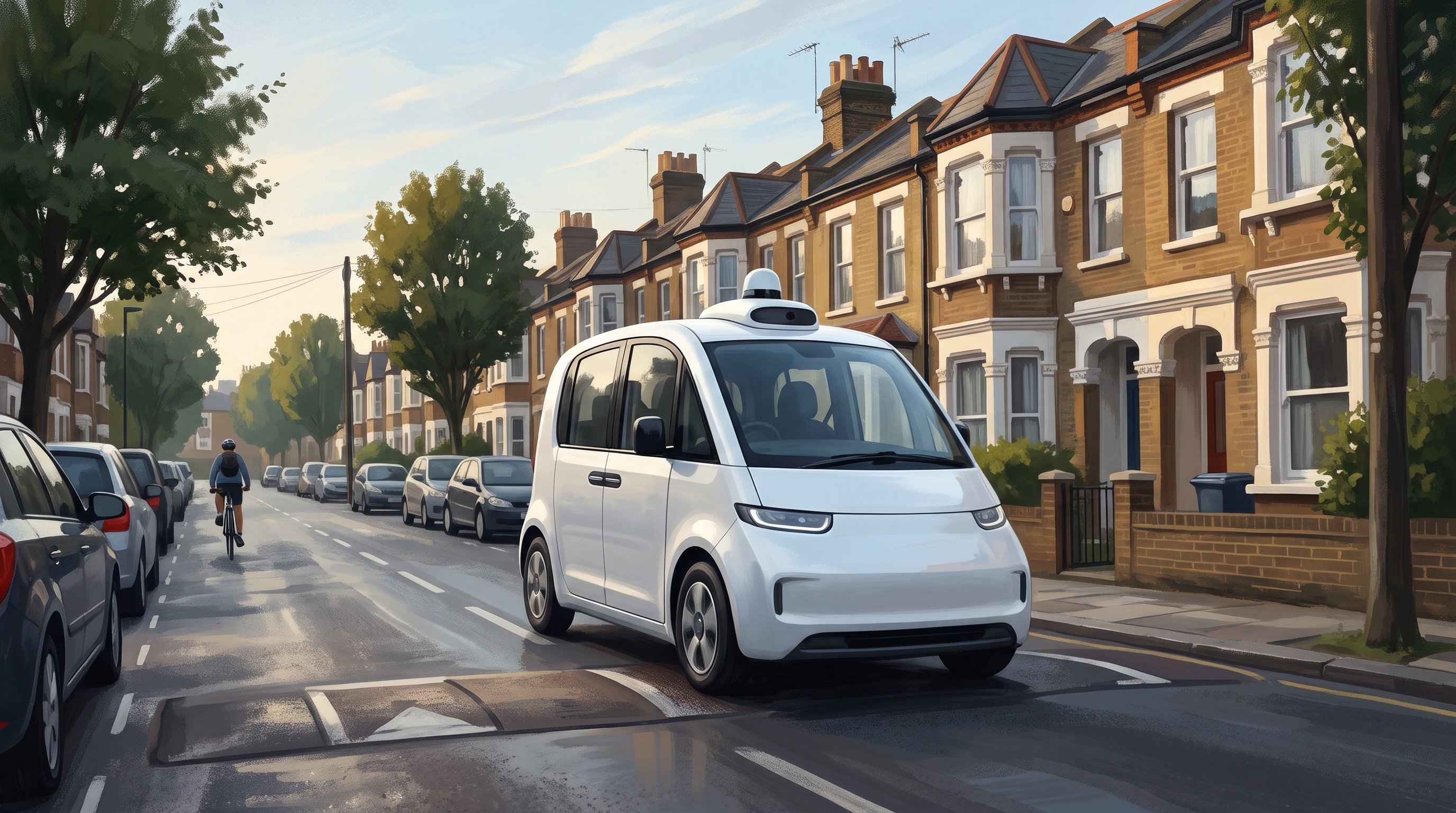
On Thursday 22 October 2026, Baidu and Freenow by Lyft presented in London the car they want to bring to the city: the RT6 from Apollo Go, the robotaxi service of the Chinese tech company Baidu. A robotaxi is a taxi that drives itself. Freenow is a German taxi app that the American company Lyft bought in 2025. The two companies want their cars to drive through London in 2027 with nobody behind the wheel, and passengers should then be able to book them through the app. For that, they first need permission from the regulators.
The cars have been on test drives since 28 July in Brent, a borough in north-west London with both busy city streets and quieter suburbs. Every car has a trained safety driver on board who can take over when needed.
A car designed without a driver
The RT6 is the sixth generation of Baidu's robotaxi and the first that the company designed from the start for rides without a driver. The steering wheel can even be removed, to make more room for passengers later. According to Baidu, the RT6 costs almost half as much to build as the previous model.
In China, Apollo Go has been driving around with nobody behind the wheel for years. According to Baidu, the service made 3.2 million such rides in the first quarter of 2026. Together, the cars have driven more than 330 million kilometres by themselves, more than 220 million kilometres of them without a driver. The robotaxis also already drive without a driver in Dubai and Abu Dhabi. In Hong Kong, where people drive on the left as in London, a test with nobody on board started at the end of July.
London as a driving test
Danny O'Gorman, the UK director of Freenow, calls London a good place to practise: many speed bumps, narrow streets and many roads where the speed limit is 32 kilometres per hour. He compares the car to someone preparing for a driving test who first learns the rules of the road.
Over the next one to two years, Freenow wants to grow to a few dozen cars, to see how Londoners use the service. According to O'Gorman, the robotaxis are not a replacement for London's well-known black cabs. Freenow wants a mixed network, in which robotaxis drive alongside ordinary taxi and private-hire drivers. Freenow chief executive Thomas Zimmermann says the technology should support the drivers.
A poll of 3,001 Londoners that Freenow had the research agency Censuswide carry out in March 2026 shows that 58 per cent would probably take a ride in a self-driving car. According to the same poll, 48 per cent have never been in one.
First the rules
Anyone who wants to offer taxi rides without a driver in England needs a licence from the DVSA, the British agency for driving tests and vehicle inspections. This is set out in a 2024 law on self-driving vehicles. In London, the transport authority Transport for London (TfL) must also agree. TfL is still working on guidelines that show companies what they have to meet. Freenow is discussing this with TfL and with the government office for self-driving vehicles. On 22 October, O'Gorman said he expected those guidelines at the end of October.
Three companies, one city
Baidu is not the only company that wants robotaxis on London's streets. The British company Wayve and Uber were the first to start a robotaxi service for the public, in early September: anyone who books a ride with Uber may get a self-driving car. A driver still sits behind the wheel to supervise. They started with 15 cars. Waymo, the robotaxi company of Google's parent Alphabet, has been testing in the city since April and wants to offer rides without a driver at the end of this year. Baidu has also made agreements with Uber about robotaxis in London.
According to the news agency Reuters, Chinese companies are focusing more on Europe now that the US Senate is working on a permanent ban on Chinese cars in the United States.
What does this mean for the road to the singularity?
Driving a taxi in an old city like London asks a lot: narrow streets, cyclists, pedestrians crossing and roadworks. That AI systems keep getting better at this is a step towards machines that do work on their own in the real world, not only on a screen. Baidu brings the experience of millions of rides in China, where people drive on the right. In Hong Kong and London, the software has to show that this knowledge also works on the other side of the road. If that switch succeeds, the software has not just learned one city, but has really learned to drive. Then other old European cities come into view as well. The next step now lies with the regulators. Once their rules are in place, it may turn out whether 2027 is the year in which Londoners get into a taxi without a driver.
What is the technological singularity? Read the explanation →
Sources
- TechCrunch
- www.lyft.com
- Reuters (via Yahoo): China's Baidu tests robotaxi on London streets
- Baidu: kwartaalcijfers Q1 2026 (SEC 6-K)
- CnEVPost
- TechRepublic: Uber en Wayve starten in Londen
- London Assembly: Who's driving the future of autonomous transport in London (oktober 2026)
- Gasgoo: presentatie Apollo RT6 (2022)