Nederlands
Japan gives the green light: TSMC will make the most advanced AI chips in Kumamoto
The Japanese government has approved the new plan for TSMC's second chip factory in Kumamoto. From the end of 2028, 3-nanometre chips for AI will come off the line there, for the first time in Japan. The factory will, however, start smaller than first planned.
Japan is getting a factory for the world's most advanced computer chips. On 16 October 2026, the Japanese Ministry of Economy, Trade and Industry (METI) approved the new plan for the second factory of chipmaker TSMC in Kumamoto Prefecture, on the island of Kyushu. It will make 3-nanometre chips, the kind now found in the fastest AI servers and phones. Until now, TSMC has made them only in Taiwan.
The factory belongs to JASM, a subsidiary of TSMC (just over 86 per cent) together with Sony, the car parts supplier Denso and Toyota. JASM gives the rapid rise of AI as the reason for the switch.
What is a 3-nanometre chip?
A chip consists of billions of tiny switches. The smaller you make them, the more fit on one chip. The chip then calculates faster and uses less power. "3 nanometre" is the name of TSMC's newest production method. A nanometre is a millionth of a millimetre.
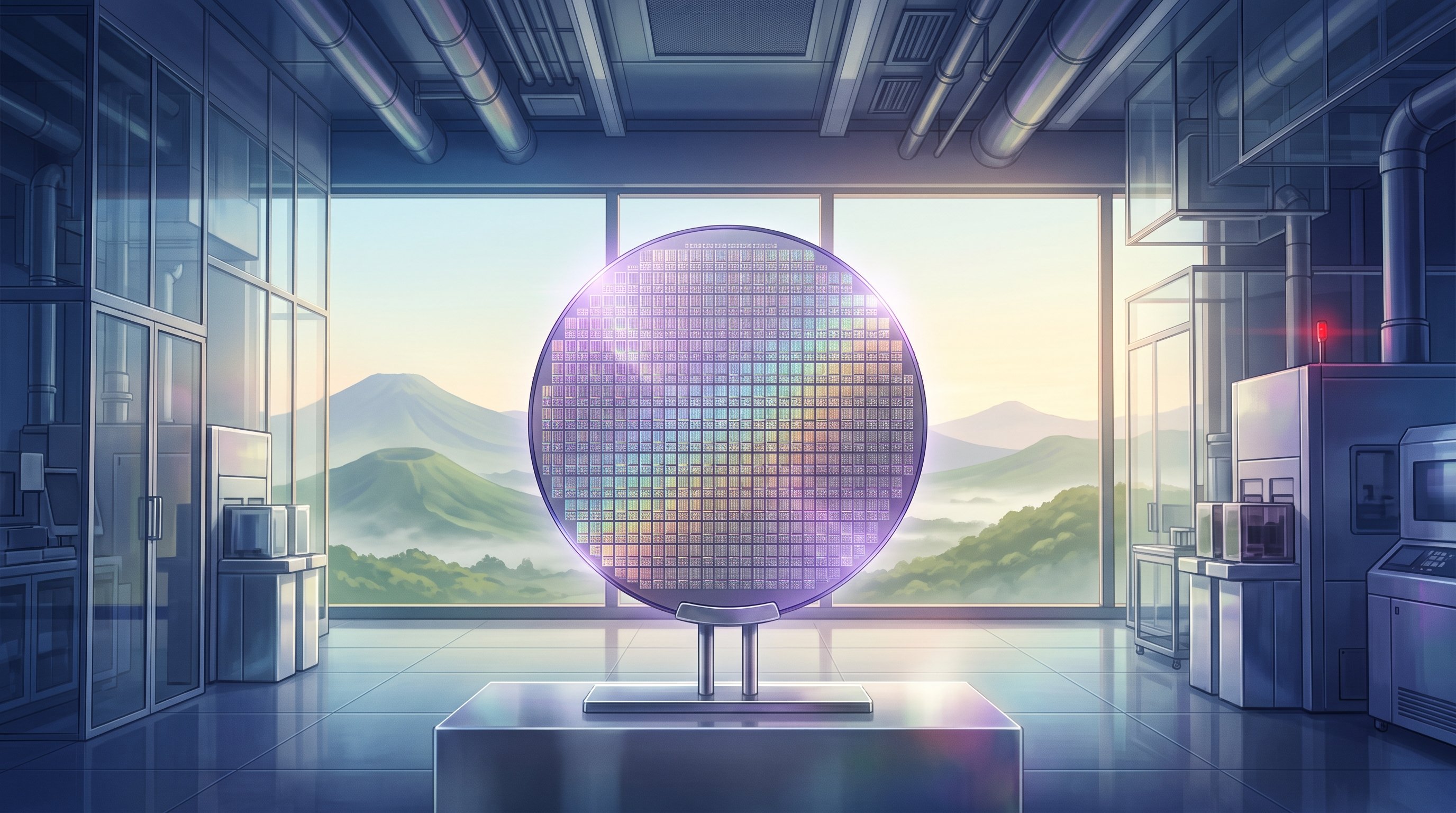
Chips are made on round discs of silicon 30 centimetres across, called wafers. One wafer holds tens to hundreds of chips at once. A factory's capacity is counted in wafers per month.
A smaller start than first planned
The original plan from 2024 assumed 48,000 wafers per month with older chips of 6 and 12 nanometres. The new plan mentions 6,000 wafers per month, but of the newest kind. In March, when Taiwan approved the investment, the figure was still 15,000 wafers per month. Japan has not explained where the difference comes from. Possibly 6,000 is a first phase.
Part of the explanation may lie with the machines. 3-nanometre chips need more production steps with EUV machines, which use extreme ultraviolet light to put the smallest patterns on the chip. Only the Dutch company ASML makes these machines, and they are scarce. According to the tech site Tech Times, that slows down production.
The factory is due to start running in December 2028. JASM promises to produce there for at least ten years.
Government support
Japan is paying a large share. The second factory will receive up to 645 billion yen in support, about 4.1 billion dollars (about 3.7 billion euros). That is slightly less than the 732 billion yen (about 4.2 billion euros) promised in 2024. On the same day, the ministry also adjusted the plan for the first factory in Kumamoto, which has been supplying chips since the end of 2024. It will now make 45,000 wafers per month, with up to 409.5 billion yen (about 2.3 billion euros) in support. Together, the support comes to just over 1 trillion yen (about 6 billion euros).
In return, there is a condition. If there is a shortage of chips, JASM must make more. TSMC must then talk with the Japanese government about extra deliveries to Japanese customers. The ministry has already requested more money for 2027, so that the factory can grow later.
Japan bets on its own chips
For Japan, this is about AI and about security. A country that makes the newest chips at home depends less on one place in the world. That is why Japan also supports Rapidus, a Japanese chip company on the island of Hokkaido that wants to make 2-nanometre chips from 2027. TSMC is also building factories for its newest chips in the United States.
What does this mean for the road to the singularity?
AI grows as fast as computing power is added. Every new factory for the most advanced chips outside Taiwan makes that supply larger and less vulnerable. Kumamoto starts modestly, but it is the first place in Japan where these chips can be made. If the factory grows with demand and more EUV machines are built, Japan could become an important supplier of AI chips. Step by step, the world is building the factories that tomorrow's AI will run on.
What is the technological singularity? Read the explanation →