Nederlands
Chinese team sends 3.2 petabits per second through a single optical fibre
Chinese researchers sent 3.2 petabits per second through one optical fibre with 24 cores, and the equipment processed everything straight away. That is a record for this kind of real-time measurement and could help connect AI data centres faster in future.
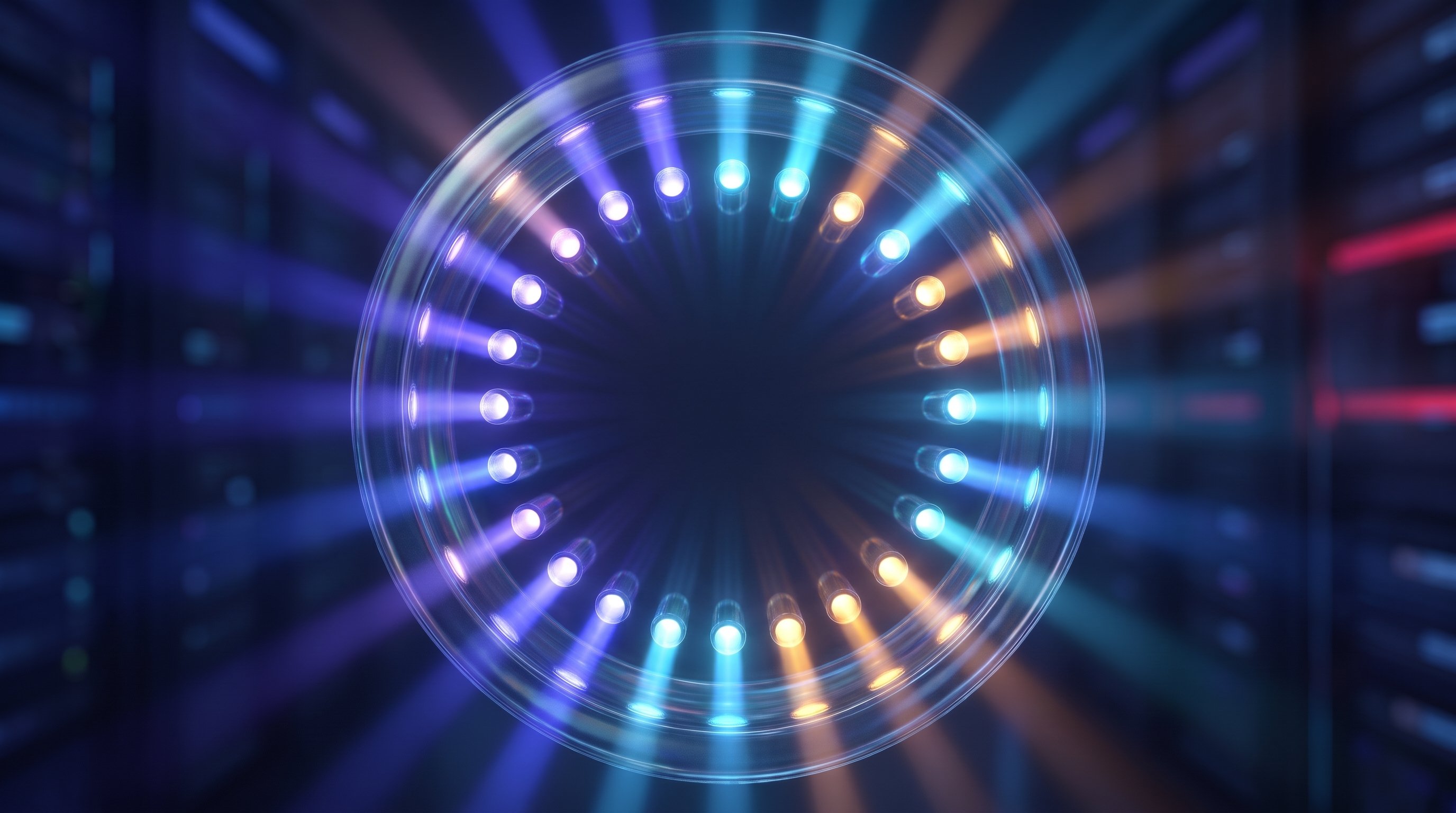
Chinese researchers have set a new record for data traffic through a single optical fibre. They sent 3.2 petabits per second through a fibre 10.3 kilometres long, with signals travelling in both directions. A petabit is a million gigabits. According to the team, at that speed you could send more than 20,000 films in 4K quality in one second. That is the capacity of the whole fibre, not the speed of a single internet connection.
The work comes from the national laboratory for optical communication of the Chinese state-owned company China Information Communication Technologies Group (CICT), together with Pengcheng Laboratory and fibre maker Fiberhome Fujikura. They announced the result around 22 October.
What makes it special is that the equipment processed the signals directly, as in a real network. In many laboratory records, the signals are first stored and only worked out by computers later. In March 2026 the same team already reached 2.5 petabits per second in the same way over the same distance. So in seven months the capacity rose by more than a quarter.
Why optical fibre is filling up
Data centres for AI send huge amounts of data to each other, for example when a large AI model is trained in several places at once. For this they use optical fibre: thin strands of glass that light travels through. An ordinary optical fibre has one core, the thin channel in the middle that the light travels along. According to the team, such an ordinary fibre can handle about 100 terabits per second. That sounds like a lot, but data traffic is growing so fast that this limit is coming into view.
How the team fitted more into the fibre
The researchers used a fibre with 24 cores instead of one. You can compare it to a motorway that gets 24 lanes instead of one, while the road does not get any wider. On top of that, they sent light in three colour ranges through each core at the same time: the S, C and L bands. Each colour carries its own signal. This created thousands of channels side by side in one fibre.
When cores lie so close together, the signals can interfere with each other. The team solved this with a clever arrangement of the cores. Signals in neighbouring cores also run in opposite directions, which reduces the interference further. A control system keeps adjusting the power of each channel, so that every signal arrives properly.
The team used ordinary commercial transmitter and receiver modules, as well as its own modules that send 1.2 terabits per second over a single colour of light. Altogether, according to engineer Yang Chao of the laboratory, the fibre can handle about 32 times more data than an ordinary optical fibre.
What still has to happen
The measurement was done on a test set-up, not in an existing network. According to those involved, more tests are needed before use on a large scale, and the costs also have to become clear. The researchers have submitted their work as a paper to the scientific journal Journal of Lightwave Technology. CICT wants to bring the technology to industry and take part in shaping international standards.
The team mainly sees it being used in connections between large data centres. Later, the technology could also help the main lines of the internet and future 6G mobile networks.
What does this mean for the road to the singularity?
AI grows not only through faster chips, but also through faster connections. The largest AI models are trained in data centres that increasingly work together, and for that they have to exchange data extremely quickly. A fibre that can carry 32 times more data means the same cables in the ground can do much more work. This record shows that such a fibre works with equipment that can run directly in a network. The next step is to test the technology in real connections, and then computing power for AI can also work together over greater distances.
What is the technological singularity? Read the explanation →