Nederlands
NASA develops PROMISE Moon rover with parts from Mars rovers
NASA is moving ahead with PROMISE, a nuclear-powered rover for research near the Moon's south pole. Blue Origin is getting a base contract of 94 million dollars to deliver the rover with a lunar lander.
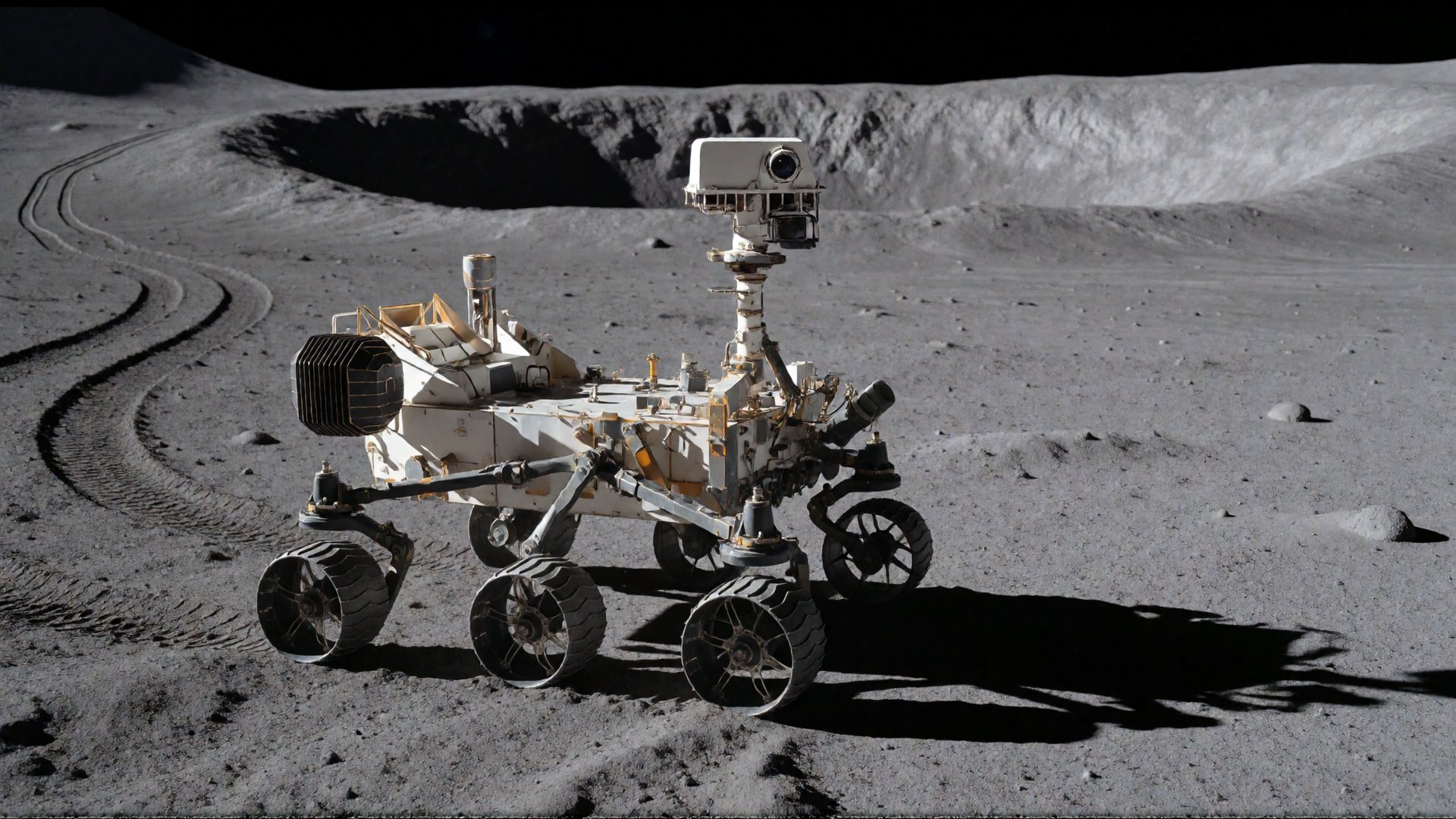
The US space agency NASA announced on 7 November 2026, at the MAX POWER expo at Kennedy Space Center in Florida, that development of PROMISE is going ahead. PROMISE is a rover, a self-driving research vehicle, for the Moon's south pole. The launch is planned for late 2028, and NASA expects an 18-month mission. The rover is meant to collect data for a planned permanent base near the Moon's south pole.
PROMISE will have six wheels and will be about the size of a large off-road vehicle. NASA's Jet Propulsion Laboratory (JPL) in California is leading the mission and building the vehicle. To do so, the laboratory is using the test model of the Mars rover Curiosity, plus spare and test parts from Curiosity and Perseverance. According to NASA, this reuse saves money and time.
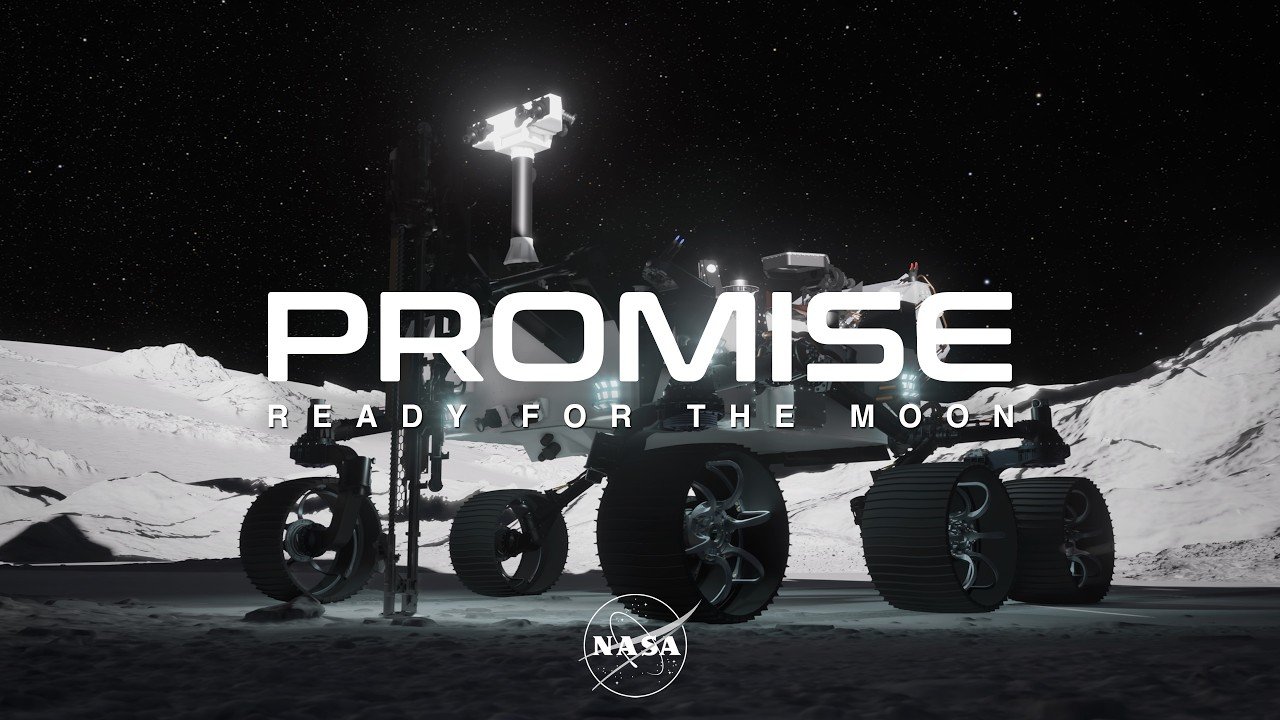
JPL made a video about the rover.
Playing loads YouTube, which may set cookies. More information
Research in dark areas
A lunar night lasts about two weeks, and some craters near the south pole never get any sunlight. Solar panels do not work there. PROMISE will therefore get a spare unit of the nuclear battery that Curiosity and Perseverance also use. It turns the heat from slowly decaying radioactive material into electricity, day and night. According to NASA, this means the rover can also work in those dark areas. Scientists think there may be ice there, and water is very valuable for a Moon base.
The rover will have a drill that can bring up lunar soil from as deep as about one metre. Instruments will then study what that soil is made of. PROMISE will also carry cameras and sensors for temperature and radiation. Among other things, the data should help NASA choose landing sites.
NASA is also testing technology for driving on its own. A computer that can withstand radiation processes the data from SCAN-3D, a system that uses laser light to make a three-dimensional map of the surroundings. Navigation software called HI-RATE should help the rover drive further with less help from drivers on Earth.
Blue Origin will take the rover to the Moon
The space company Blue Origin is to land PROMISE on the Moon with its Mark 1 lander. For this it is getting a base contract of 94 million dollars (about 84 million euros), with an option for another 140 million dollars (about 125 million euros) if it performs well. The order expands an agreement from May 2026 for the delivery of two lunar vehicles.
On the same day, NASA also announced other contracts. Eight companies may compete over the next ten years for cargo flights to the Moon, together worth up to 10 billion dollars (about 8.9 billion euros). For a planned tower that is to provide power and communications on the Moon, NASA chose three companies: Honeybee Robotics for storing energy, Redwire for generating it and Yank Technologies for transmitting power wirelessly.
What does this mean for the road to the singularity?
PROMISE combines driving on its own, its own energy source and research into raw materials, in a place where people cannot simply step in to help. If it works, NASA will learn how robots can do the groundwork for a base on the Moon by themselves: exploring, measuring and searching for water. That is a concrete step towards a permanent human presence beyond Earth.
What is the technological singularity? Read the explanation →