Nederlands
Pony.ai and Toyota put a new driverless robotaxi on the road in Guangzhou
In the Chinese city of Guangzhou, passengers can now ride day and night in the bZ4X robotaxi from Pony.ai and Toyota, with nobody behind the wheel. The companies want to put around 1,000 of them on the road in major Chinese cities.
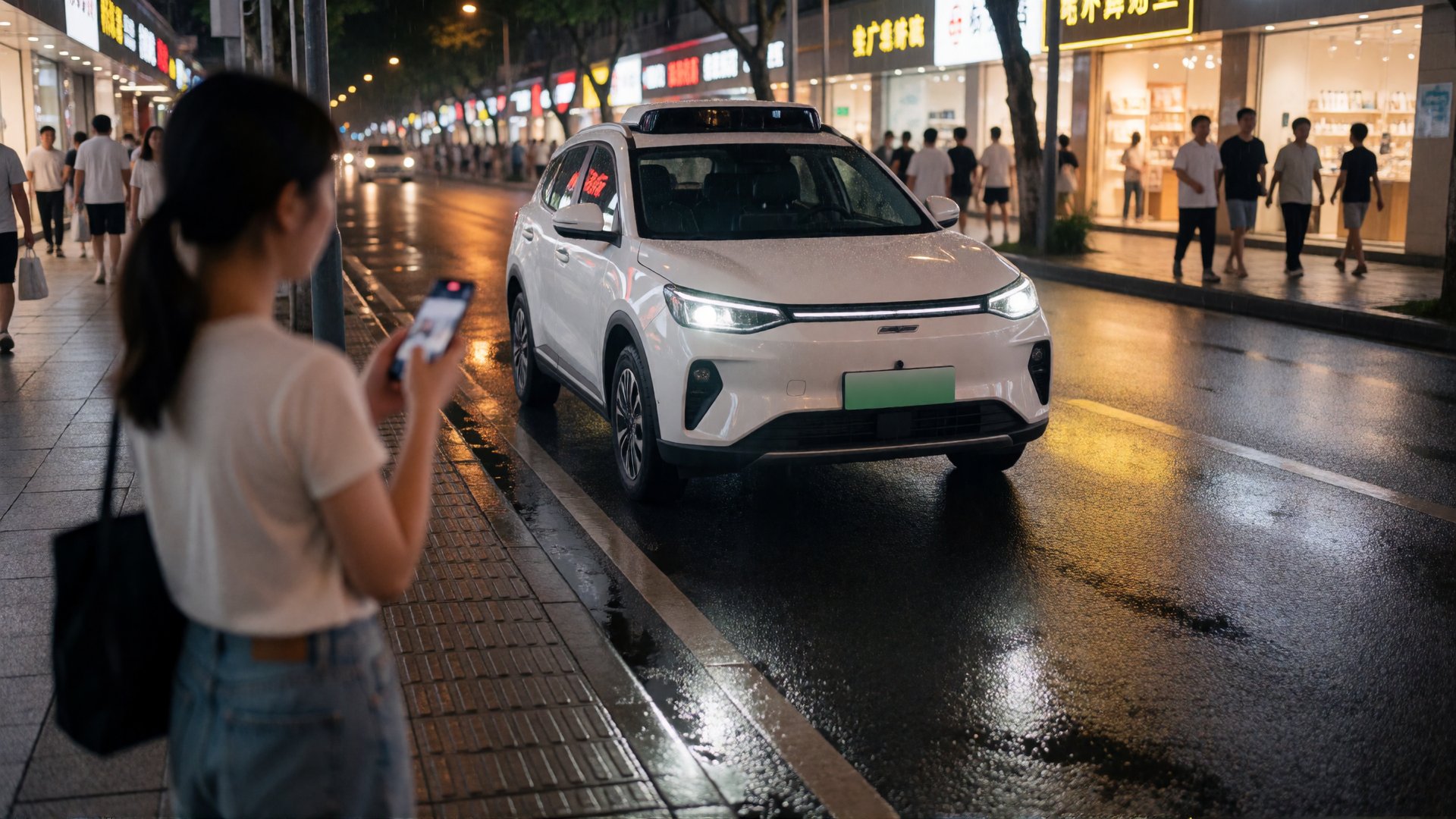
In Guangzhou, a city of millions in southern China, a new robotaxi has joined Pony.ai's fleet of driverless taxis. It is the bZ4X Robotaxi, which the Chinese company developed together with Toyota. Passengers can book it 24 hours a day through the PonyPilot app or through small Pony.ai apps inside WeChat and Alipay, the well-known Chinese messaging and payment apps. Nobody sits behind the wheel.
The car is one of Pony.ai's three seventh-generation robotaxis. In February 2026 the first series-built car rolled off the production line, and production is being stepped up. The companies want around 1,000 of these robotaxis on the road in major Chinese cities. In other cities the car is still being tested and its launch is being prepared.
Built to drive itself
The bZ4X Robotaxi was designed from the start for level 4: within a defined area the car drives completely by itself, and no human needs to be ready to take over. To make this possible, Toyota built the car with key parts in duplicate. If one fails, the car can keep going and finish its trip safely.
Passengers unlock the car with their phone via Bluetooth. Inside, they can set the temperature themselves, watch or listen to something, and use a voice assistant.
Partners for years
Pony.ai and Toyota have been working together on robotaxis since 2019. Pony.ai already offers its robotaxis in Beijing, Shanghai, Guangzhou and Shenzhen. In 2023 Pony.ai, Toyota Motor China and GAC Toyota, the car factory Toyota runs together with the Chinese carmaker GAC, decided to set up a joint company to build and run robotaxis in larger numbers. They invested more than 1 billion yuan (about 136 million euros) in it.
A large fleet needs more than good cars. That is why the companies are also building sites for maintenance, charging and the daily checks of the cars. According to Luyi Mo, vice president of Pony.ai, they want to expand the service so that more passengers can travel safely and reliably without a driver.
What does this mean for the road to the singularity?
Driverless taxis are already a normal sight in a few Chinese and American cities. This robotaxi comes off the production line as a series product from one of the largest carmakers in the world. That changes the calculation. A car built on an assembly line gets cheaper the more of them are made, and a taxi without a driver can run day and night. If that trend continues, a ride could become cheaper than in an ordinary taxi, and that forces other taxi and car companies to follow or lose customers. Work on such taxis is also going on outside China: Baidu and Lyft plan to start driverless rides in London in 2027.
For ordinary people that could mean a lot. People who cannot drive themselves, such as older people or people with a disability, could then travel door to door at any hour. Cities need fewer parking spaces when cars drive all day instead of standing still. It does change the work of taxi drivers: new jobs appear in maintenance, charging and remote supervision, but not for everyone in the same place. How fast this happens depends on how quickly factories, charging points and rules keep up.
What is the technological singularity? Read the explanation →