Nederlands
Researcher says the inner workings of AI are much easier to understand than we thought
Nick Cammarata of the AI company Goodfire argues that the 'neurons' in AI models usually have one clear task. If that is right, it becomes much easier to look inside an AI model and check what it does. Other experts call the work interesting, but want to see more evidence first.
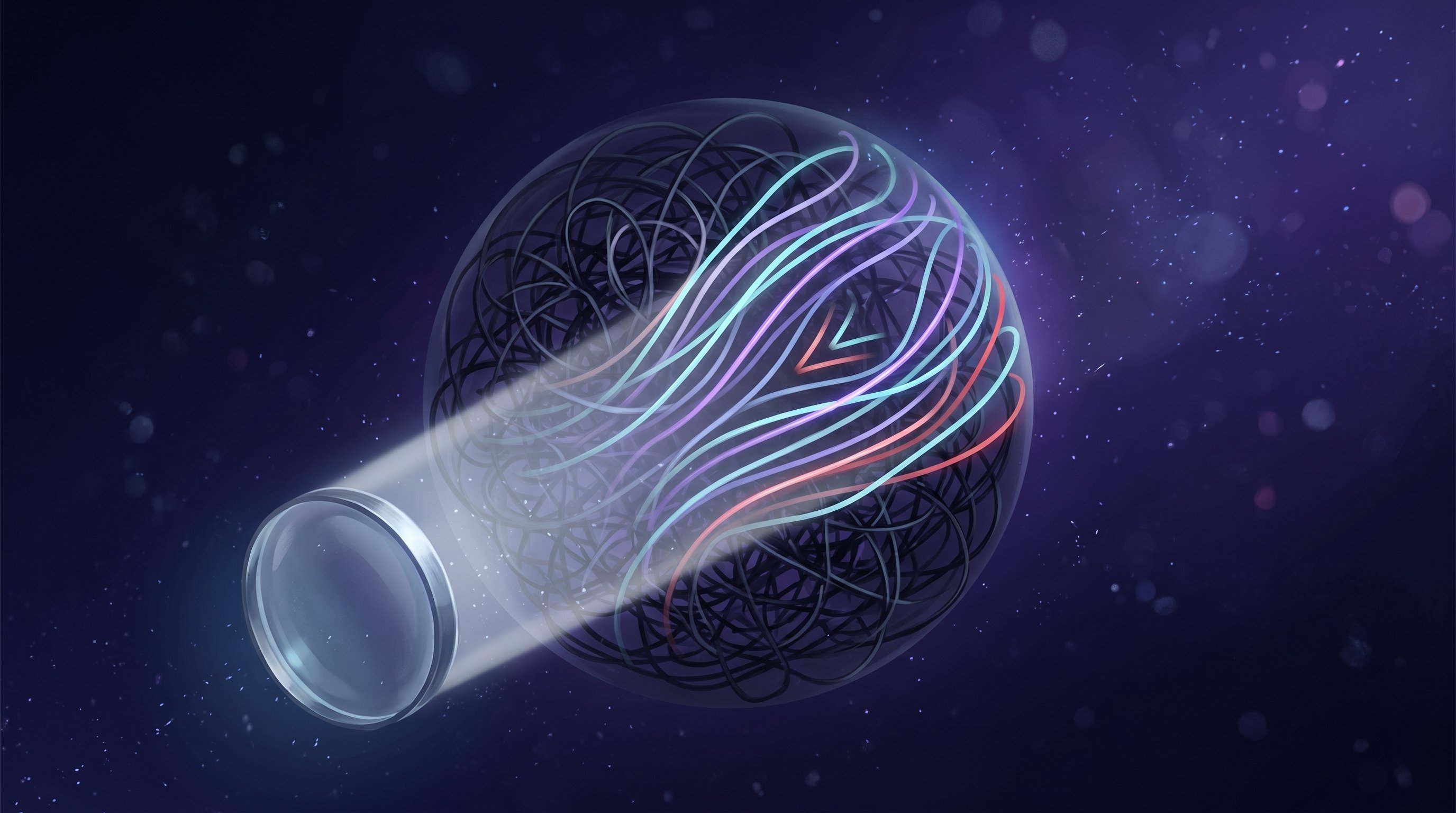
AI models such as ChatGPT and Claude are often called a 'black box'. They give clever answers, but nobody can see exactly how they arrive at them. That is a problem: if you do not understand how a model thinks, it is also hard to check whether it works safely and fairly.
An essay by researcher Nick Cammarata is therefore causing a lot of discussion in the AI world. Cammarata works at the American company Goodfire and previously worked at OpenAI. In mid-October 2026 he published a long piece titled Neural Networks Are Already Clean. MIT Technology Review spoke to him and to other experts.
The old idea: one neuron, many tasks
An AI model consists of billions of small computing units, called neurons. Researchers have been trying for years to work out what each neuron does. In 2020, in an image recognition model from Google, they found a neuron that seemed to respond to both cats and cars. That seemed random.
The explanation became superposition: a model would know many more concepts than it has neurons, and would therefore cram them together into the same neurons. If that is so, you cannot understand a model by looking at neurons one by one. You first have to untangle it. That idea was widely accepted for years, including by Cammarata himself, who helped come up with it.
The new idea: we were looking at it wrong
Cammarata looked at the same neuron again. According to him, it does not respond to cats and cars at all, but to a V shape: a pointed cat's snout, the front of a car, the nose of a fast train. Round shapes actually suppress it. So the neuron does have one clear task.
He says the confusion came mainly from ordinary problems that can be solved, such as the way older models were built and the limited tools available at the time. He also sees that a neuron sometimes grows during learning from one concept into related concepts. That looks like a muddle, but according to him it is not.
Cammarata says that over the past year he has studied neurons for ten hours almost every day, with the help of teams of AI agents that map neurons and test explanations. In a first, rough check of the open language model Qwen3 with 32 billion parameters, about 90 per cent of the neurons had one main task, according to him. Some 7 per cent had two related tasks, and he does not yet understand 2 to 4 per cent.
Enthusiasm and criticism
On social media, some researchers reacted enthusiastically. Others are more cautious. Chris Potts of Stanford University calls the piece thorough, but above all a hypothesis that still has to be tested rigorously. Jacob Hilton of the Alignment Research Center in Berkeley says we still understand only a very small part of the largest models. According to him, you need to understand not only individual neurons, but also how they work together. Neel Nanda of Google DeepMind finds the work interesting, but sees no major shift in the overall picture.
Cammarata acknowledges that some people have blown his words out of proportion. He himself calls his outlook speculative and does not say that AI models can already be fully understood. But he no longer thinks that this is impossible. A technical paper on neurons in language models is due soon. Other researchers will then be able to check the results.
What does this mean for the road to the singularity?
The more powerful AI becomes, the more important it is that we can see what happens inside. That is the basis for safe AI: a model you can examine, you can also correct. If Cammarata is right, that work is a good deal less hopeless than many researchers thought.
What also stands out is how he works: with teams of AI agents that investigate neurons themselves. In this way, AI helps to understand AI. Cammarata estimates that one person would need a hundred thousand years to understand a top model piece by piece, but that automated researchers can speed that up considerably. That is exactly the kind of cooperation between humans and machines that the coming years will be about. The next step is for other teams to reproduce his results.
What is the technological singularity? Read the explanation →