Nederlands
Researchers test robot code with AI agents in simulations
Researchers at UC Berkeley and NVIDIA let AI agents write, test and adjust robot programs in a virtual environment. According to the team, the code that was developed also worked on a real robot in one trial.
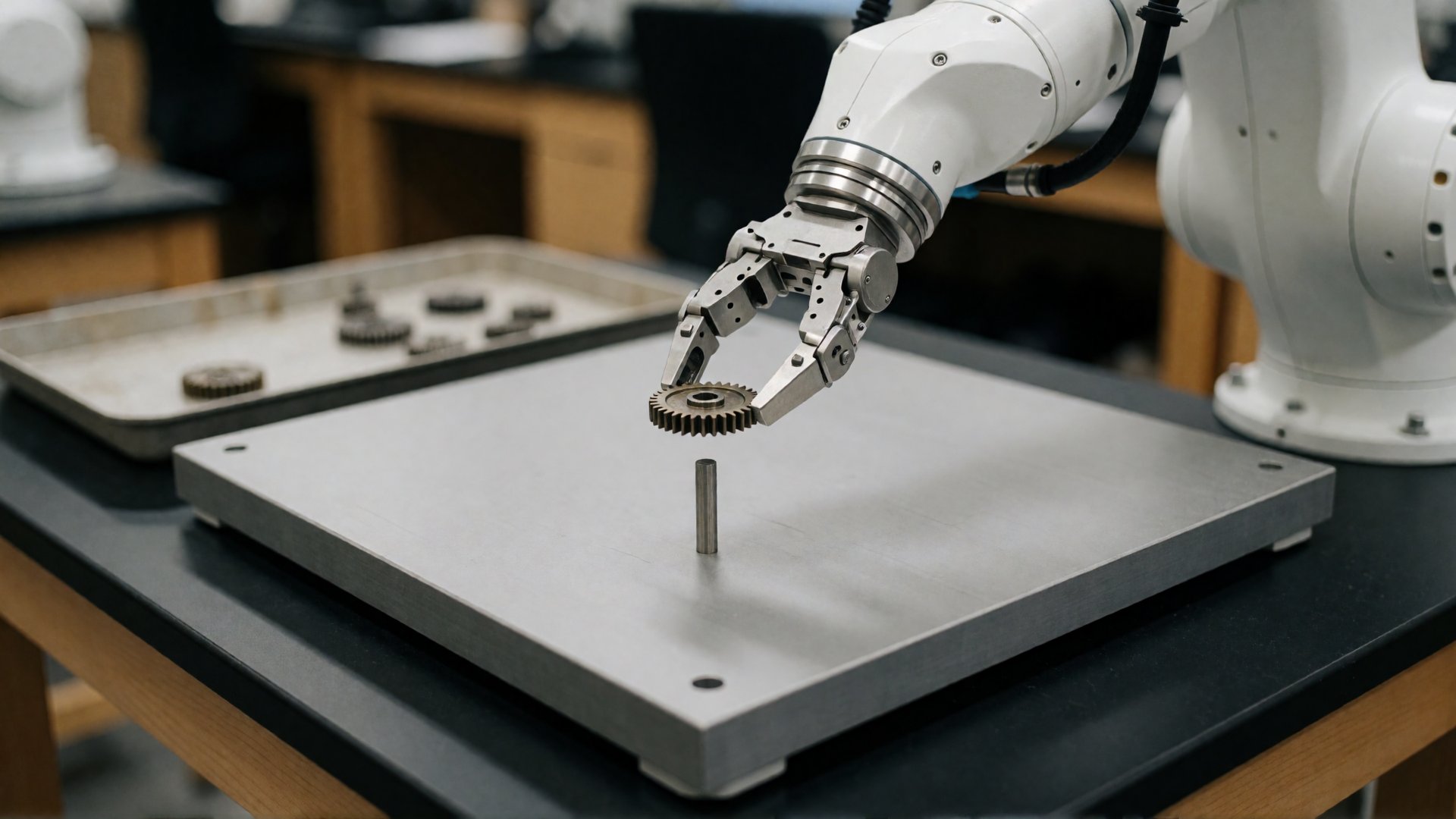
Ken Goldberg, a robotics researcher at the University of California, Berkeley (UC Berkeley), is presenting a new way to program robots in November 2026. He is doing so together with Spencer Huang, director of robotics engineering at the chipmaker NVIDIA, and a team of researchers. They call their approach "agentic robotics": AI agents, programs that carry out a series of steps on their own, write the control code for a robot, test it in a simulated world and improve the code when a task fails.
The team is showing the results of months of testing at the Conference on Robot Learning (CoRL), a major robotics conference. It is releasing the software as open-source code, built on Isaac, NVIDIA's open simulation software. It is also releasing a test suite for comparing robots on industrial tasks. The research is available as a preprint on arXiv: a paper that has not yet been reviewed by other scientists.
Two difficult routes
According to Goldberg and Huang, the approach gets around two problems. Teaching a robot from examples takes an enormous amount of training data and time. Programming a robot line by line, on the other hand, takes a lot of work from engineers. The aim is to make programming faster and more flexible, without losing the fixed structure that reliable factory robots need.
Building blocks in the computer
Earlier in 2026, the team started with Graph-as-Policy. This system splits a task into separate skills, such as finding an object, planning a grasp and moving the gripper without hitting anything. Goldberg compares them to building blocks that together form something bigger. AI agents make these blocks and link them into a program. They then practise it in the simulation with all kinds of variations of the task, find where it goes wrong and adjust it, before the program goes onto a real robot.
From a short video to a working robot
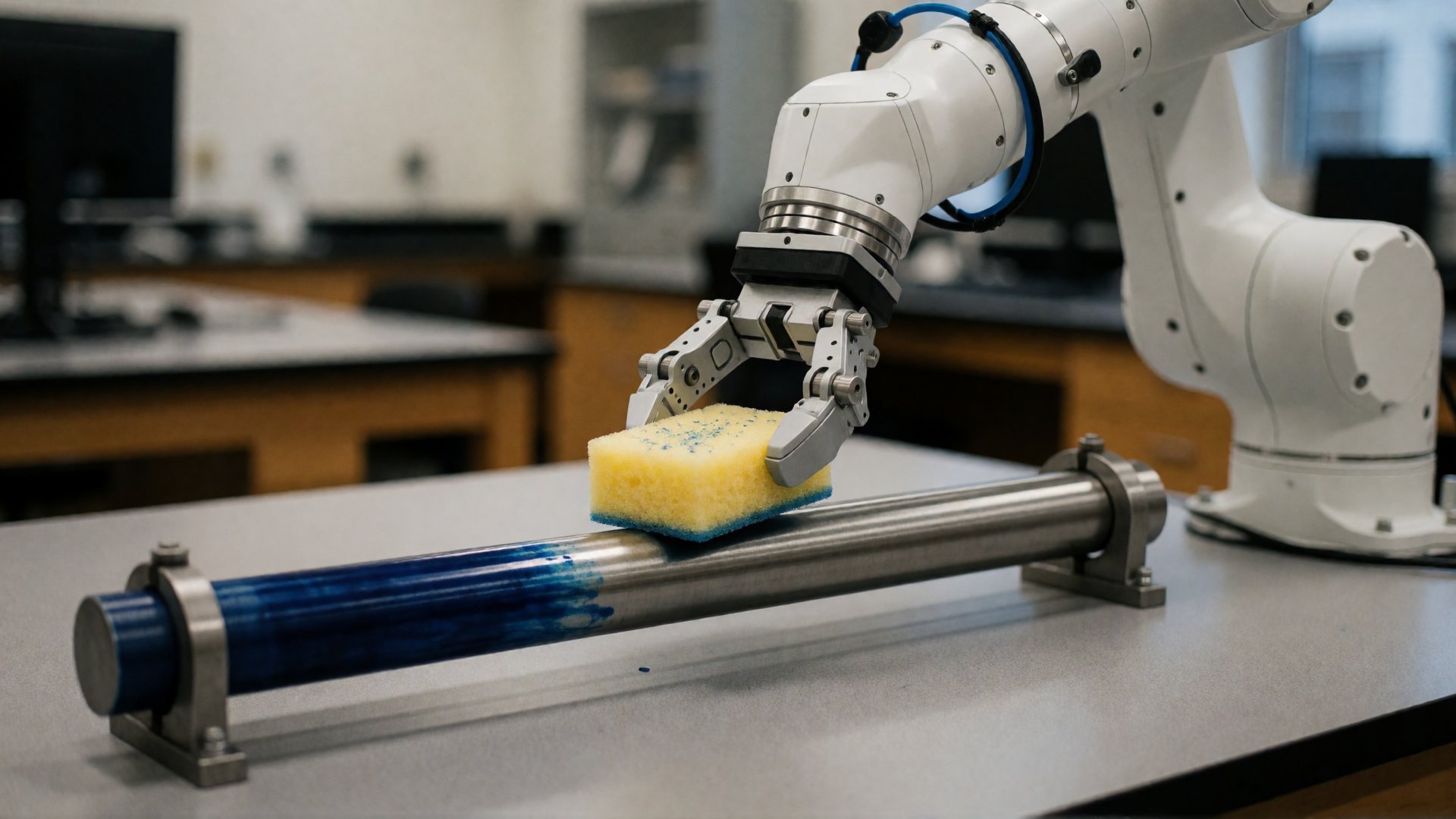
Goldberg's postdocs Eric Kaiyuan Chen and Shuangyu Xie gave OpenAI's Astra AI model access to their simulation software and a short video. In it, a real robot wiped ink off a metal bar with a sponge. Within an hour, the model built a physics simulation that copied the video accurately, down to the way the sponge deformed. Using this simulation and Graph-as-Policy, the AI then wrote a control program and kept improving it. When the researchers ran the code on a real robot, it worked.
In another attempt, the robot knocked the bar over, because it misjudged its weight. That also turned out to be useful: the AI could use the video of that failure to improve the simulation and the code and to try a new approach. "That gave me goose bumps," says Goldberg.
Already used with parcel robots
Ambi Robotics, a company from Berkeley that makes robots for warehouses, applied the method earlier in 2026 to data from parcel sorting and used it to test new settings for its robots. According to UC Berkeley, each robot now sorts more than 15,000 extra parcels per year as a result. The adjustment is now running on 30 per cent of the company's robots in the United States. That figure comes from the company itself.
The team's test suite is called VABAR and contains six industrial tasks, such as hanging objects on a wall and pulling cables through a set-up in different ways. NVIDIA presented this test suite at the same conference, together with new software for robots; read about it in our article on GR00T 2.
What does this mean for the road to the singularity?
Here, AI is not only writing text or software, but programs for machines in the real world, and it learns from its own mistakes: a failed attempt becomes new information for the next one. If AI agents can adjust robots like this on their own, engineers no longer have to fine-tune every behaviour by hand. That could greatly increase the speed at which robots learn new tasks.
What is the technological singularity? Read the explanation →