Nederlands
Stanford physicist proposes a theory of quantum gravity with help from GPT-6 Astra
Stanford physicist Venkatesa Chandrasekaran proposes a new theory that describes gravity with the rules of quantum mechanics. He worked on it for months together with OpenAI's GPT-6 Astra. Other experts still have to review the work.
Physicist Venkatesa Chandrasekaran of Stanford University posted his research on arXiv, a public website where scientists share their papers before other experts have reviewed them. In it, he proposes a theory of quantum gravity: a single description of gravity that also holds at the very smallest scale.
Chandrasekaran is the only author. In his acknowledgements he writes that several calculations and proofs came out of months of working together with GPT-6 Astra, OpenAI's most powerful AI model until its successor GPT-6.2 Astra appeared in mid-November 2026. OpenAI gave him about 400 million tokens of computing time for this; a token is a small piece of text that the model reads or writes. Exactly which calculations came from the model is not stated.
Two theories that do not fit together
Quantum mechanics describes how particles behave at a very small scale. Einstein's general theory of relativity describes gravity as a curving of space and time. Anyone who tries to write gravity in the language of quantum mechanics in the usual way gets infinitely large results in some calculations. In physics, such results are meaningless.
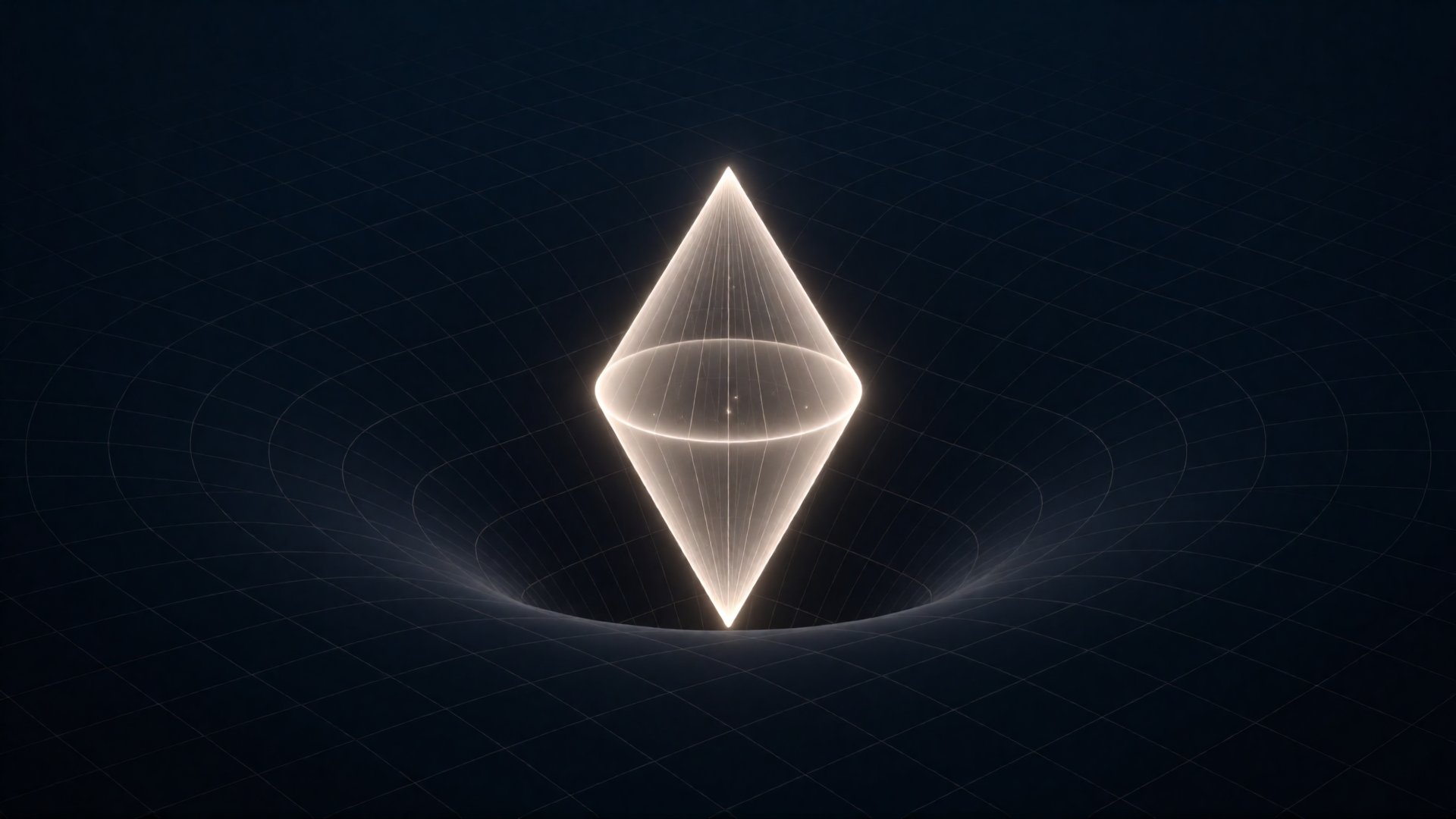
Chandrasekaran looks at a clearly bounded piece of spacetime, meaning space and time together. That piece is bounded by the paths that light can travel. It contains everything that an earlier event can still influence and that can itself still influence a later event. He describes the gravity inside that piece using data on its boundary. In doing so, he does not assume a fixed space and time as a background.
Finite results
In his theory, the sums do add up to a finite number. He works through one example: two gravitons appearing and disappearing. Gravitons are the particles that, according to physicists, carry the force of gravity. His method gives a finite answer; the usual approach gives an infinite one.
A bounded piece of spacetime can also have only a finite number of states in his theory. The theory also produces a well-known formula for how much information a black hole can hold, including a small correction that physicist Ashoke Sen calculated earlier in a completely different way. At ordinary energies, Einstein's equations come out again, with a small quantum correction.
These are checks on paper, not measurements. The theory also covers only empty space, without matter. Adding matter is the next big step.
What does this mean for the road to the singularity?
In October 2026 an AI agent using GPT-6 Astra solved 49 out of 50 physics problems, each one a day of calculation for a top expert. This goes a step further: the model worked for months on a whole research programme, on one of the hardest open questions in physics. In this way, a single theorist with a model can take on work that used to need a whole group.
If that continues, more big proposals will appear than other experts can check, and the bottleneck shifts from coming up with ideas to checking them. Things are already moving there too: in November its successor, GPT-6.2 Astra, wrote a mathematical proof that a computer checked step by step. If that also becomes possible for physics calculations like these, physics can try out ideas much faster, throw them away, and keep what really holds.
What is the technological singularity? Read the explanation →