Nederlands
Quantum state with hundreds of photons makes a measurement nine times more precise
Researchers in China created a quantum state with hundreds of photons and used it to measure a very weak signal about nine times more precisely than is possible with an ordinary microwave state. They say this is a record. The next step is to use the method in other set-ups.
Anyone who wants to measure something very small always runs into noise. Even with the best equipment, some noise remains that comes from physics itself. Photons, the particles that light and microwaves are made of, never come in an exactly fixed number. In an ordinary beam, that number keeps fluctuating a little. This fluctuation sets the best precision you can reach with it. Physicists call this limit the standard quantum limit.
A special quantum state can do better. If the number of photons is almost fixed, part of that noise disappears. Such states are hard to make, however, especially with many photons at once. The information they hold is also difficult to read out again.
Researchers from institutions including Tsinghua University in Beijing and the University of Science and Technology of China in Hefei found a solution to both problems. They describe their work in the scientific journal Nature. An earlier version appeared in February 2026 as a preprint.
Two lenses, but for photons
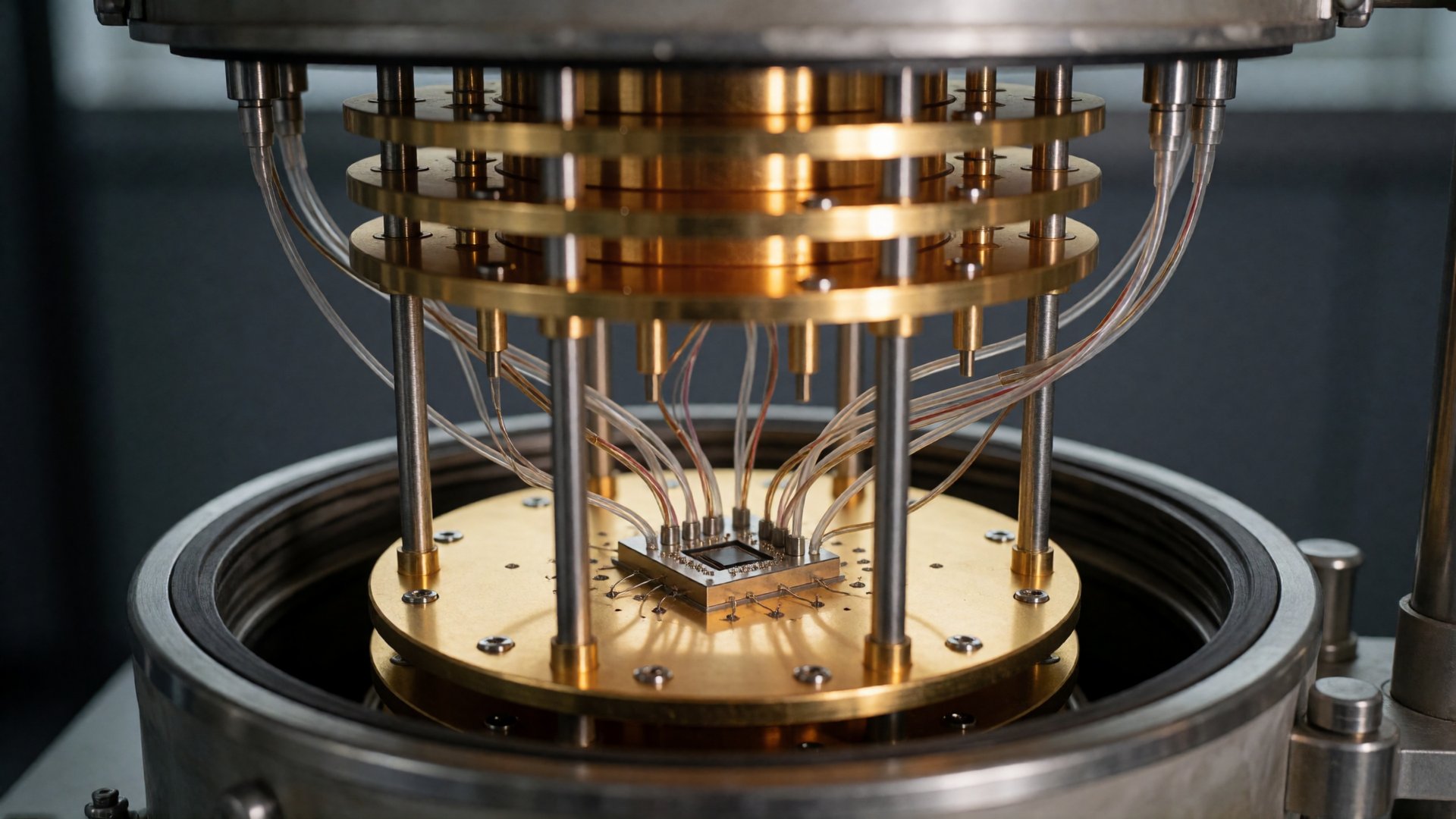
The experiment centres on a resonant cavity: a small metal cavity in which microwaves bounce back and forth. The cavity is superconducting, which means it is cooled so strongly that almost no energy is lost.
Attached to the cavity is a qubit, the computing element of a quantum computer. This qubit controls the state of the photons in the cavity.
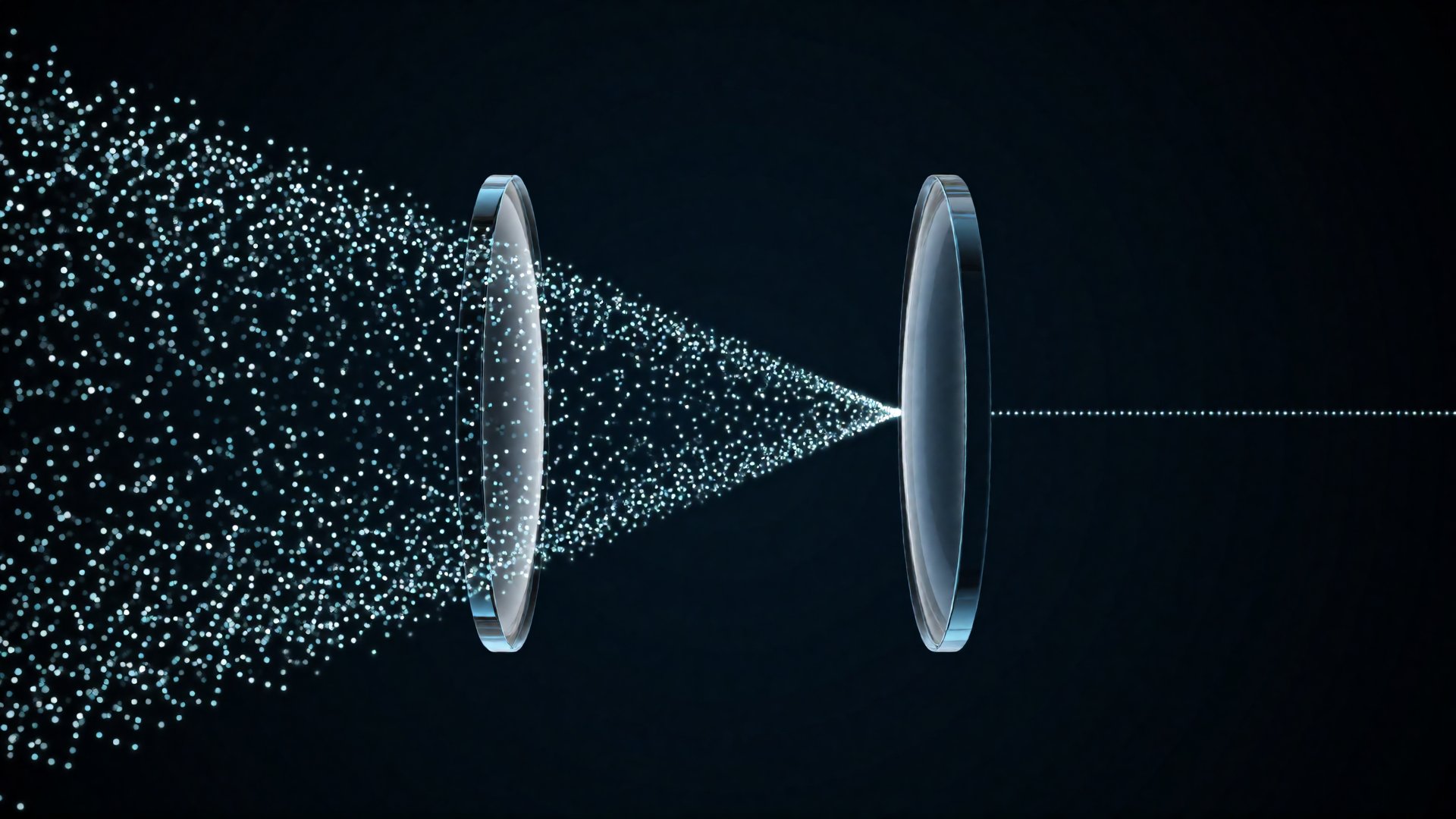
The researchers compare their method to a microscope, in which two lenses focus light onto a single point. Their first 'lens' is a fixed series of operations. It turns an ordinary microwave state into a state in which the number of photons lies close to a chosen value. This worked every time, up to an average of 500 photons. At 500 photons, the number was usually within two photons of that value. With an ordinary microwave state, the spread is more than twenty photons.
In November 2026, researchers at Paderborn University built a detector that counts up to 276 photons with an error of less than one photon. That work was about counting photons precisely. This work is about the step before it: making a state in which that number is almost fixed.
The second 'lens' turns the state back again after the measurement. This makes it easy for the researchers to get the information out.
Nine times more precise
To test the method, the researchers gave the photons in the cavity a tiny nudge with a weak extra microwave signal. They had to measure that nudge as precisely as possible. They achieved the best result at an average of about 350 photons. There, the measurement uncertainty was about nine times smaller than is possible with an ordinary microwave state. According to the researchers, this is a record.
Up to those 350 photons, the measurement became more precise the more photons there were in the cavity, almost as fast as physics allows. With even more photons, the result became slightly worse again, because more photons then leak out of the cavity. The researchers say their approach also works for other quantum systems that use such particles. Showing that is the next step.
What does this mean for the road to the singularity?
Measuring with quantum states is not new. Earlier, researchers managed to make states with a fixed number of photons up to about a hundred photons, and not every time. What is new is that this group gets hundreds of photons into such a state every time. The series of operations does not get longer as more photons are added. So if someone builds a cavity that loses fewer photons, the same method can probably go even further.
If that trend continues, such resonant cavities will themselves become sensitive measuring instruments. Physicists already use similar superconducting cavities to search for very weak signals from particles that are still unknown. With less noise, such a search can cover a larger area in the same time. Quantum computers work with the same components. Anyone who can make and read out the state in a resonant cavity more precisely therefore also has better building blocks for computing. In this way, every precision record expands the toolbox with which the next breakthroughs will be made.
What is the technological singularity? Read the explanation →