Nederlands
Waymo lets ordinary customers ride in driverless cars in Phoenix
Waymo is opening its service without a driver behind the wheel to ordinary customers in Phoenix, starting with existing Waymo One users. Self-driving is now a service for the public, no longer just a trial.
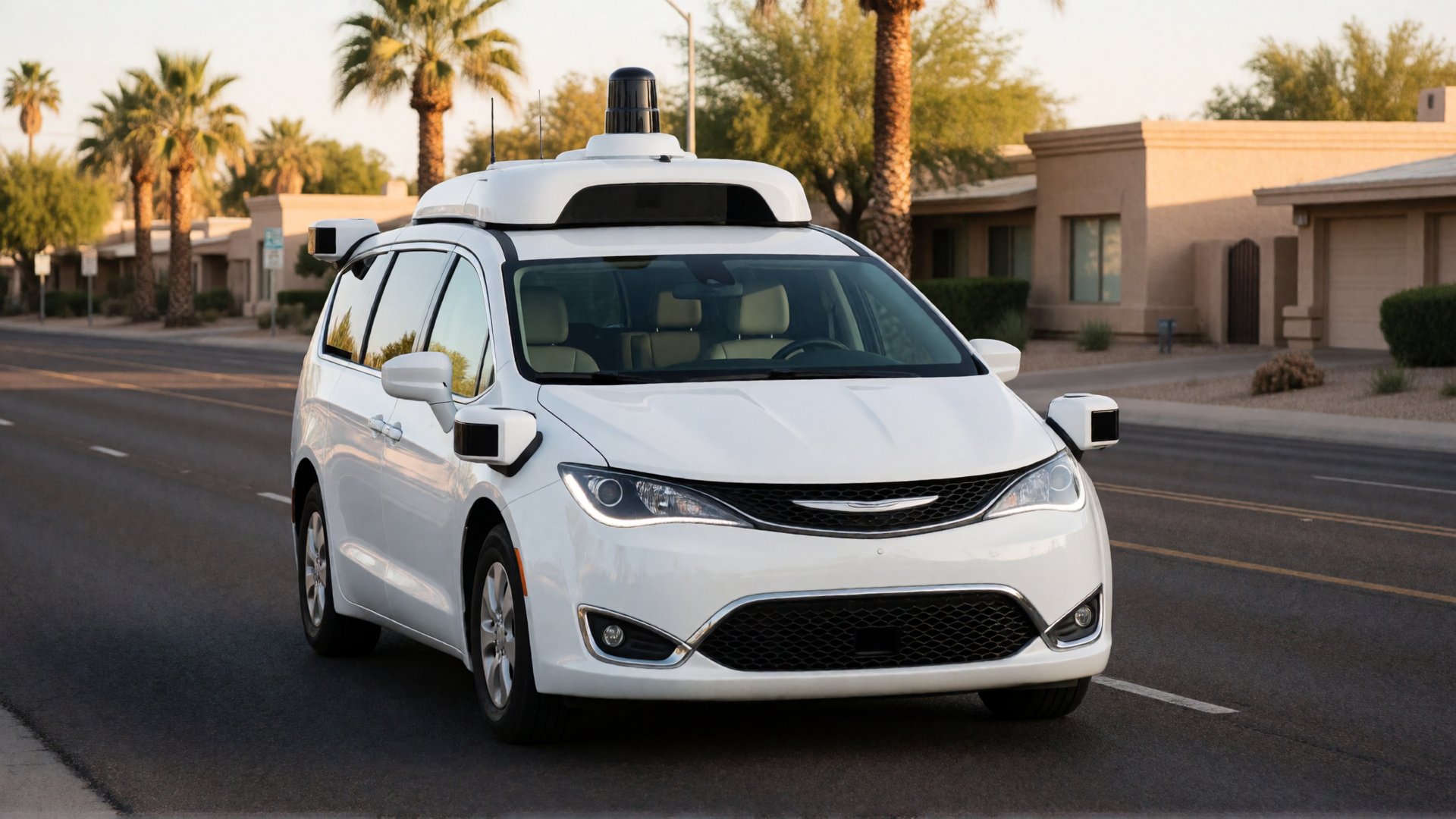
PHOENIX, OCTOBER 2020 - From today, anyone in Phoenix can order a taxi with nobody behind the wheel. Waymo, the self-driving car company owned by Google's parent company, is letting ordinary customers ride in cars without a driver. It starts with people who already use Waymo One, the company's taxi service, and will add more people over the coming weeks. Friends and family can ride along too.
Until now, Waymo almost always had an employee behind the wheel who could step in. After that, a small share of rides, 5 to 10 per cent according to Waymo, already ran without an employee, for a small group of early users who had signed a confidentiality agreement. From today, that is 100 per cent of rides at the start of the service. According to Waymo, the area is larger than the city of San Francisco.
How a car can drive itself
The cars are hybrid Chrysler Pacifica minivans with the fourth generation of Waymo's driving system. It does four things: sensing, recognising, predicting and planning.
Sensing. The car has three kinds of sensors. Lidar sends out millions of laser pulses in all directions and measures how long each pulse takes to bounce back. From this, the computer builds a three-dimensional picture of the surroundings, even in the dark. Cameras all around the car give a picture in colour, in which they see traffic lights and road works from far away. Radar measures the distance and speed of every object and keeps working in rain, fog and snow. They complement each other: where one sensor sees poorly, another does better.
Recognising. A computer in the car combines the data from dozens of sensors and works out what is out there: a car, a cyclist, a pedestrian.
Predicting. The system estimates what others will do. It takes into account that a cyclist moves differently from a car, and it looks at the different paths someone could take. It learns this from experience on real roads and from simulated trips.
Planning. Using its detailed maps, the recognised objects and their expected movements, the system chooses the path, the speed and the steering to keep driving safely. This happens continuously while the car is moving.
Screens and employees on board
Waymo has fitted screens between the front seats and the rear bench, for hygiene and safety. Later this year, the company also wants to offer rides again with a trained employee on board. This lets it use more cars and serve a larger area.
Looking back from 2026
Waymo went on to grow further. It arrived in the San Francisco area (June 2024), Los Angeles (November 2024), Austin (March 2025) and Atlanta (June 2025), and added more cities in 2026, now with about 500,000 paid rides per week, according to Wikipedia. A 2024 study by the insurer Swiss Re together with Waymo found far fewer claims for injury and property damage than for human drivers over the same distance. In 2026, a study by the American institute IIHS in three states found a much lower number of crashes than for human drivers. US regulators are also investigating some incidents, including ones involving school buses.
The link with AI is concrete. Predicting what a cyclist or pedestrian will do is a task for a model that learns from experience. The step of 2020 was mainly that such a system can work without a person on board. For robots working in the real world, that is an important first boundary.