Nederlands
Nuclear fusion
Nuclear fusion is the merging of light atomic nuclei, as in the sun. It releases a great deal of energy. Researchers are working on fusion power plants that use it to make electricity.
Nuclear fusion is the merging of two light atomic nuclei into a heavier one. It happens in the sun and in all other stars. A great deal of energy is released when they merge, and that is what researchers on Earth want to harness in a fusion power plant.
How does it work?
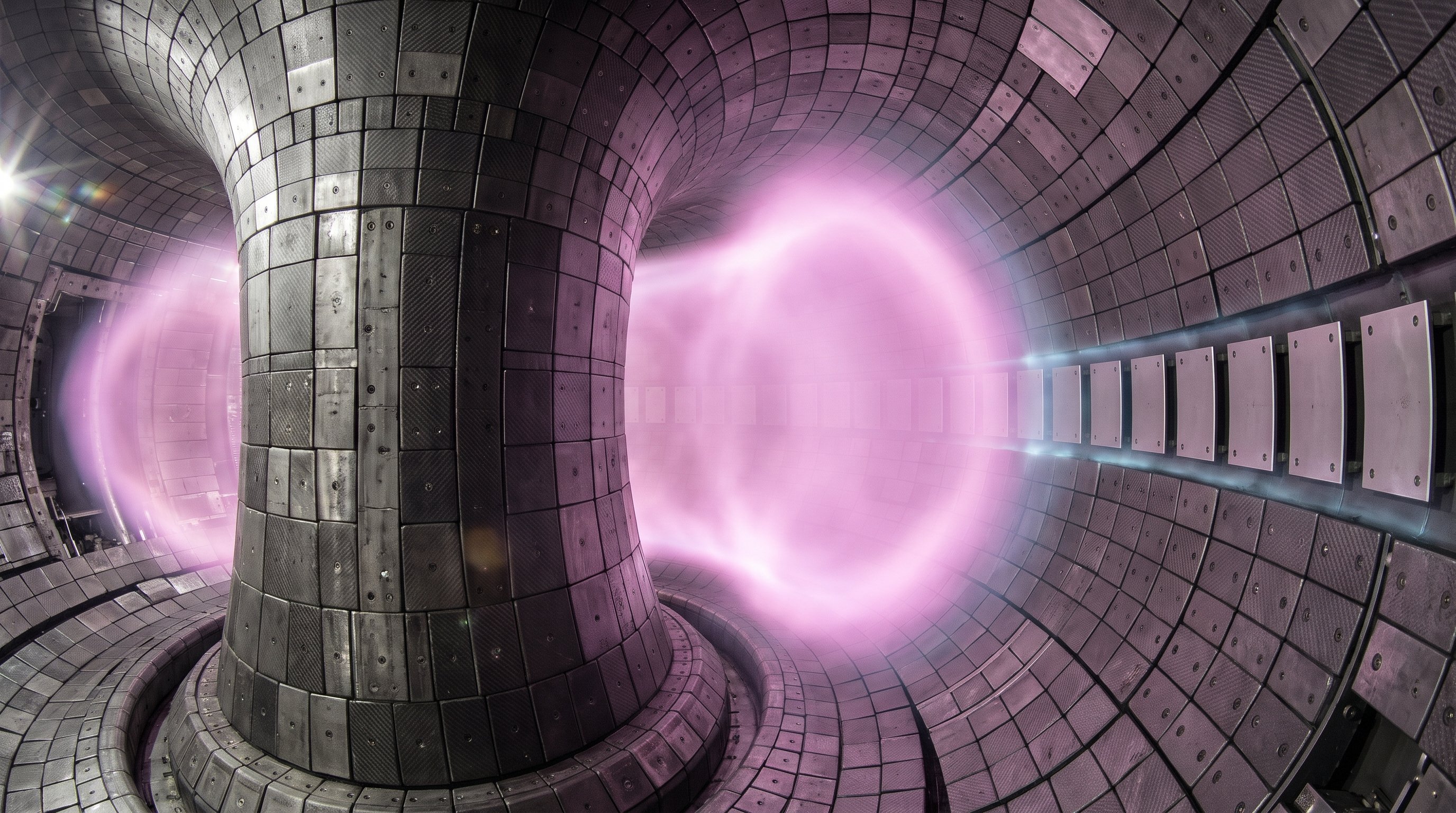
Atomic nuclei are positively charged and repel each other. To make them merge anyway, you have to make them extremely hot, hundreds of millions of degrees Celsius, and hold them together for long enough. At that temperature the gas is a plasma: a glowing soup of loose nuclei and electrons.
Such a plasma must not touch the wall, because that would cool it at once. That is why strong magnets hold the plasma floating in a hollow ring, a tokamak. Another route is a powerful laser flash that squeezes a tiny fuel pellet. The aim is for the fusion to yield more energy than it costs to keep the plasma hot.
Why it matters
Fusion promises a lot of power from little fuel, with no CO2 emissions. Research is aimed at a plant that can run continuously. At the American fusion reactor DIII-D, researchers showed clearly for the first time that helicon waves, a kind of radio wave, can generate current in the heart of a fusion plasma. That is a step towards plants that run continuously rather than in short bursts (link). The magnets are getting attention too: the company Thea Energy is having a large, flat superconducting magnet tested at MIT, at the full magnetic field and full force of a power plant. Flat magnets like these are much easier to make than the twisted magnets of ordinary stellarators (link).
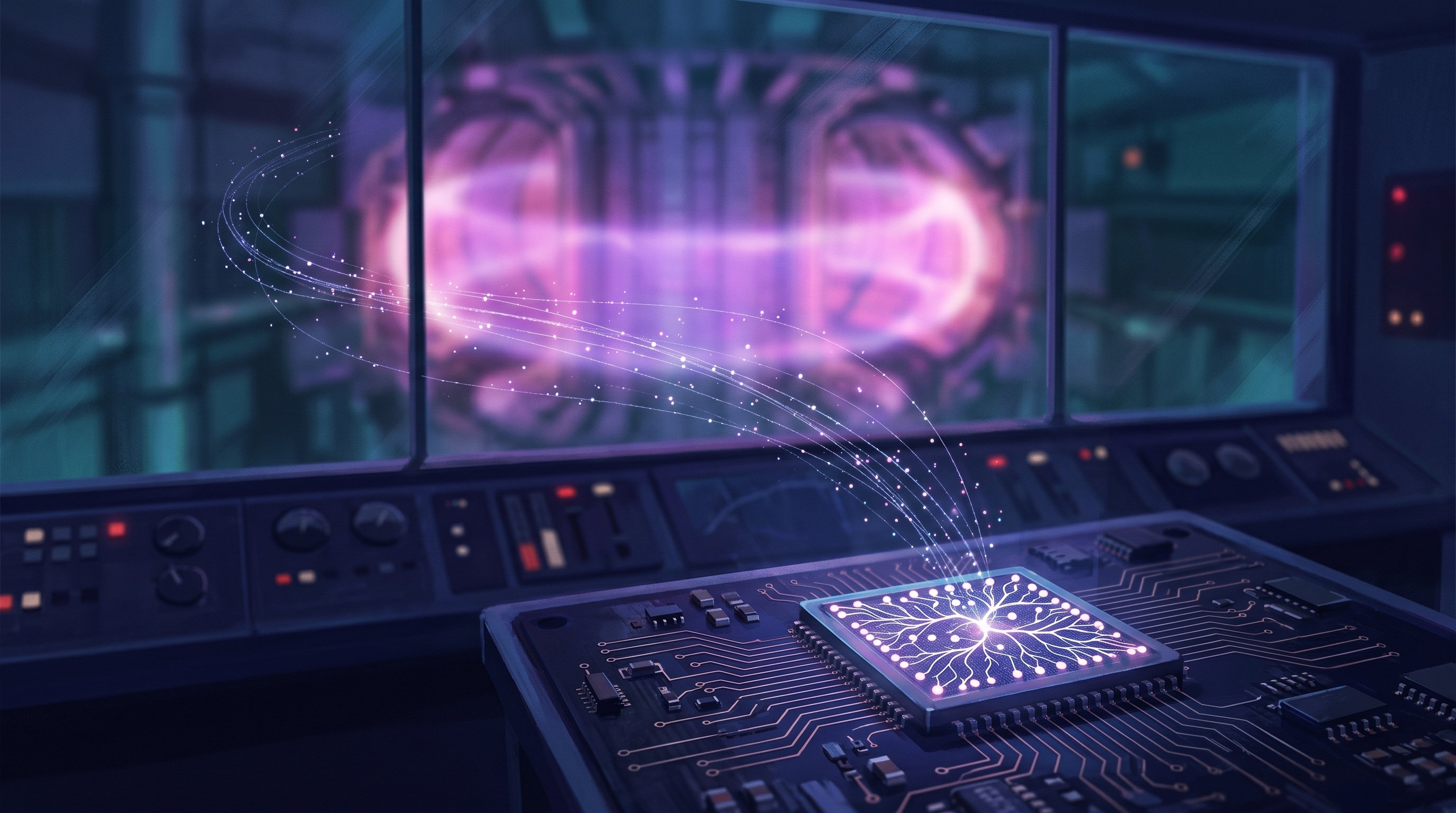
AI helps here too. Commonwealth Fusion Systems is building a digital twin of the SPARC fusion reactor with four American national laboratories, NVIDIA and Google DeepMind, aiming to predict plasma behaviour in under 20 minutes, between two experiments. That is still an ambition, not a result (link). Handling the measurements can also get faster: an American team tested a superconducting chip that works like a network of brain cells and kept up with the measurements from a fusion reactor, a million per second, as fast as they came in (link).
Articles about Nuclear fusion
-
Full-size 3D-printed tungsten tiles withstand 74 plasma discharges in DIII-D fusion reactor
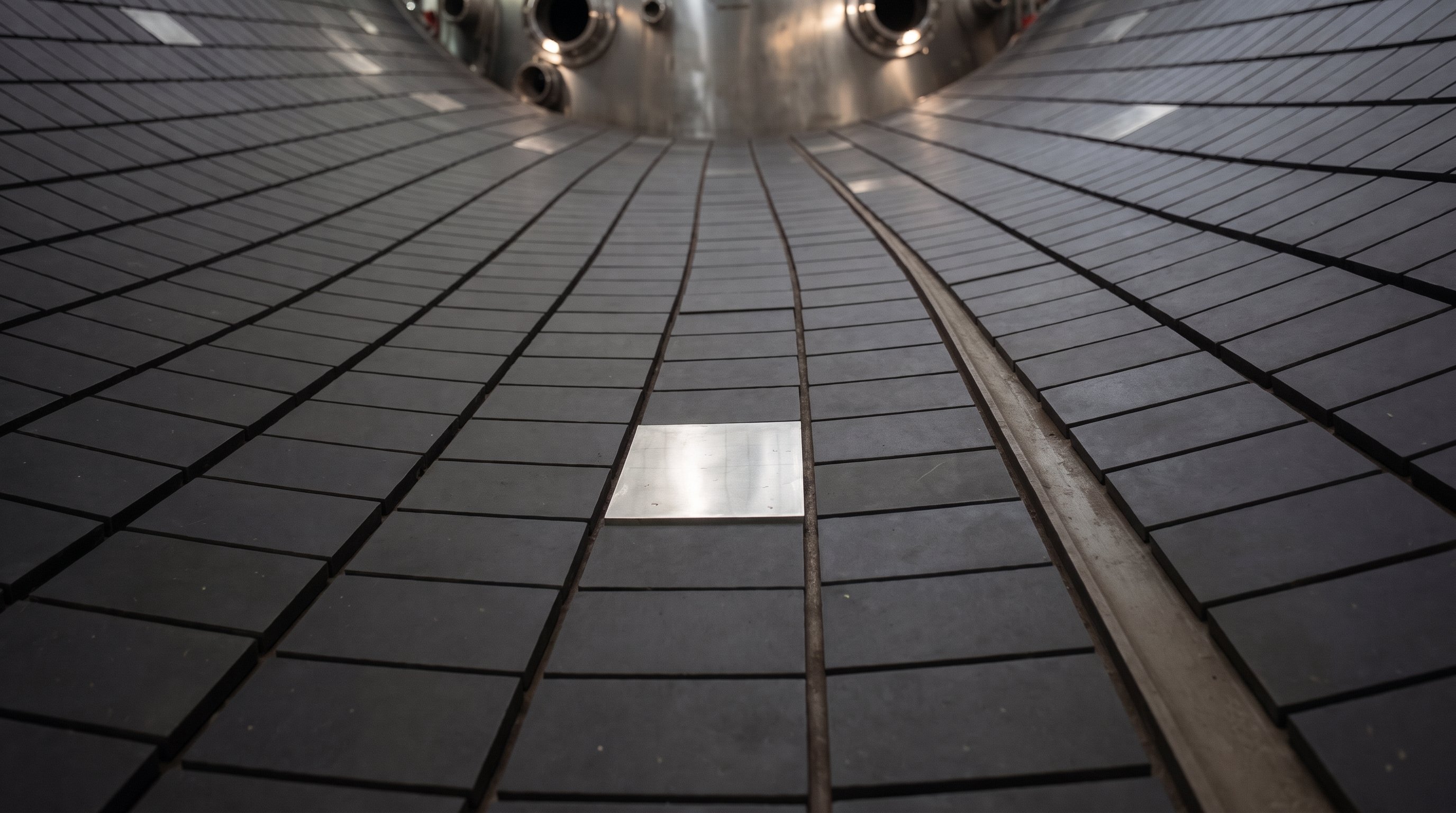
Researchers from the US and Japan have printed full-size tungsten tiles and tested them in the American DIII-D fusion reactor. After 74 powerful discharges they were still intact, according to the team. Detailed analysis of the tiles is now under way.
-
SLAC measures the shortest high-energy X-ray flashes ever produced by an X-ray laser
Researchers at SLAC in the United States have shown that their X-ray laser makes high-energy flashes lasting 100 to 400 attoseconds, the shortest ever from such a laser, according to SLAC. They can use them to watch electrons in action, even deep inside dense materials such as hot plasma.
-
MIT to test a flat superconducting magnet for Thea Energy's fusion plant at full power
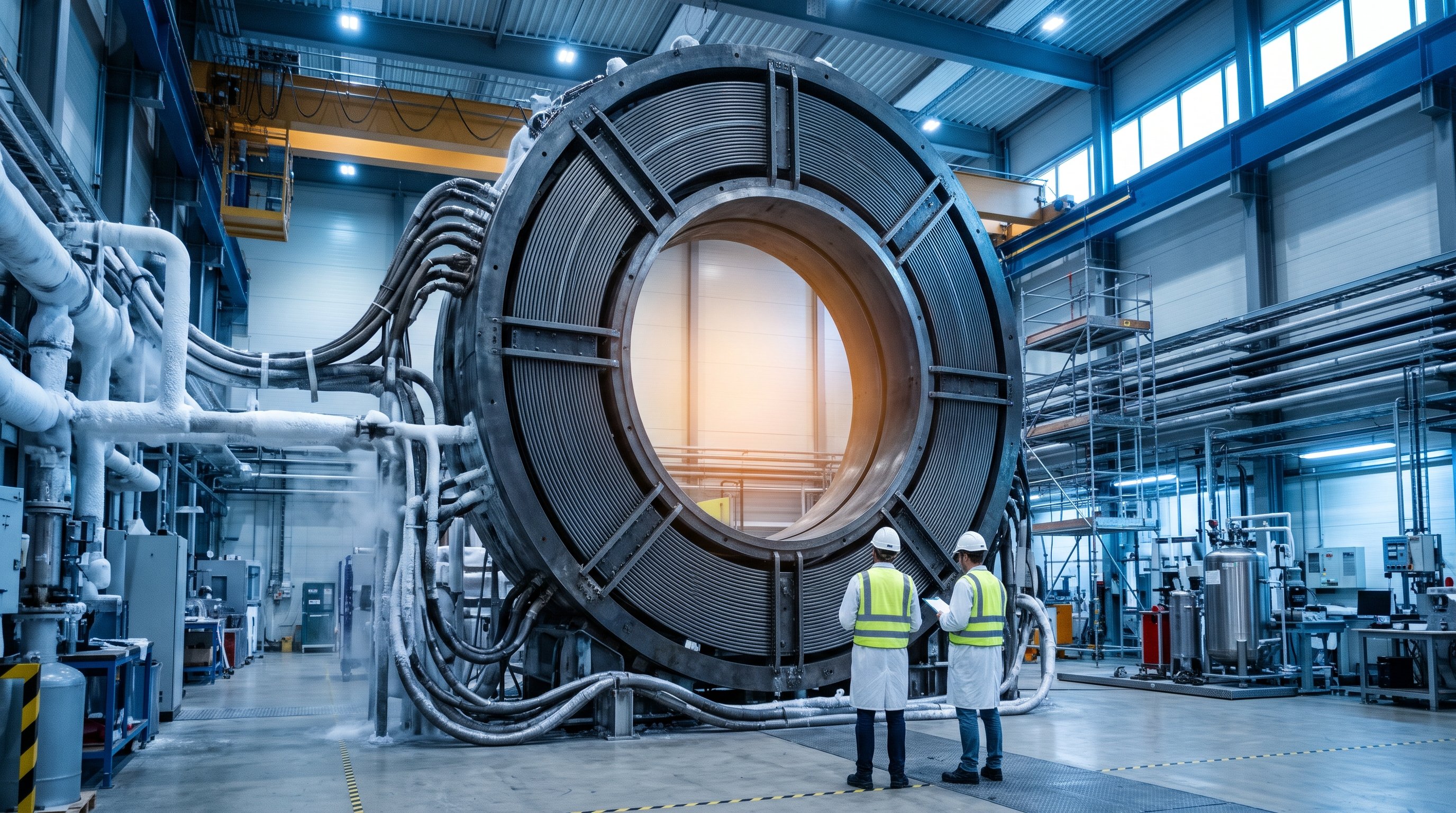
The US fusion company Thea Energy is having a large, flat superconducting magnet tested at MIT, at the full magnetic field and full force of a power plant. Flat magnets are much easier to make than the twisted magnets of ordinary stellarators.
-
Radio waves drive current in the heart of a fusion plasma: a step towards a power plant that runs non-stop
Researchers at the US fusion reactor DIII-D have clearly shown for the first time that helicon waves, a kind of radio wave, can drive current in the heart of a fusion plasma. This is a step towards fusion power plants that run continuously instead of in short pulses.
-
GitHub adds 4 million CPU cores to cope with a wave of AI agents
In September, changes to code were saved 7.4 billion times on GitHub, more than five times as often as a year earlier, mostly because of AI agents. The platform added 4 million processor cores this year and is rebuilding its storage.
-
Laser flash turns plastic into trillions of tiny diamonds
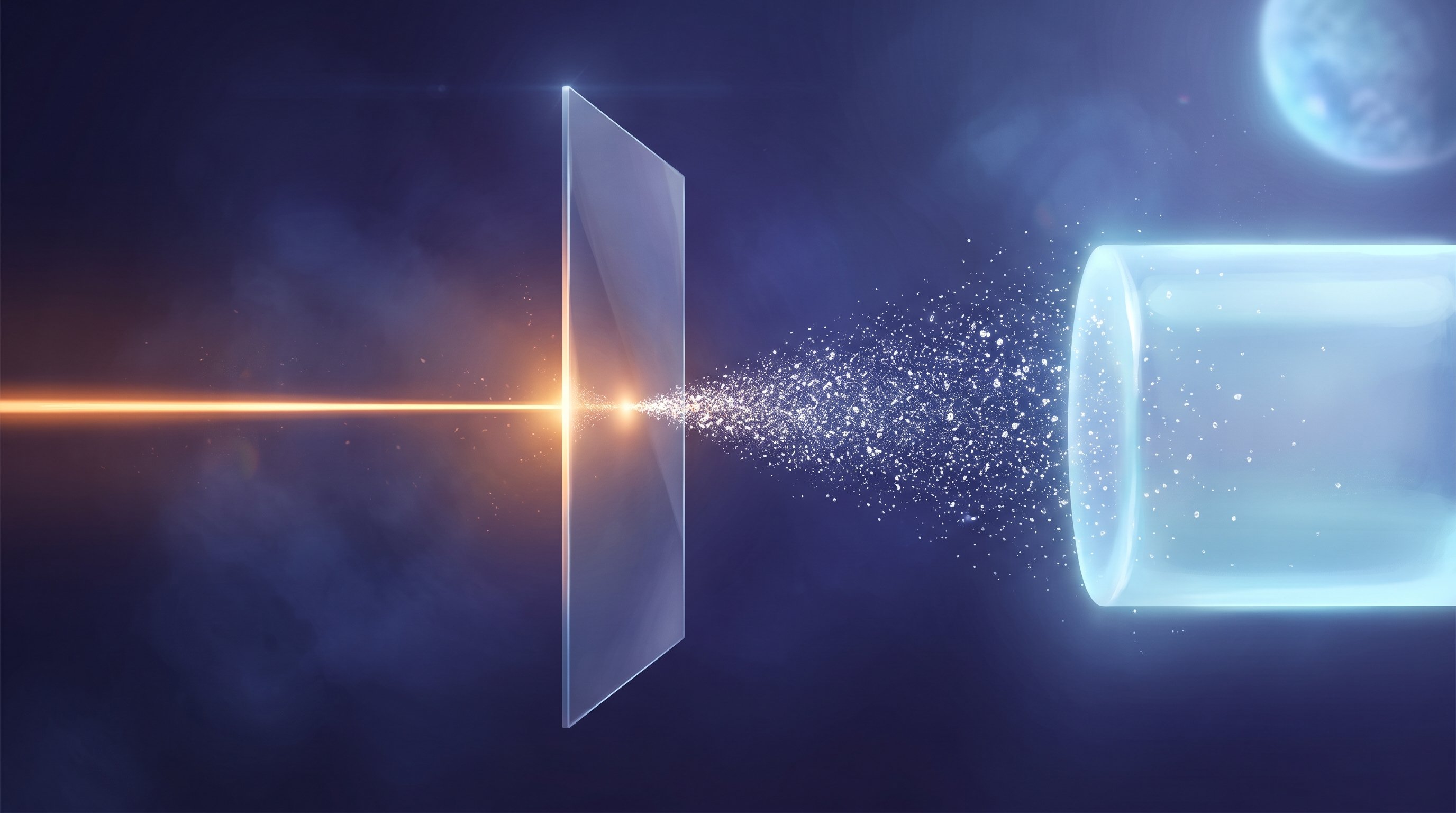
German physicists fire a powerful laser at a thin sheet of the plastic that soft-drink bottles are made of. Each flash produces about 10 trillion tiny diamonds averaging 3 millionths of a millimetre, almost all the same size. The next step is making enough of them to work with.
-
Brain-inspired chip keeps up with a million measurements per second from a fusion reactor
An American team tested a superconducting chip that works like a network of brain cells. It processed measurements from a fusion reactor as fast as they came in. Next year, a chip ten times larger will monitor the reactor itself.
-
Electron pairs survive after superconductivity is gone
Physicists saw that electrons in a metal keep forming pairs even when it is just too warm for superconductivity. That helps to understand how electricity without losses comes about. The next step is to see whether it also happens inside the material.
-
Gemini 4 Argon widely available: Google back among the leaders
Google has rolled out Gemini 4 Argon widely. On paper it beats GPT-6 Astra and Claude Opus 5.5 on 13 of 19 benchmarks, but independent measurements put it alongside the competition, not above it. The biggest leap is in price, long context and science.
-
US project builds digital twin of SPARC fusion reactor to predict plasma within 20 minutes
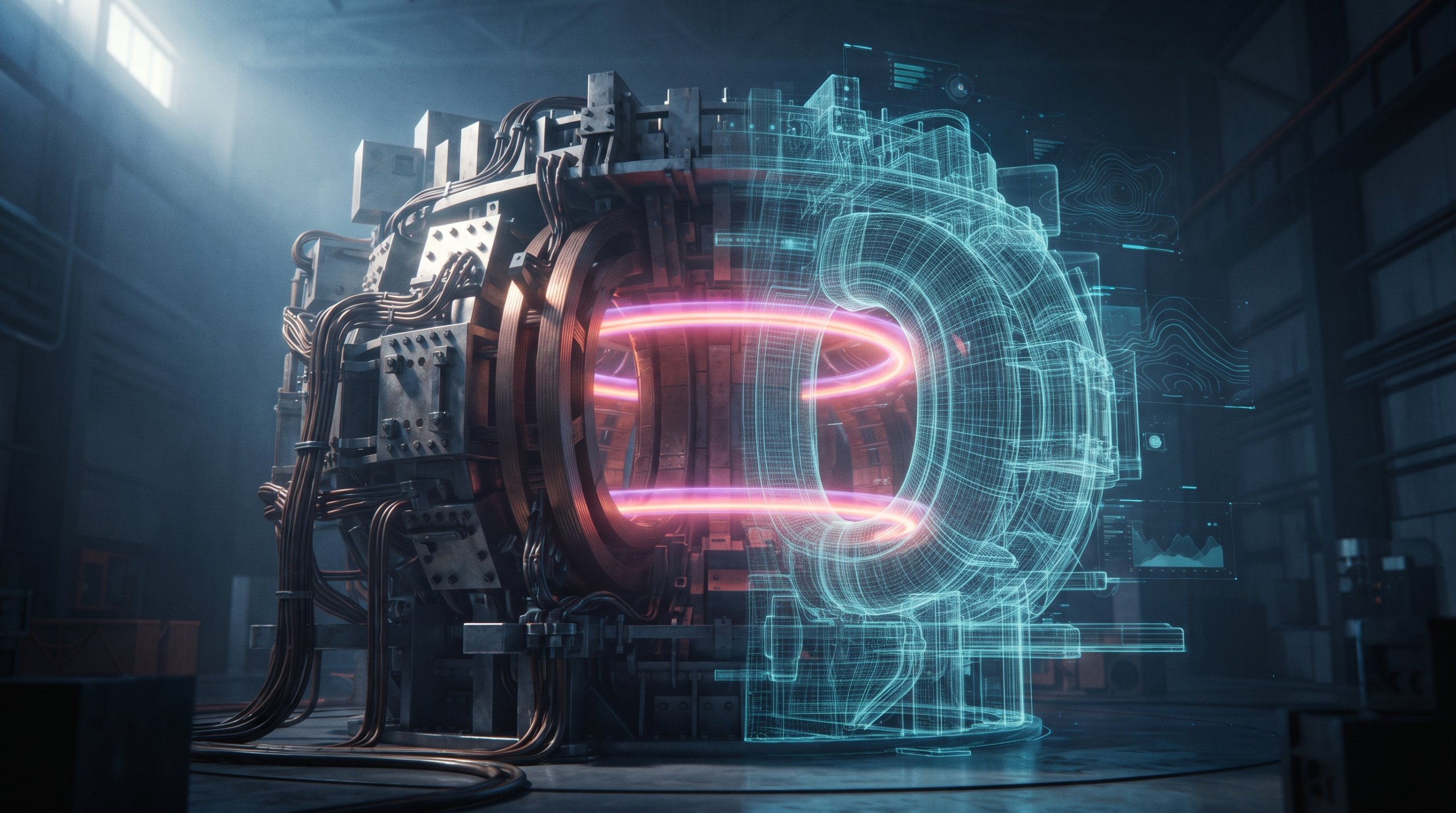
Commonwealth Fusion Systems is building a digital twin of the SPARC fusion reactor with four American national laboratories, NVIDIA and Google DeepMind. The goal: predict plasma behaviour in less than 20 minutes, between two experiments. That is still an ambition, not a result.