Nederlands
Electron pairs survive after superconductivity is gone
Physicists saw that electrons in a metal keep forming pairs even when it is just too warm for superconductivity. That helps to understand how electricity without losses comes about. The next step is to see whether it also happens inside the material.
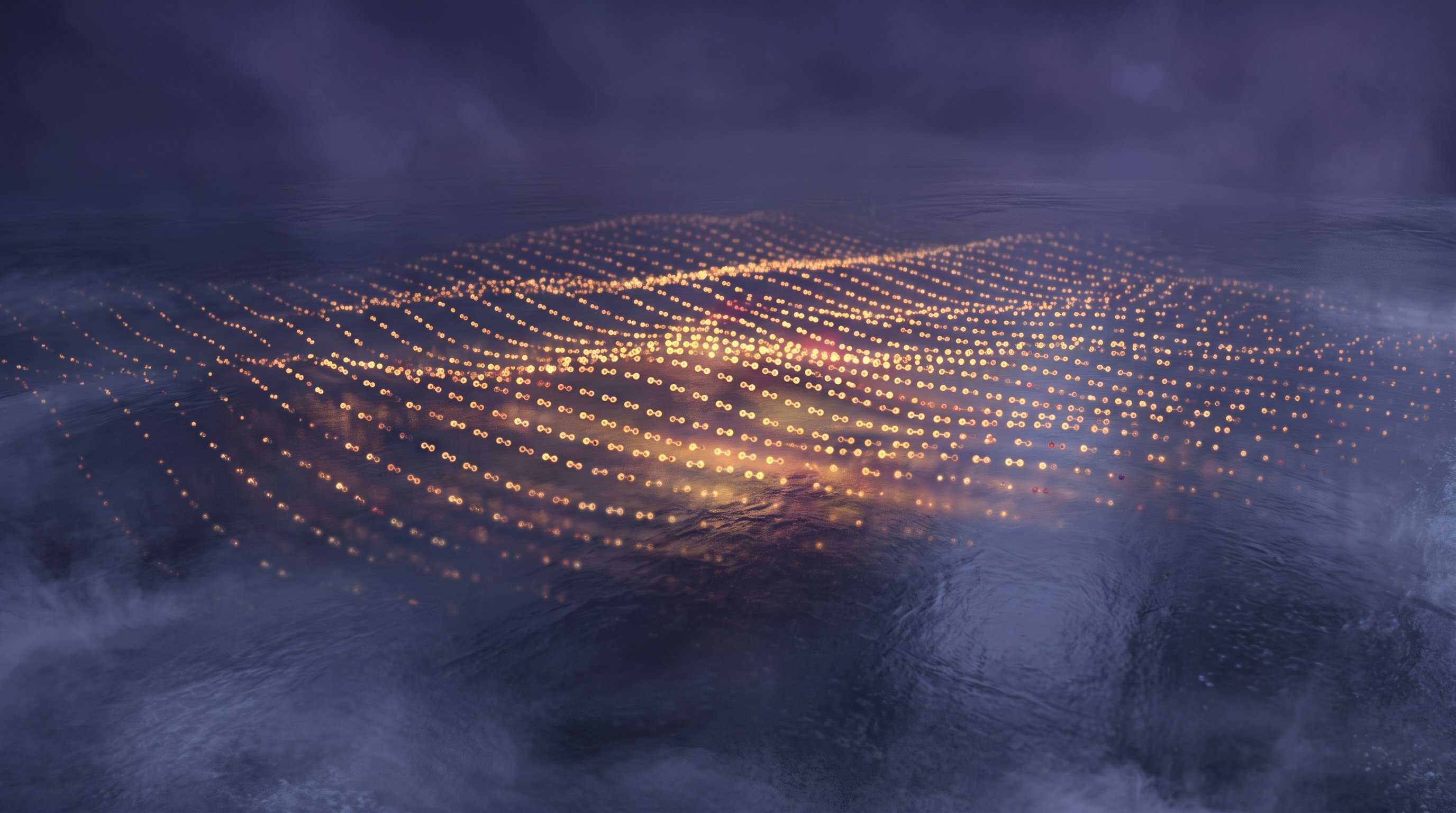
Superconductors are materials that conduct electricity without any energy being lost. They are already used in MRI scanners and in the magnets of nuclear fusion reactors. The drawback: most only work when they are extremely cold. Physicists are therefore looking for superconductors that also work at ordinary temperatures. To do that, they first need to understand better how superconductivity comes about.
Physicists at the University of Illinois Urbana-Champaign have found a new piece of that puzzle. Their research appeared in the journal PNAS.
Electrons in pairs
In an ordinary electric wire, electrons, the particles that together make up the current, constantly bump into atoms. Energy is lost as heat in the process. In a superconductor, the electrons form pairs. These pairs move smoothly through the material, without bumping into anything.
A trace that lingers
The researchers studied the metal uranium ditelluride. It only becomes superconducting when it is colder than about minus 271 degrees Celsius. With a microscope that can see individual atoms, they saw that the electron pairs on the surface form a regular wave pattern. Think of the ripples the sea leaves in the sand on the beach.
The special thing is that this pattern remained visible when the material became a few degrees warmer, beyond the point at which superconductivity disappears. So the pairs already exist before the material conducts electricity without losses. Physicist Eduardo Fradkin and colleagues predicted such a pattern in 2007. According to the researchers, this is the first direct sign that it can also exist without superconductivity.
Fradkin compares it to the cat from Alice in Wonderland: the cat disappears, but its grin stays hanging in the air.
According to many physicists, uranium ditelluride is also a rare kind of superconductor. Such materials might help with quantum computers that are less troubled by errors. This is still being studied further.
Next steps
The researchers looked at the surface of the material. Now they want to know whether the same pattern is also present inside.
What does this mean for the road to the singularity?
Superconductors that work at ordinary temperatures would change a lot: power grids without losses, cheaper MRI scanners and more energy-efficient data centres. This research shows that electrons already form pairs before superconductivity begins. That gives physicists a new clue about what to look for.
AI can help with that. In this kind of research, measurements often fit several explanations. AI models can compare large amounts of measurements and theories at the same time and so find the right explanation faster. In this way, the search for better superconductors could speed up considerably in the coming years.
What is the technological singularity? Read the explanation →