Nederlands
Full-size 3D-printed tungsten tiles withstand 74 plasma discharges in DIII-D fusion reactor
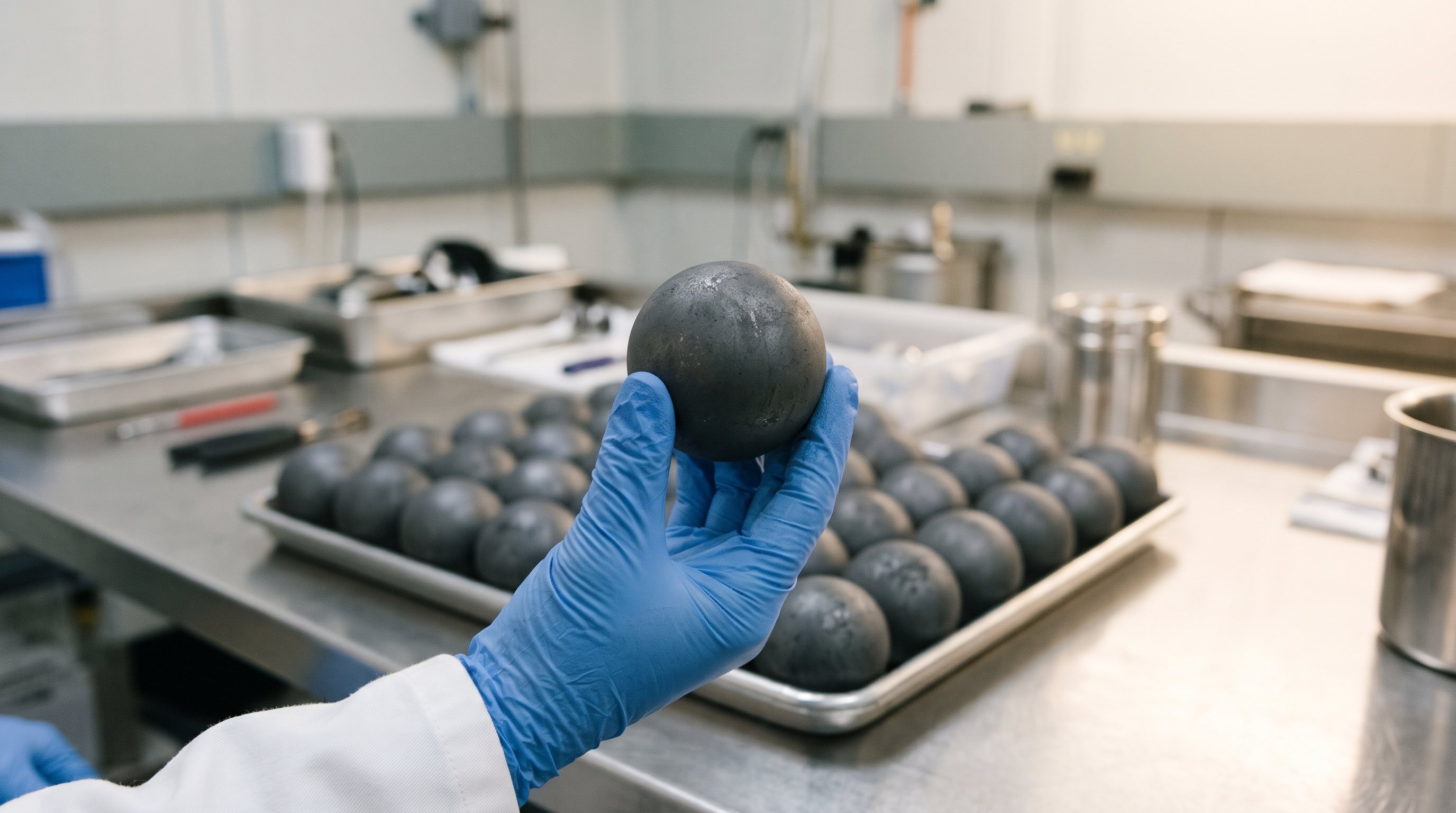
Researchers from the US and Japan have printed full-size tungsten tiles and tested them in the American DIII-D fusion reactor. After 74 powerful discharges they were still intact, according to the team. Detailed analysis of the tiles is now under way.
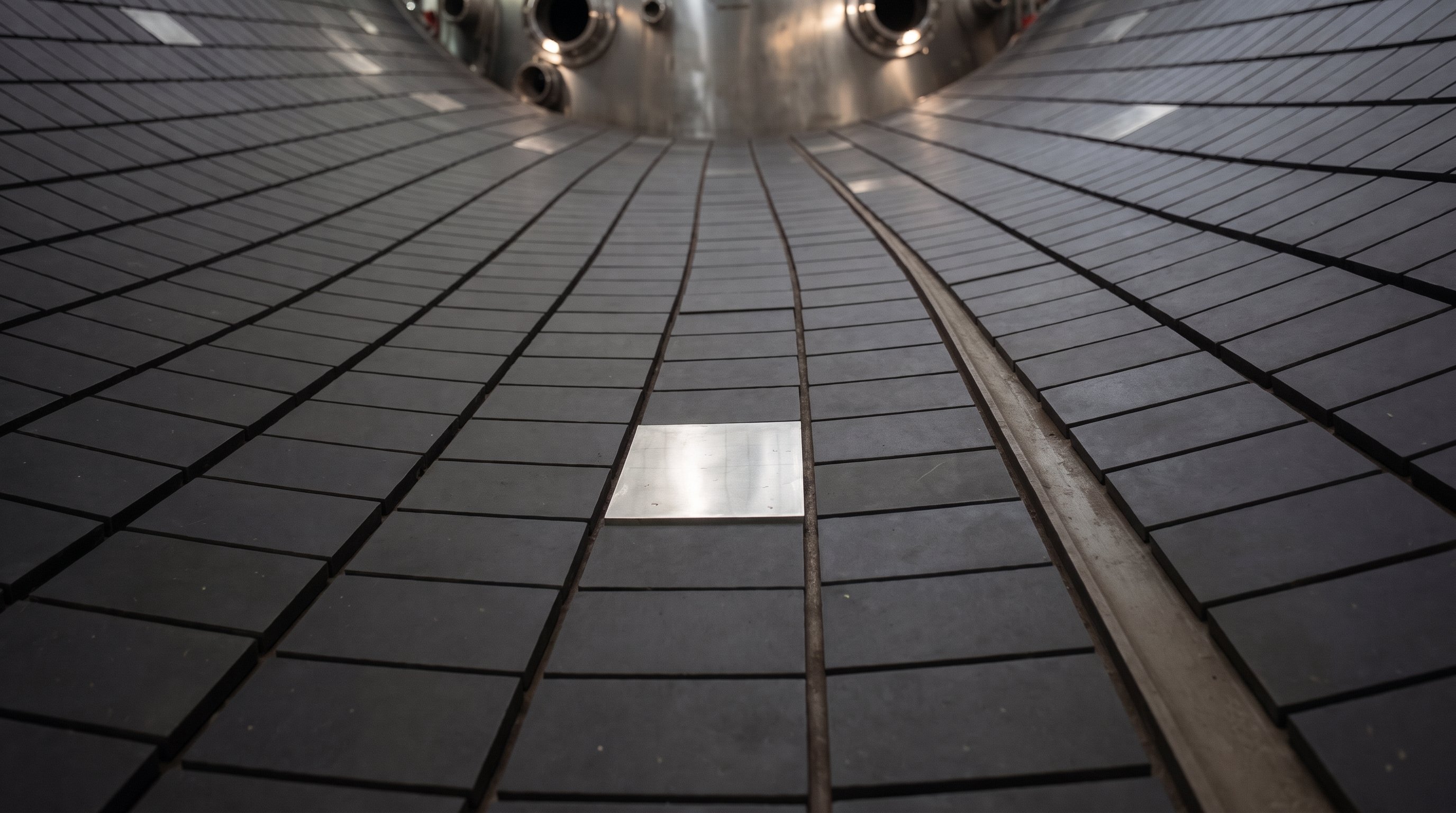
The inner wall of a fusion reactor has a hard life. This is especially true of the divertor, the exhaust of the machine, where heat and particles from the hot plasma end up. Tungsten is the favoured material for it, including for the large international test reactor ITER. At 3,422 °C it has the highest melting point of all metals.
But tungsten is hard to shape. Below roughly 200 to 600 °C it cracks instead of bending. According to the researchers, printing it with a laser almost always produced parts with small holes and cracks.
A team from North Carolina State University (NC State), Oak Ridge National Laboratory (ORNL) and the Japanese manufacturer JEOL has now printed tiles of about 140 by 130 millimetres. In July 2026 they were placed in the lower divertor of DIII-D, a fusion reactor in San Diego. For three days they were directly exposed to the plasma. This included 74 discharges at medium to high power, which are short runs of the reactor, adding up to about four minutes of plasma.
According to the team, the tiles came through the test intact. Jonathan Coburn of Sandia National Laboratories, who invited the team to do the test, says they performed very well as seen from the control room. There was also an unexpected extra test. An ordinary tile next to them sat slightly crooked, melted along its edge and splashed onto one of the printed tiles. This showed the team straight away how the printed material reacts to that.
The final verdict is still to come. The tiles are now being removed from the reactor and photographed, and their surface is being scanned. After a radiation check, they go back to NC State for extensive research.
From fingertip to tile
The team prints with an electron beam, which melts tungsten powder layer by layer. During printing, the beam keeps the surrounding metal above 1,400 °C, well above the temperature range in which tungsten cracks. This produces parts without major defects.
In 2025 the team had already tested small pieces of printed tungsten, about the size of a fingertip, in DIII-D. They received a heat load of around 20 megawatts per square metre, with short peaks above 35, and suffered little damage to the surface. Tiles in ITER and in later fusion power plants will have to withstand 10 to 20 megawatts per square metre for a long time.
The new tiles are much bigger: the largest tungsten part NC State had printed before was about 50 millimetres wide. JEOL made them on a large printer in Akishima, Japan. ORNL provided knowledge about fusion materials and paid for the production. NC State finished the tiles and ground about a quarter of a millimetre off, until the surface shone like a mirror. From the invitation in December 2025 to placing the tiles in the reactor took about eight months.
Michael Kirka of ORNL says the test moves 3D printing for fusion from "promising" to "proven". Physicist Florian Laggner of NC State points out that new materials and production methods are only approved on the basis of measurements from a real fusion environment, and that this test provides them. Chris Ledford of ORNL expects the data to help in designing tungsten parts for ITER and later reactors.
What does this mean for the road to the singularity?
A world full of AI, robots and factories needs enormous amounts of energy, and nuclear fusion is one of the sources that could eventually supply it. An important problem is the wall: it must withstand extreme heat for years and it must be possible to make it in the right shape. These tiles are an important step from small test pieces to full-size parts that have been tested in a working reactor.
The next step is the analysis at NC State. If it confirms that the tiles came through the test well, 3D printing becomes a serious way to make tungsten parts, including in shapes that are otherwise hard to make. After that, it has to be shown how the tiles perform under longer and heavier loads, as in ITER and the first fusion power plants.
What is the technological singularity? Read the explanation →
Sources
In the glossary: Nuclear fusion