Nederlands
AI helps researchers design enzymes that break down a pesticide
Researchers have used an open AI model to design enzymes that break down paraoxon. Of the 288 designs they tested, 89 worked in the laboratory. The older model produced no working designs for the same task.
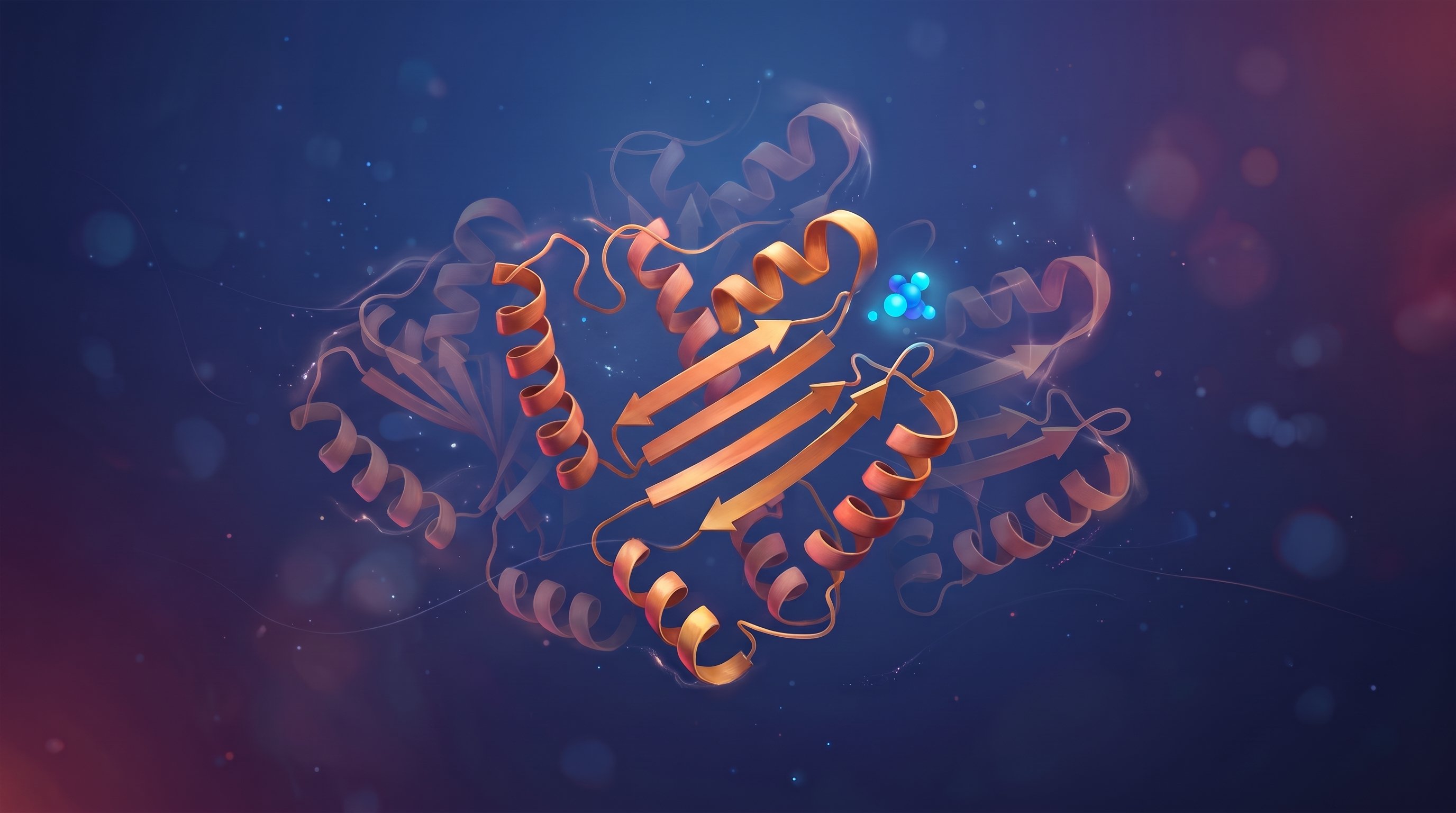
Some pesticides made by people are hard to break down. Researchers are therefore looking for enzymes: proteins that speed up chemical reactions. But designing such a protein is complicated. The parts that make the reaction possible have to end up in exactly the right place in the protein.
A team from the University of Washington and NVIDIA used RFD4-Proteina for this, an open AI model for designing proteins. With it, the researchers made designs for enzymes that break down the pesticide paraoxon. Of the 288 designs they tested in the laboratory, 89 were active. The computing work for the designs took four days.
When the experiments took place is not known. The research report appeared on the project site as a preprint: at that point it had not yet been reviewed by fellow scientists.
Two extra building blocks
With an older model, RFD3, the team had already designed working enzymes for the same reaction. Those had six amino acids, the building blocks of proteins, at the place where the reaction happens. The researchers expected that two extra amino acids could improve the reaction, but for that they had to get all eight in the right place.
For that new task, RFD3 produced no active enzymes among 192 tested designs. Six of the active designs from RFD4-Proteina were studied more closely. A measure of how well they work was 10 to 1,000 times higher than for the earlier designs with six amino acids. That does not mean that every breakdown reaction goes that much faster.
From design to experiment
A researcher tells the model what a protein has to be able to do and which parts have to stay in place. The model then works out the order of the building blocks and the shape of the protein at the same time. After that, researchers make and test the designs in the laboratory.
The team also looked at a step in the production of the HIV medicine lenacapavir. In that separate experiment, four of the 67 designed enzymes worked. The best design turned 79 per cent of the desired form of a starting substance into the intended product.
Researchers can download the code and the model. The model weights, the data that record what the model has learned, are available under an open licence as well. So far the team has tested the enzymes for paraoxon in the laboratory.
What does this mean for the road to the singularity?
AI can already help researchers work out, step by step, how to make a chemical substance. With an AI program looked at earlier, professors judged the steps it proposed, but nobody had tried them in the lab yet. With RFD4-Proteina, designed enzymes were actually made and tested. That test matters: a design on screen does not have to work in reality.
If open models produce usable designs more often, more research groups can start working with them. They can use the results from the lab to aim a next round of designs better. That can give researchers room to explore more possible enzymes for a wide range of problems.
Wide availability also makes checks on misuse important. Screening designs when they are turned into DNA can help with that. If such checks grow along with the models, open models can at the same time give more researchers access to powerful tools for new proteins.
What is the technological singularity? Read the explanation →