Nederlands
China connects compressed-air storage in excavated rock caverns to the grid
Since 16 November, a storage plant in northwest China has been supplying electricity by compressing air into four excavated rock caverns, 110 metres underground. According to the builder, it is the first of its kind; until now, such plants mostly used cavities in salt layers.
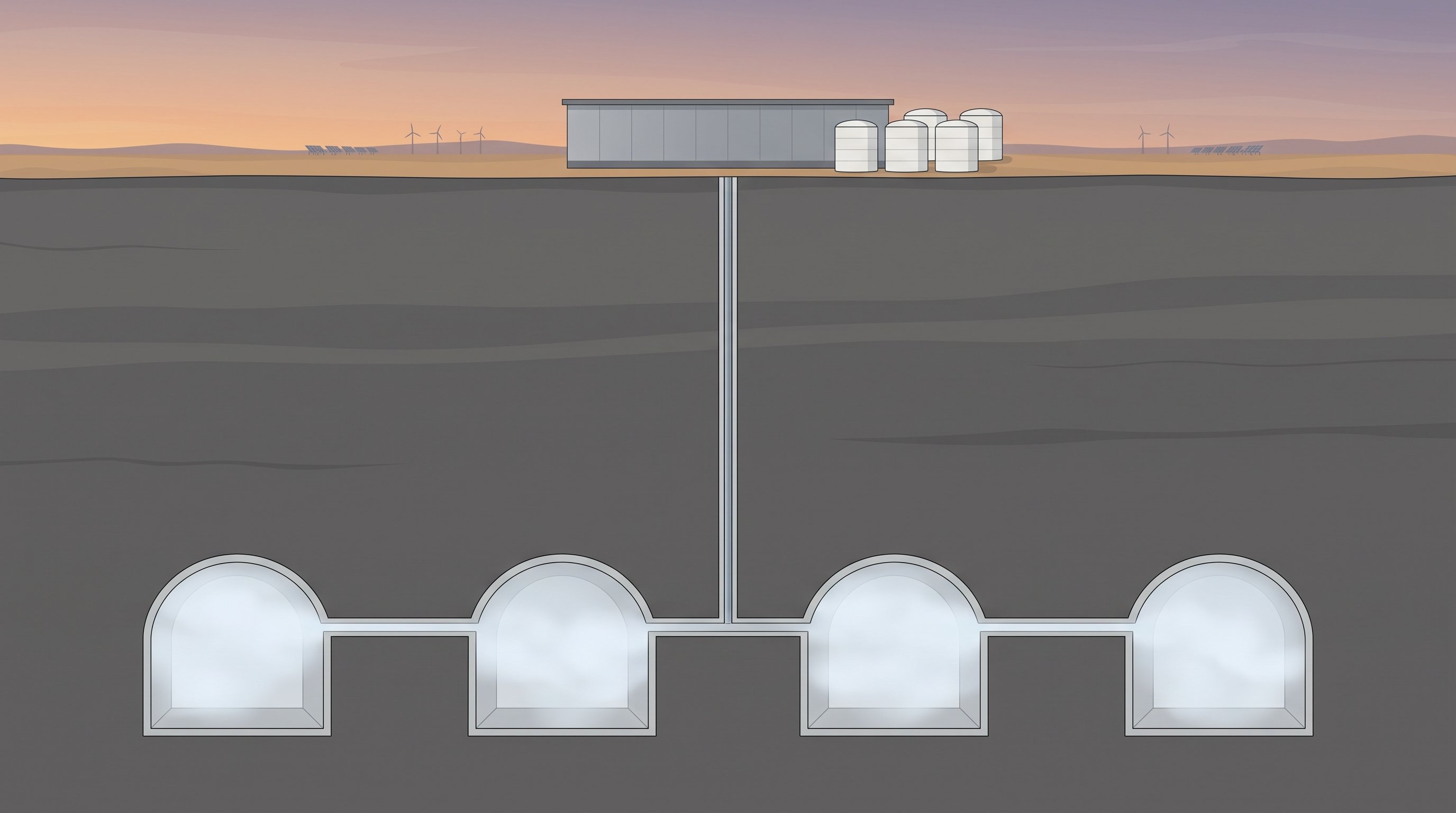
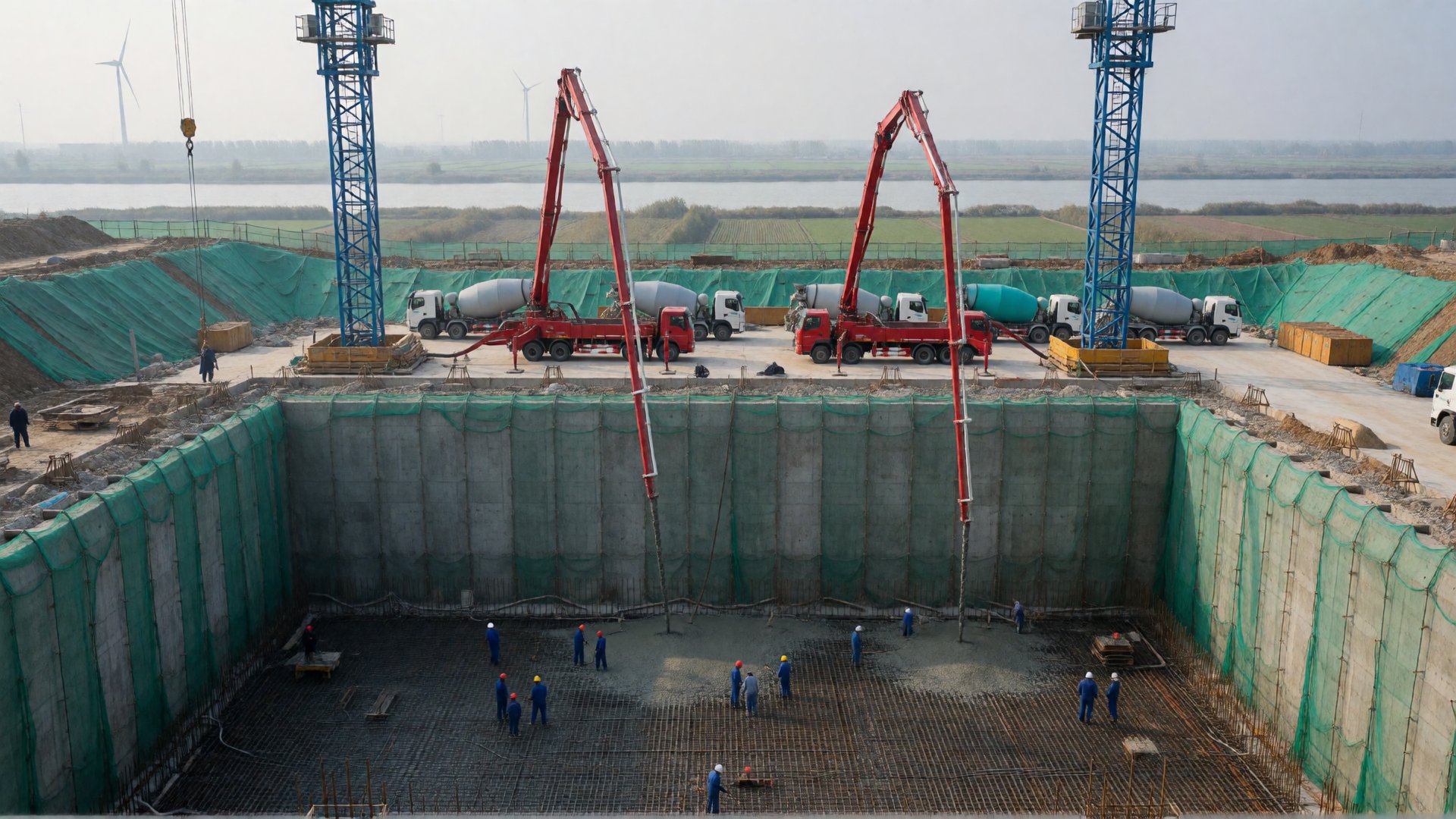
, a power storage plant was connected to the grid in northwest China. It compresses air into four specially excavated caverns in the rock. The plant is called Yuanchu No. 1 and is located near the city of Yumen, in Gansu province. Its builder, China Energy Engineering Corporation, calls it the world's first compressed-air energy storage plant with man-made rock caverns that supplies power to the grid.
This is new because large compressed-air plants have so far mostly stored their air in cavities in underground salt layers. Such salt caverns are relatively cheap to make, but only in places where the right salt layers lie underground. Caverns in hard rock can be excavated in many more places.
How the plant works
The plant can deliver 300 megawatts at a time, for six hours in a row.
That means it can hold 1,800 megawatt hours of energy: megawatts say how much power can come out at once, megawatt hours how much energy is stored in total. Charging it fully takes eight hours. Each year, the plant is expected to supply about 600 gigawatt hours of electricity.
When there is more solar and wind power than needed, that power drives compressors: machines that compress air. The air goes into the four connected caverns, which lie about 110 metres deep in the rock and together hold about 200,000 cubic metres, a little more than 80 Olympic swimming pools. The air there can be kept at a pressure of up to 18 megapascals, almost 180 times normal air pressure.
Air heats up when it is compressed. That heat is not lost: the plant stores it in tanks of pressurised hot water and molten salt. When power is needed later, the air flows back up, is warmed with the stored heat and drives turbines as it expands. The plant does not need to burn natural gas for this.
According to the builder, for every 100 kilowatt hours that go in, 72 kilowatt hours come back out. That figure still has to prove itself over years of normal use.
Why here
Yumen lies in the Hexi Corridor, a long strip of land in Gansu with many wind and solar farms. The plant is meant to store power there when there is a surplus and return it when demand is high. The project cost about 2.5 billion yuan (368 million dollars, about 330 million euros).
China already has larger compressed-air plants, such as a 600-megawatt plant in a salt cavern near Huai'an. Whether the rock caverns stay sealed and stable in the long run, and what the plant costs to run, will decide whether the approach is affordable elsewhere too.
What does this mean for the road to the singularity?
Large-scale power storage is often tied to the ground beneath it: compressed-air plants to salt layers, pumped-storage plants to mountains with lakes. If excavated rock caverns prove affordable, storage can move closer to where the sun and wind already are, such as the dry regions of western China. A solar farm with such storage next to it can then also supply part of its power in the evening and at night.
That ties in directly with AI. A large data centre needs power day and night, and therefore looks for places where that power is cheap and reliable. If a sunny, empty region can store enough of its own power to get through the night, that region becomes a place to build computing centres. For countries and companies that want to compete on computing power, cheap storage then becomes as important as cheap solar panels.
What is the technological singularity? Read the explanation →