Nederlands
Google buys 50 megawatts of geothermal power from Quaise in Oregon
Google has signed a power deal with Quaise Energy for a planned geothermal plant at Newberry Volcano in Oregon. From 2030 at the earliest, the plant is meant to supply power day and night, from rock that is hotter than in ordinary geothermal energy.
Google already buys geothermal power from Fervo Energy, for a possible data centre in Utah. Now the company has signed a second geothermal deal, using a different technology. Google is buying 50 megawatts of power with no CO2 emissions from Quaise Energy, for its three data centres in The Dalles and the surrounding power grid in Oregon. The power could start flowing in 2030 at the earliest. The price has not been made public.
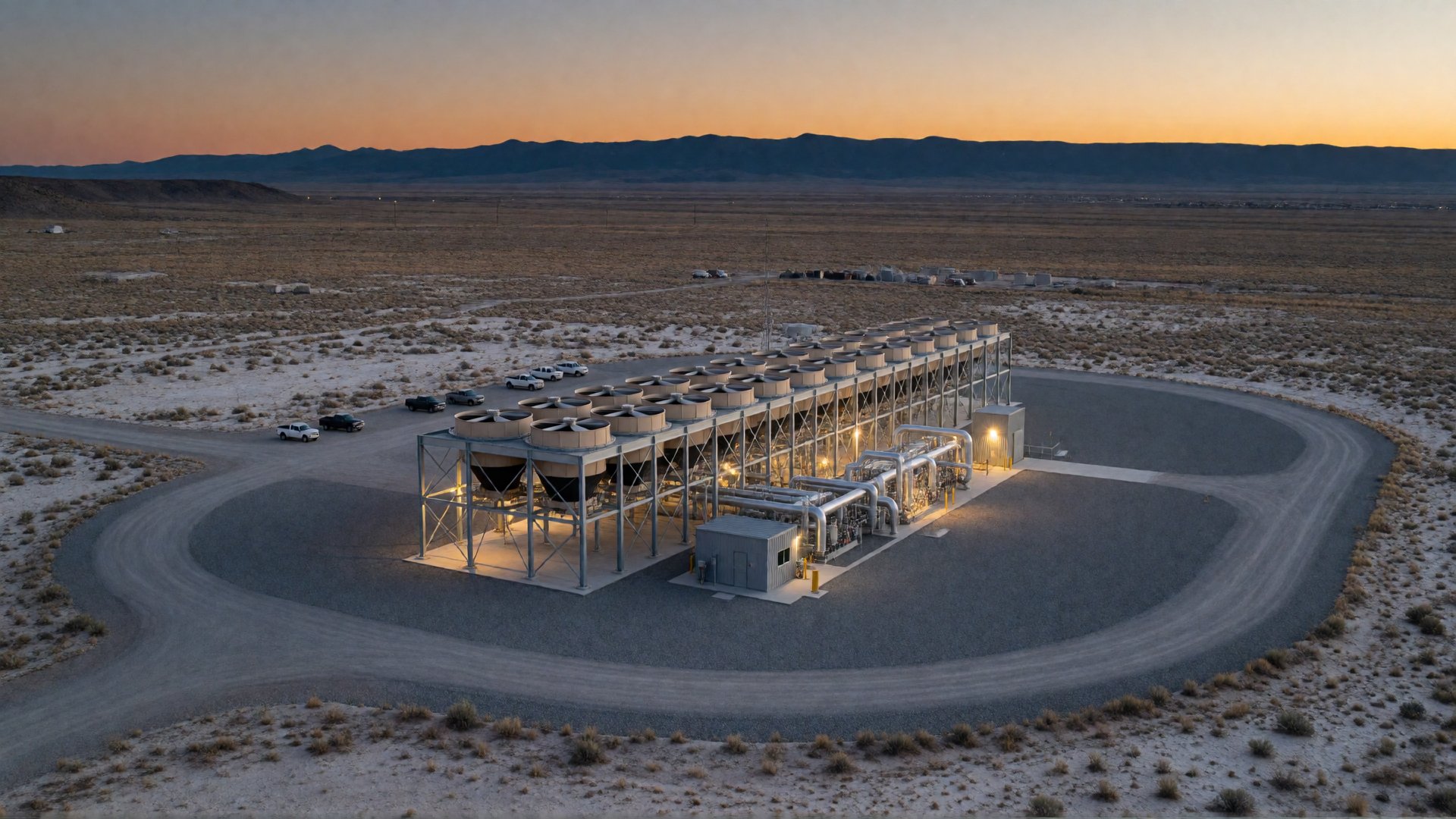
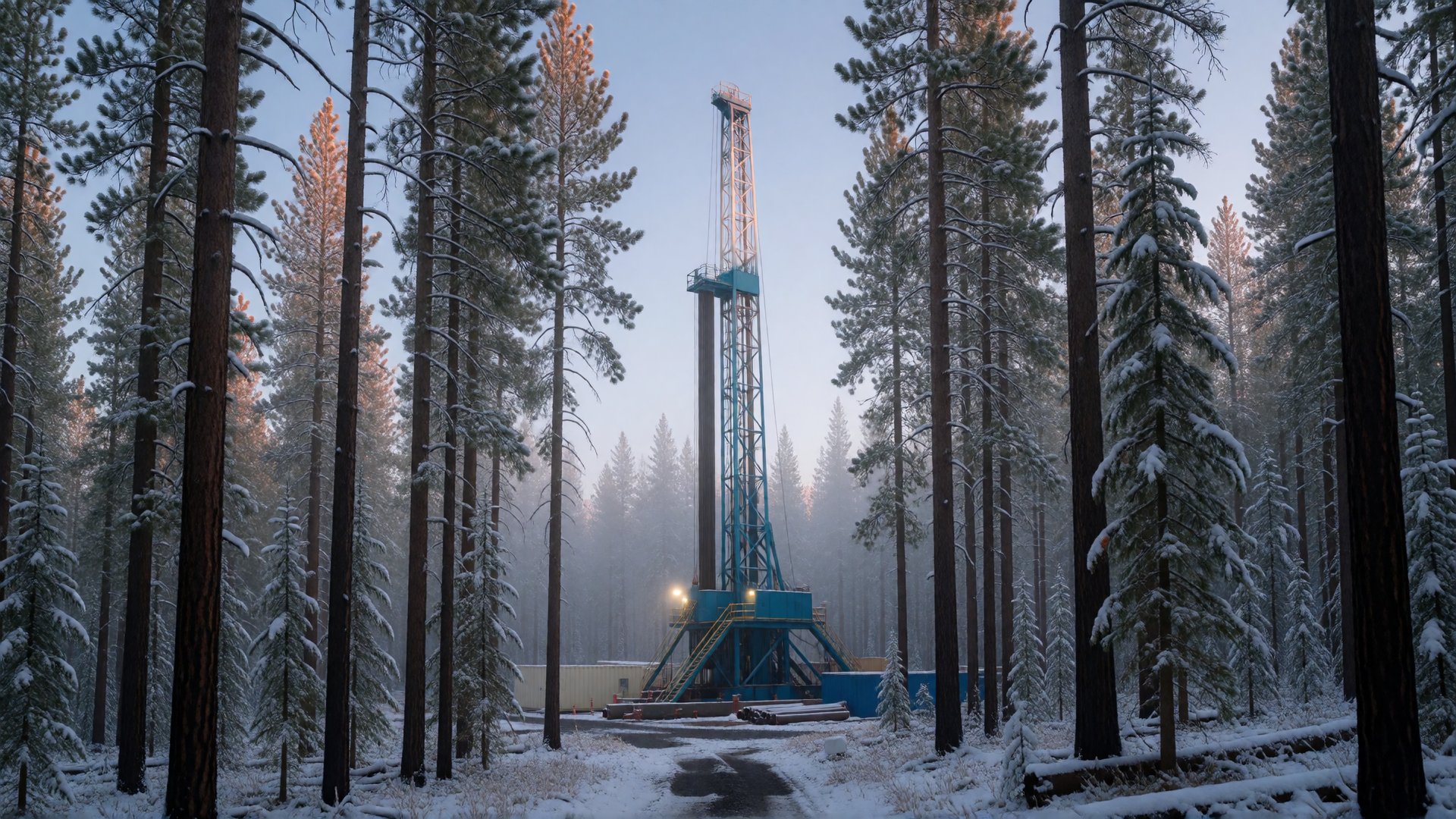
The power is to come from Project Obsidian, a plant that Quaise wants to build on the southern side of Newberry Volcano, a volcano in central Oregon. According to the companies involved, it is the world's first commercial deal for power from extremely hot rock.
Hotter than ordinary geothermal energy
Ordinary geothermal power plants use hot water that is naturally present underground. Quaise wants to go deeper, to rock at several hundred degrees Celsius. Above about 374 degrees and under high pressure, water becomes supercritical: it is then neither a liquid nor steam, and it carries far more heat up to the surface. According to Quaise, one well can therefore deliver up to ten times as much power as a well at an ordinary geothermal plant.
In the first phase, Quaise will drill with ordinary drilling rigs. At Newberry, the volcanic heat lies relatively close to the surface. In a second phase, the company wants to be the first in the world to use its own drilling technology with millimetre waves, a kind of radiation related to the waves in a microwave oven. The technology comes from more than ten years of research at the Massachusetts Institute of Technology (MIT) in the United States.
A gyrotron, a powerful transmitter originally developed for research into nuclear fusion, sends the radiation down the hole. It heats the rock until it melts and turns into vapour. A stream of gas carries the vapour away. So no drill bit touches the rock, which matters, because drill bits wear out quickly at great depth. In this way Quaise hopes to go deeper than ordinary drilling rigs can.
Quaise's chief executive, Carlos Araque, expects Project Obsidian to deliver about one gigawatt within ten years, twenty times as much as this deal. Lucia Tian, who leads new energy technology at Google, says the technology is still more expensive for now, and hopes the costs will fall as more of it is built.
Before the power can reach the grid, Quaise still has to build a power line of about 16 kilometres to a substation, a distribution point in the power grid, in La Pine. From there the power travels over the grid to The Dalles. The north-west of the United States has too few power lines, and hardly any new ones are being built.
What does this mean for the road to the singularity?
A data centre needs power day and night, even when there is no wind and no sun. Google is now buying that power from two young geothermal companies, each with its own technology. For such a company, a fixed buyer is the difference between a trial and a real power plant: with a contract in hand, it is easier to borrow money and start drilling. For Google, it is a way of not betting everything on one option, so that it does not depend on a single technology that may disappoint.
If drilling with millimetre waves works and becomes cheaper, geothermal energy no longer has to wait for places where the heat happens to lie close to the surface. In principle, plants that always deliver power could then be built in many more places, including in countries without volcanoes. That could greatly ease the main bottleneck for the growth of AI, which is having enough power at every hour of the day, and at the same time give households and factories extra clean power. For that to happen, the power lines have to grow too, otherwise the new power stays at the source.
What is the technological singularity? Read the explanation →