Nederlands
A little titanium makes a thin layer that turns heat into electricity 250 times better
Japanese researchers have made a wafer-thin layer that turns heat into electricity about 250 times better, by adding a little titanium. It can be applied at room temperature. A first test generator works; a better second layer and tests on flexible material come next.
Heat is lost everywhere: in the processor of a laptop, in a factory, in a car engine. Thermoelectric materials can turn part of that heat straight into electricity, with no moving parts. Researchers at Tohoku University in Japan have now made such a material much better, and it can be applied at room temperature.
The team of assistant professor Yi Shuang, student Junya Kurahashi and professor Yuji Sutou added a small amount of titanium to thin layers of chromium nitride, a hard compound of chromium and nitrogen. As a result, the layer became about 250 times better at turning heat into electricity than the same layer without titanium. They describe the work in the journal Journal of Materials Chemistry A.
How does heat make electricity?
If you heat one side of a thermoelectric material and keep the other side cool, electrons move from the warm side to the cold side. This creates an electrical voltage between the two ends, just like in a battery. Connect a wire to it, and a current flows.
A good material has to do two things at once. It must build up a strong voltage for every degree of temperature difference, and it must conduct electricity well. These two usually get in each other's way. A material with many free-moving electrons conducts well, but builds up little voltage. With few free electrons, it is the other way round.
The problem: missing nitrogen
Chromium nitride is attractive because it can be applied as a thin layer at room temperature. That means it can also go onto materials that cannot stand heat, such as flexible plastic or small electronic parts. But at that low temperature, not all nitrogen atoms end up in their place. Every empty spot adds extra loose electrons. The layer therefore has too many of them, and so it builds up little voltage.
Normally this is solved by growing the layer at a high temperature on a special crystal plate. That leaves fewer empty spots, but the advantage of room temperature is lost.
Titanium holds on to the nitrogen
Titanium binds nitrogen more strongly than chromium does. So the researchers applied chromium, titanium and nitrogen at the same time, with between 4.6 and 9.3 per cent titanium atoms. The more titanium, the more nitrogen stayed in the layer and the fewer empty spots there were.
The result: there were fewer surplus electrons, so the voltage per degree went up. At the same time, the remaining electrons could move about 100 times more easily through the material. So conduction did not get worse, but better. The two properties that normally get in each other's way improved together.
The researchers express the result as the power factor: a measure of how much electrical power a material can get from a temperature difference. It became about 250 times higher than for chromium nitride without titanium. According to the team, this is as good as or better than for layers that are made at high temperature.
A first working generator
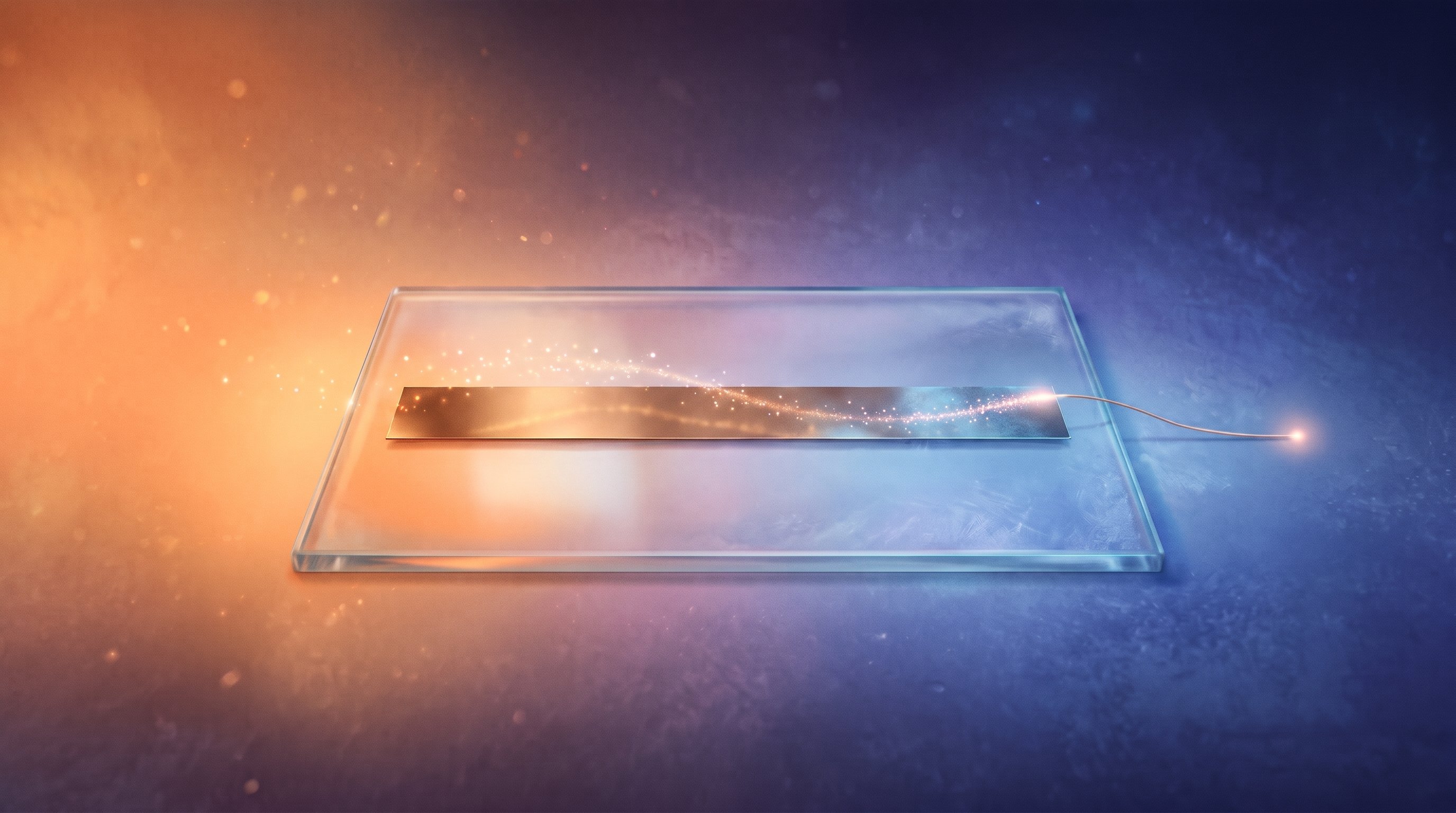
To show that it also works in a device, the team built a small test generator: a thin strip of the new material on a small glass plate. With one side 96 degrees warmer than the other, it delivered a maximum of 455.8 nanowatts, almost half a millionth of a watt.
That is not much, but the strip is wafer-thin. Calculated per cross-section of the layer, the researchers say it matches existing thin thermoelectric layers made at high temperature. At larger temperature differences it would even do better. The university calls it the first time that a thin layer of a nitrogen compound works as a thermoelectric power generator.
A second test model combined the new layer with a different kind of chromium nitride layer, which builds up its voltage in the opposite direction. This way the voltages of both strips add up. At a temperature difference of 97 degrees, this gave 180 millivolts. This model did deliver less power, because that second layer still works less well than the new layer with titanium.
Improving that second layer is therefore the next step. The team also wants to make and test the layers on flexible material, on the way to flexible thermoelectric devices.
What does this mean for the road to the singularity?
Much of the energy we use is lost in the end as heat. Materials that turn some of it back into electricity without moving parts are therefore a promising step towards a more efficient future. This research removes a known obstacle: a good thermoelectric layer of this material no longer has to be made at high temperature.
Because the layer can be applied at room temperature, it could in principle go onto plastic and into small electronic parts. In time, such layers could for example power small sensors with heat that is now lost. First the second layer has to get better and the tests on flexible material have to succeed. The team is now working on both.
What is the technological singularity? Read the explanation →