Nederlands
Gene from a lichen fungus helps wheat, rice and maize yield more in drought
Researchers moved a gene from a fungus that survives extreme drought into wheat, rice and maize. In trials in China the plants produced more grain, and up to a third more during drought.
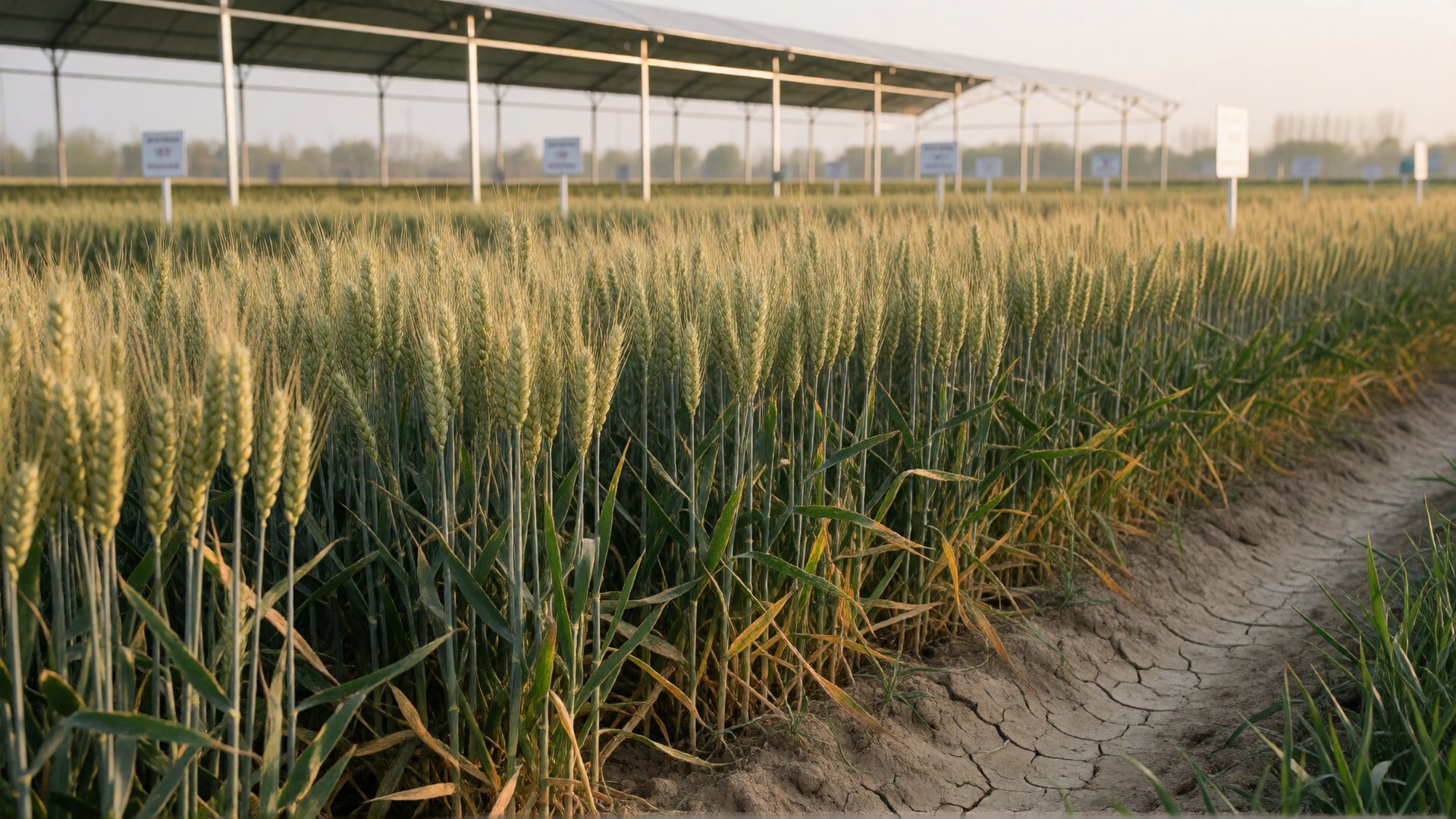
Drought is one of the biggest threats to harvests worldwide. In a year with moderate drought, a field produces on average 30 to 40 per cent less. Climate change is making droughts longer and more severe.
Plant breeders have long tried to create crops that cope better with drought. They do succeed, but such plants usually yield less when there is enough water. A plant that can handle drought and still yields a lot is therefore one of the big goals of crop breeding.
A fungus that needs almost nothing
Researchers who carried out their trials in Yangling, in China, looked in an unexpected place: a lichen. A lichen is a partnership between a fungus and an alga that can live on bare rock and in deserts. The fungus from one such lichen, Endocarpon pusillum, survives extreme drying out.
The researchers searched for the genes of this fungus that switch on when it dries out. One gene stood out. It holds the recipe for a protein that decides which other genes in a cell switch on or off, a kind of switch for the cell. The researchers call it EpTFIIAγ.
Plants have their own version of this gene too. But when the researchers made that plant version work harder, the plants did not become more resistant to drought. The fungal version did.
Three years in the trial field
The researchers put the fungal gene into five wheat varieties that are widely grown in China. For three years the plants grew in trial fields in Yangling, next to the same varieties without the gene. Some of the fields got plenty of water. Others stood under a rain shelter and deliberately got too little.
With plenty of water, the fields with the fungal gene produced 8 to 14 per cent more grain. With too little water, that was 19 to 33 per cent more. Rice and maize with the same gene produced 20 to 42 per cent more per plant, in the greenhouse and in the field.
The wheat with the gene got bigger and heavier grains, made better use of the water that was available and stayed green for longer. According to the researchers, the wheat in their tests also coped better with heat, with being flattened by wind and with yellow rust, a fungal disease of cereals.
It matters that the trials were done in the field. Many genes that help against drought in the greenhouse no longer do so in a real field. In 2025 the researchers also tested the wheat in three dry regions elsewhere in China. There too, the wheat produced 11 to 26 per cent more grain per plant.
These are genetically modified crops in trials. Before farmers can grow them, they have to be approved. Whether that happens in Europe depends on the rules for genetically modified crops.
What does this mean for the road to the singularity?
Until now, breeders mainly looked in the plants themselves, and in their wild relatives, for traits that help against drought. This research shows that organisms that never had anything to do with farming can be a rich source. Lichens and fungi live in the driest and hottest places on Earth. Over a very long time they have found their own solutions for that.
If this search is done on a larger scale, it could shift from a few separate finds to a systematic hunt. An obvious next step is for computer models to search the genetic material of thousands of organisms for such candidates before anyone sows a trial field. If that works, harvests could depend less on the weather. That means less hunger in dry years, precisely in the regions where climate change hits hardest.
What is the technological singularity? Read the explanation →