Nederlands
With an electric comb, the hair of mice grew back almost completely in a month
Chinese researchers built a comb that stimulates hair follicles with small pulses of electricity while bringing experimental genetic treatments deep into the skin. In mice, a shaved patch was almost fully covered again after four weeks. Trials in people still have to follow.

More than a billion people worldwide have hereditary baldness: over the years the hair becomes thinner and disappears, in men often at the temples and the crown. There are treatments, but each has a drawback. A pill works throughout the body, including in places where that is not needed, and can therefore cause side effects. A lotion on the scalp has to pass through the outer layer of the skin, which stops most substances. As a result, only a small part reaches the hair follicles, the small cavities in the skin from which a hair grows.
Researchers at Beihang University in Beijing therefore made a comb that brings the treatment into the skin itself, while the hair is being combed. They call it Detangle and described it in November 2026 in the journal Nature Communications.
Teeth of two lengths
The comb has long and short teeth in turns. Inside the teeth are small metal contact points that give short pulses of electricity. Because the teeth are not of equal length, the contact points sit at different heights. The current therefore does not only run over the surface of the skin, but also deeper into it. According to the researchers, it reaches about nine times deeper this way, down to the hair follicles, than when the skin is simply treated from the outside.
The pulses do two things. They stimulate the hair follicles, so these start making hair again. And they briefly make the outer wall of the cells permeable. The short teeth hold a small supply of the treatments, which can then enter the cells. That technique is called electroporation: short pulses of electricity briefly make small openings in the wall of a cell, which close again afterwards.
The researchers filled the comb with two experimental treatments. The first is a small ring of DNA carrying the gene for a growth factor that makes new blood vessels grow. The cell reads that gene and makes the growth factor itself. In this way the hair follicle gets more blood, and with it more oxygen and nutrients.
The second treatment is a short piece of RNA that slows the cell down in making the hormone DHT. The body makes DHT from the male hormone testosterone. In people with hereditary baldness, DHT makes the hair follicles shrink slowly, so that they produce ever thinner and shorter hairs. Less DHT therefore means that the hair follicles shrink less.
Almost everything back in four weeks
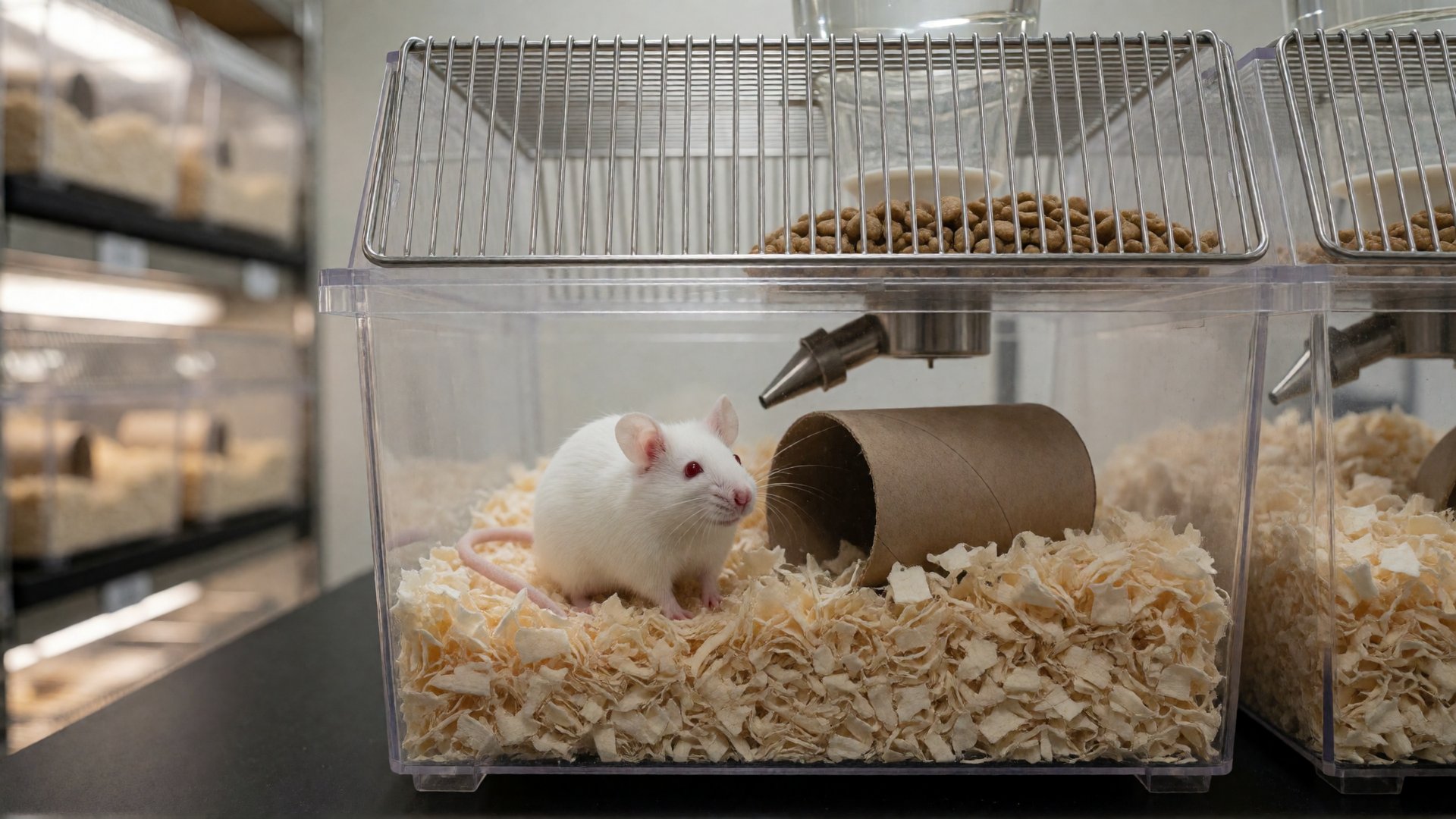
The researchers tested the comb on male mice. They shaved a patch of the back and gave the mice testosterone, so that they had a lot of DHT, as in hereditary baldness. As a result the hair barely grew back: after four weeks, about 1 per cent of the shaved patch was covered again in mice without treatment.
In mice that only got the comb's pulses of electricity, that was about 40 per cent. Two existing treatments did better: finasteride, a pill that slows the production of DHT, reached about 50 per cent, and minoxidil, a lotion that has been used against baldness for years, about 70 per cent. The comb with the RNA treatment reached about 85 per cent and the comb with the DNA treatment about 90 per cent. With both treatments at once, almost 98 per cent of the patch was covered again.
The hair follicles were more active and the blood flow better. According to the researchers, the skin of the mice was not damaged.
What comes next
These are trials in mice. The next step is research in people, and important questions still have to be answered there: does a human scalp tolerate the pulses of electricity when the comb is used again and again, how long does the new hair last, and how often does the comb have to be used? The two treatments in the comb have not been tested in people either.
What does this mean for the road to the singularity?
Medicines that work with DNA or RNA already exist. They usually reach the blood through an injection or a drip, such as the CRISPR treatment for the hereditary disease angio-oedema, and the body then carries them to the organ where they have to work. In mice, this comb shows that such a treatment can also get deep enough into the skin from the outside, exactly at the spot where it is needed, through something people do every day anyway.
If that also works in people, a treatment of the skin no longer has to choose between a pill that works throughout the body and a lotion that hardly gets in. A treatment that only works where it should gives less chance of side effects elsewhere in the body. And a treatment with DNA or RNA, which is now usually a drip or an injection in a hospital, would then become something done at home in the bathroom. An obvious next step is to try the same thing for other skin conditions.
What is the technological singularity? Read the explanation →