Nederlands
Kary Mullis gets a piece of DNA to keep doubling in a test tube
Chemist Kary Mullis of the company Cetus gets a piece of DNA to copy itself in a test tube: each round doubles the number of copies. Colleagues first want to see repeats with controls.
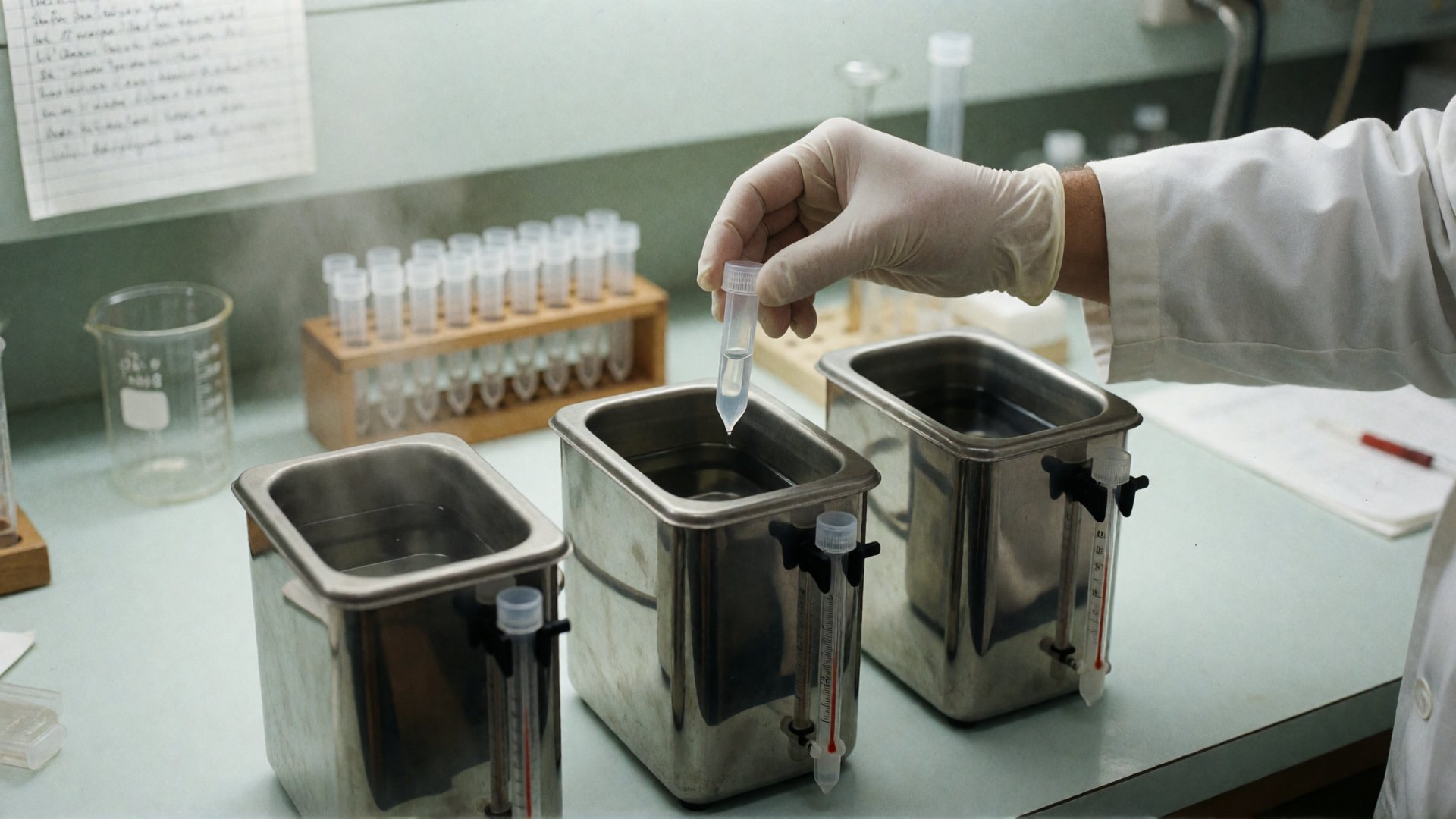
EMERYVILLE, DECEMBER 1983 - On 16 December, the chemist Kary Mullis of the company Cetus in Emeryville, California, showed that a piece of DNA in a test tube can be made to copy itself, round after round. Each round doubles the number of copies. It is the first experiment. Colleagues do not yet find the result clear-cut and want to see more controls and repeats.
The problem: one gene among huge amounts of DNA
Mullis wanted to track down small changes in human genes, for example a single wrong letter in the code. He reads such a gene with the Sanger method, in which the DNA is read letter by letter. For this he needs a primer: a short piece of DNA that fits exactly onto the start of the section to be read and serves as a starting point there. In human DNA a gene occurs only once, among huge amounts of other code. A primer then finds too many places to stick to. So the gene first has to be present in far more copies than the rest.
Two starting pieces and a copying machine
Mullis's idea is to have the section he wants copied, again and again. For this he needs four things in the same tube: the DNA, two primers, the four building blocks that DNA is made of, and DNA polymerase. That last one is the enzyme that copies a DNA strand. It starts at a primer and builds the rest of the new strand from there.
The two primers are designed to fit on either side of the wanted section, each on one of the two strands of the DNA and pointing towards each other. Together they enclose the section to be copied.
One round consists of three steps, at three temperatures:
- The tube is heated to about 94 to 98 degrees Celsius. The two strands of the DNA come apart.
- It is cooled to about 50 to 65 degrees. The primers find their place on the separate strands and attach firmly to them.
- It is warmed to about 72 degrees. The polymerase builds a new strand from each primer.
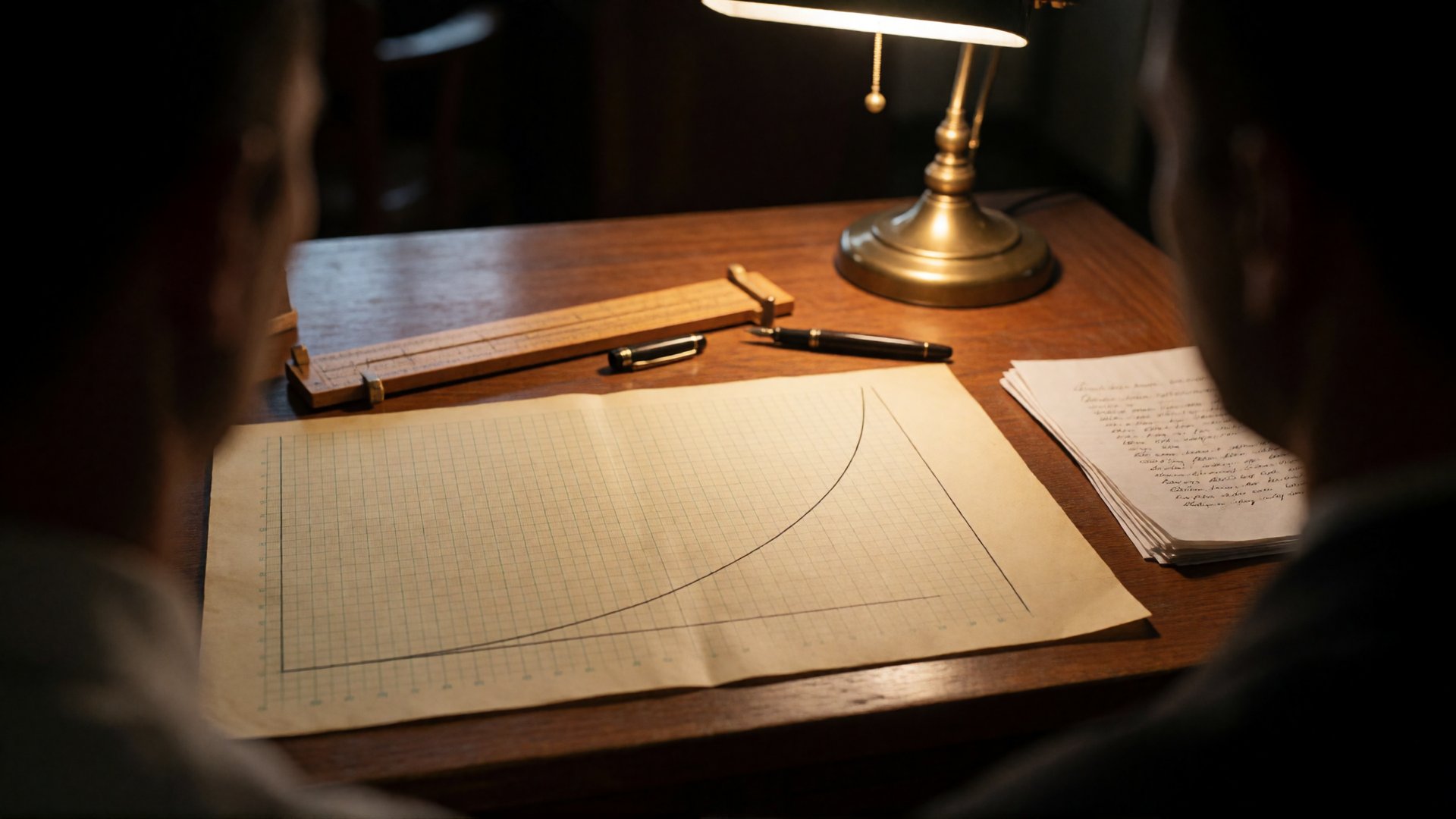
After one round, each double strand has become two double strands. In the next round the new strands also serve as templates. So it goes from 1 to 2, 4, 8, 16. After thirty rounds there can in theory be more than a billion. After the first few rounds, most of the copies consist of exactly the section between the two primers, and that is what matters.
There is still one practical drawback. The enzyme Mullis uses comes from the gut bacterium E. coli and does not survive the heat of the first step. So fresh enzyme has to be added to the tube after every round. That makes the work very hands-on, but the principle works.
Looking back from 2026
It did not stay hands-on. Cetus built a machine, 'Mr Cycle', that automatically adds new polymerase after each heating step. In 1985 Mullis suggested using the enzyme of a bacterium that lives in hot water. That enzyme, Taq polymerase, comes from the bacterium Thermus aquaticus and had already been purified in 1976 from a hot spring in Yellowstone. It works at 72 degrees and survives the 94 degrees of the first step, so the enzyme only has to go into the tube once.
On 20 December 1985 the first paper using the method appeared in Science: Randall Saiki and colleagues, including Mullis, used it to detect the inherited blood disorder sickle cell anaemia. The method was given the name PCR, polymerase chain reaction. In 1993 Mullis shared the Nobel Prize in Chemistry with Michael Smith. Many people know PCR from coronavirus tests, in which a small piece of the virus's genetic material is multiplied enough to detect it.
Copying DNA became cheap and fast, and that sped up the reading of DNA. This produced a huge amount of genetic data. AI models that predict genes and proteins learn from that data.