Nederlands
MIT builds a memory cell that works in extreme cold and remembers without power
MIT researchers have made a memory cell from a superconducting film between two magnetic layers. It stores a 0 or 1 without power and can be rewritten without disturbing its neighbours: a possible building block for superconducting computers and quantum computers.
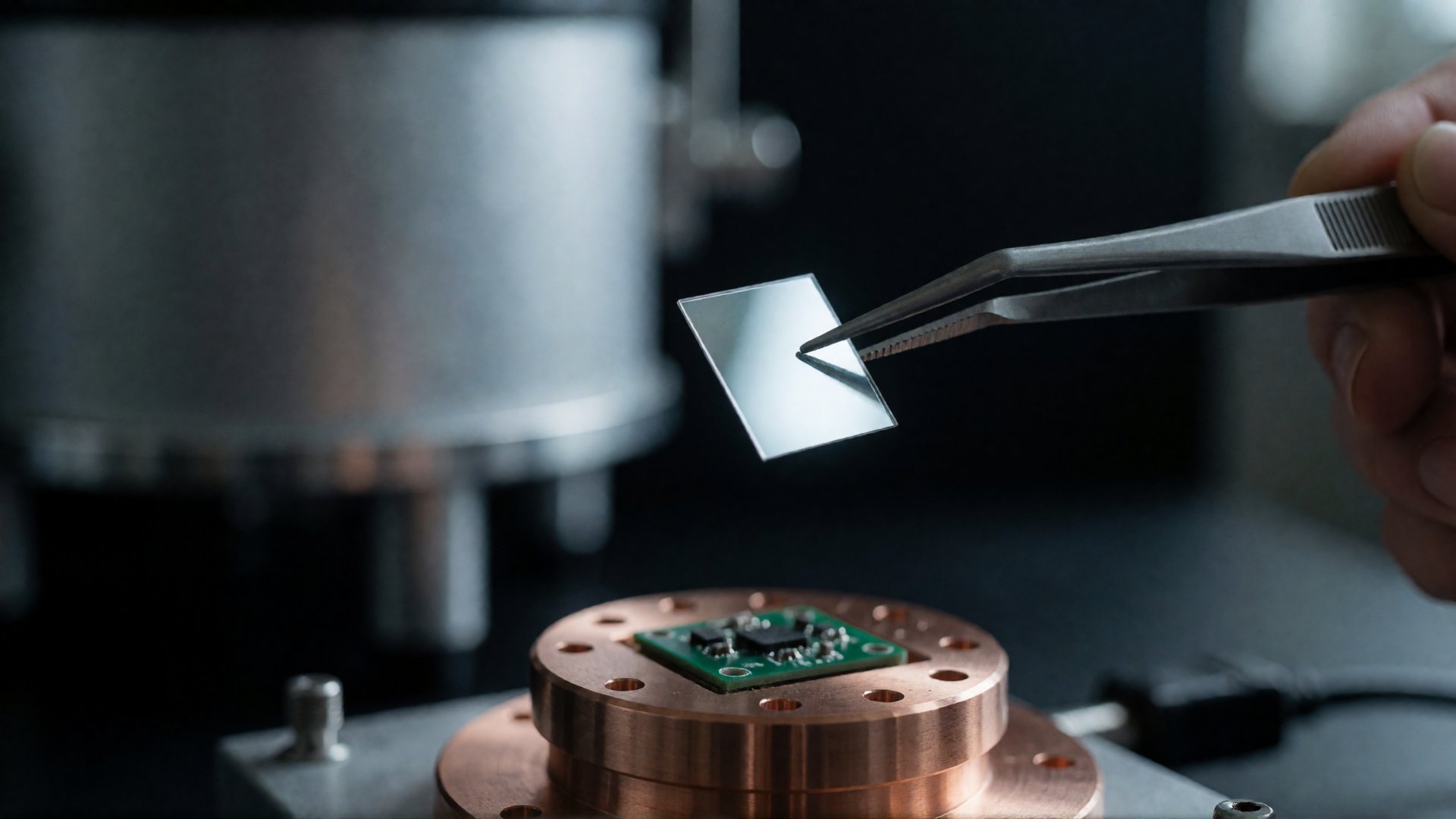
Researchers at the Massachusetts Institute of Technology (MIT) in the United States have built a tiny memory element for the extreme cold in which superconducting computers work: an ultrathin film of a superconductor between two magnetic layers. A superconductor is a material that conducts electricity without any resistance once it is cold enough. The work by Josep Ingla-Aynés, Jagadeesh Moodera and colleagues appeared in the scientific journal Physical Review Letters; MIT announced it .
Writing a bit with magnetism
The magnetic layers decide whether the film between them is superconducting. If they point in opposite directions, current flows through it without resistance. If they point the same way, the film has resistance. A computer reads these two states as a 0 and a 1, just as with ordinary memory.
To write a bit, the researchers use a small magnetic field and a short pulse of current. The pulse heats the chosen cell for a moment, so that its magnetic direction flips more easily. After that, the state stays put without any need for current or a magnetic field, just as a file stays on a USB stick when it is unplugged from the computer. The cell itself does have to stay extremely cold.
The team showed that it could switch one cell without the cell next to it losing its state. Every memory needs this: one bit must be rewritable without erasing the rest. According to the researchers, flipping the magnetic direction takes little energy. How much a whole system would save this way is something they still have to work out.
Memory and traffic controller in one
At an even lower temperature, the same component works as a diode: a one-way street for current. Within a certain range, current flows one way without resistance but not the other way. By changing the magnetic direction, the researchers can reverse this preferred direction or block current in both directions. This way, memory and signal routing could sit together on one superconducting chip.
The cells store ordinary bits, not qubits, the delicate computing units of a quantum computer. But they can help in the electronics around them. According to Moodera, there is currently a lack of suitable memory and control components that work in that cold.
Cells that sit close to the qubits would cause less heat and electrical interference, and it is exactly these that disturb the fragile state of qubits. Before that happens, the cells have to become smaller and be combined in large numbers into memories that can store a lot of information.
What does this mean for the road to the singularity?
A quantum computer with superconducting qubits sits in a cooling system that is colder than outer space, and is controlled through wires by ordinary electronics outside it. The more qubits, the more wires, and every wire leaks a little heat inside. If part of the memory and control can sit in the cold itself, less has to go through those wires, and building larger machines becomes easier.
A second thought goes further. Computers that calculate entirely with superconductors lose almost no energy as heat in their circuits. If enough of that saving remains after the energy needed for cooling, this is a route to computing power that needs much less electricity per calculation. For AI, whose power use already decides how fast data centres can grow, that would make a big difference. Such computers would then need memory that works in the cold, and that is exactly where this component fits.
What is the technological singularity? Read the explanation →