Nederlands
German quantum computer that calculates with light offers insight into what makes such machines more powerful
Researchers at Paderborn University used their quantum computer PaQS, which calculates with particles of light, to find out which properties of light make such a machine work better. This means future versions can be improved in a more targeted way.
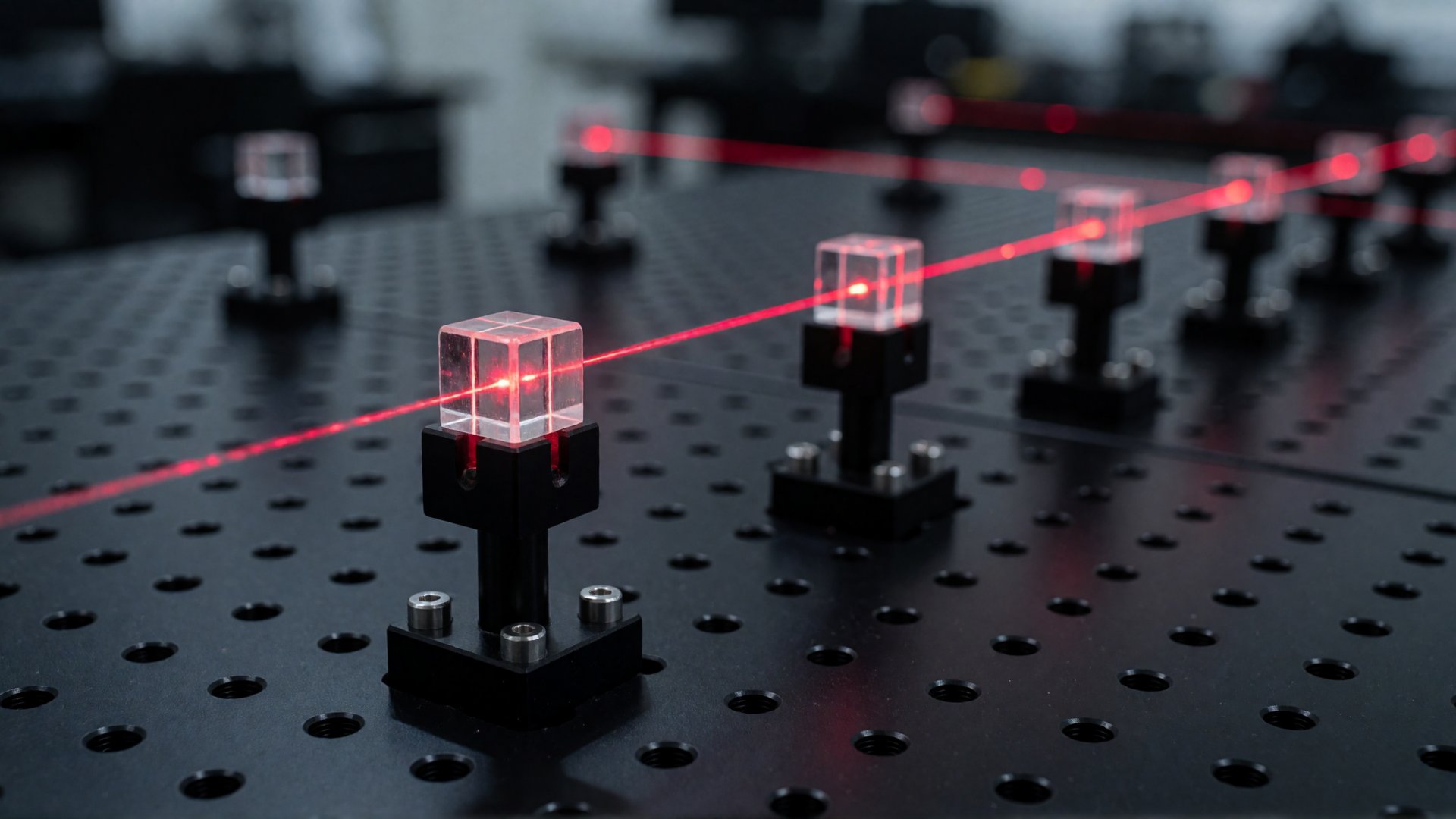
A quantum computer can do some calculations much faster than an ordinary computer, but only if its building blocks work exactly right. In a quantum computer that calculates with light, those building blocks are particles of light, also called photons. Which properties of that light make the difference? Researchers at Paderborn University in Germany investigated this with their own machine, the Paderborn Quantum Sampler, or PaQS for short. The university announced the results ; they appear in the scientific journal PRX Quantum.
PaQS has been running since October 2024. At the time, the university called it the largest quantum computer of its kind in Europe. It was built within the German research programme PhoQuant, together with the research institute Fraunhofer IOF in Jena and the companies Menlo Systems and Swabian Instruments.
A calculation with light
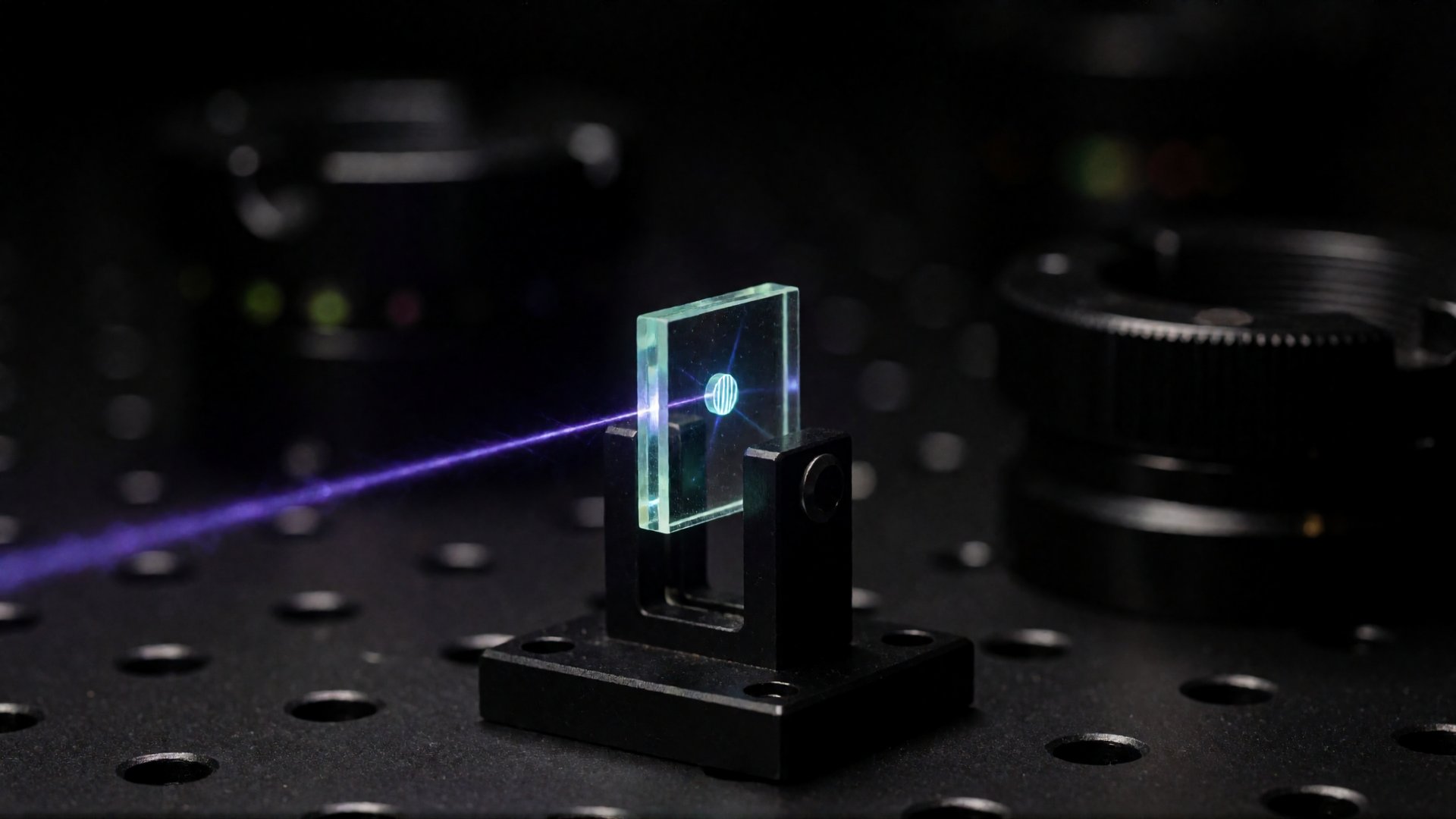
PaQS performs one kind of calculation, known in the field as Gaussian boson sampling. The device sends photons through a network of optical components that repeatedly split the light and bring it back together. At the end, it measures where the photons come out. That pattern is hard for an ordinary computer to predict, and it becomes much harder as the number of photons and paths through the network grows. For large versions of such a device, a supercomputer would need many thousands of years to recalculate the results, according to the university.
The network of PaQS is programmable: the researchers can set it up differently for each experiment. So it is not a single-task machine but a test platform, on which they can compare different ways of calculating with light side by side.
What makes the light powerful
The team looked at three properties of the light. The first is squeezed light. Light always carries a little unavoidable quantum noise, and in squeezed light that noise is reduced in one property, at the cost of more noise in another. The second property is how much the number of photons per flash of light varies.
The third is entanglement: a quantum link that makes particles behave as a single whole, even when they are apart. To measure the influence of all three, the team developed its own components, new ways of analysing the measurement data and a theory to explain the measurements. The researchers also compared different kinds of quantum light as input for the machine.
According to Michael Stefszky, who leads the Quantum Computing research group and coordinated the project, the results show that building a useful quantum computer involves much more than making a system bigger. The work was led by Professor Christine Silberhorn of PhoQS, Paderborn's institute for photonic quantum systems, together with the groups of Jan Sperling and Tim Bartley. , Bartley's group also presented a measuring system that counts up to 276 photons in a single flash of light. Such precise counters are needed for quantum computers that calculate with light.
Machines of this type also exist elsewhere. In 2022 the Canadian company Xanadu showed with its programmable machine Borealis that it could do one particular calculation of this kind faster than ordinary computers could. The Paderborn research looks into where such performance comes from. The team is now expanding PaQS for more complex calculations. In time, quantum computers that calculate with light could become useful for chemistry, energy and secure communication.
What does this mean for the road to the singularity?
It has been shown for a few years now that a quantum computer can do a narrow task faster than an ordinary computer. The difficult step is the one from such a test task to calculations that are actually useful. Builders who simply make their machines bigger do not know which part delivers the gain and which part mainly costs money. An adjustable machine on which the properties of the light can be compared one by one lets builders choose in a more targeted way: more work on the part that matters, less on what makes little difference.
For Europe there is another side to this. Many large quantum companies are based outside Europe, and those who lack the knowledge themselves will later have to buy computing time or components from them. That is why Germany, through PhoQuant, helps pay for its own machines, together with companies that make lasers and measuring electronics. In this way, what the researchers learn about which light works best also reaches those suppliers. If that continues, Europe could build its own quantum computers to model new materials for batteries or solar cells, instead of waiting for others to do so.
What is the technological singularity? Read the explanation →