Nederlands
New liquid lets iodine in a water-based battery store charge in two steps, without corrosive salts
In the lab, researchers at University College London got iodine in a water-based battery to store charge in two steps instead of one, without the corrosive salts this used to need. In theory, that doubles the storage. The work is published in Nature.
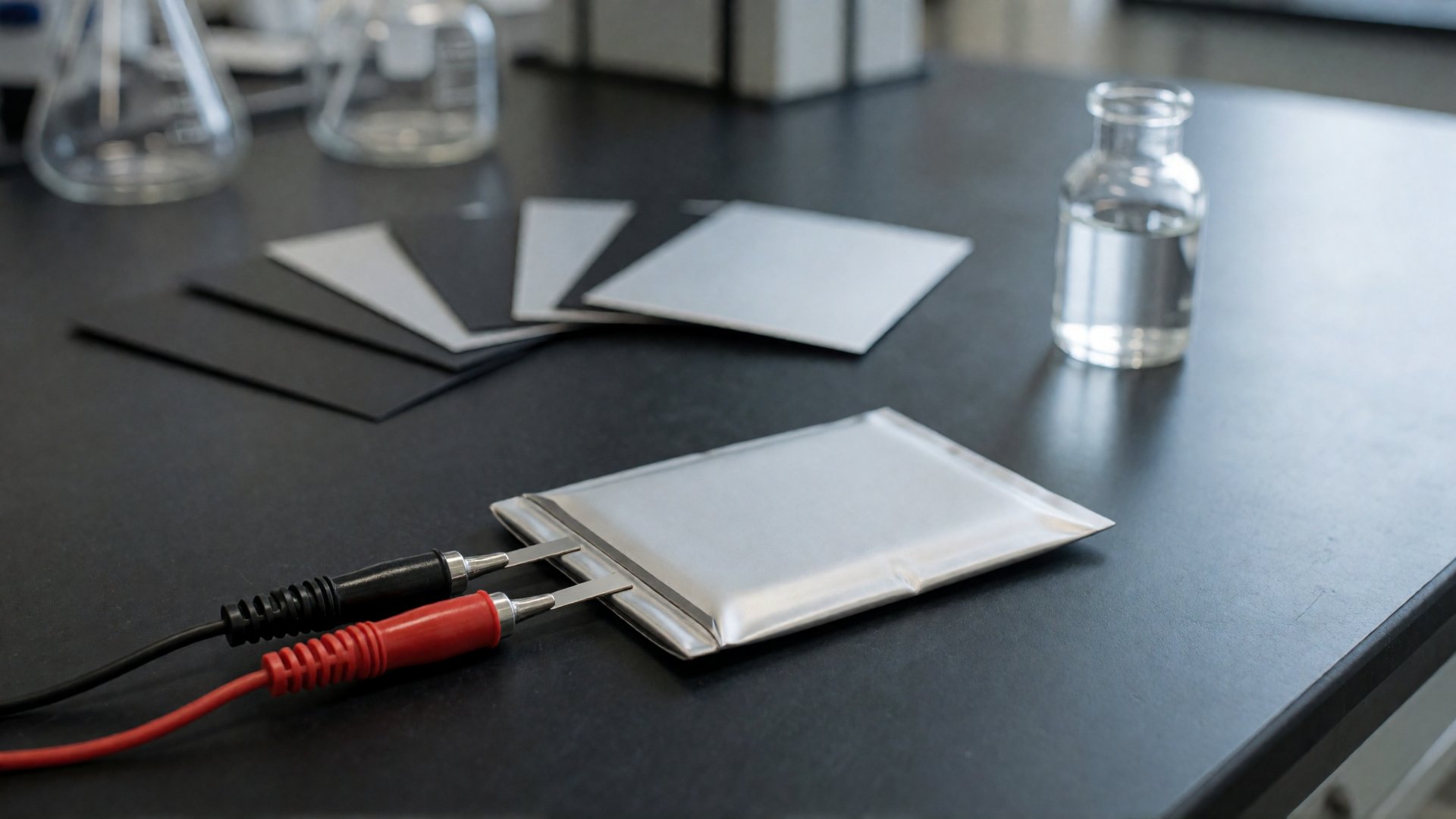
A team from University College London and the University of Oxford has developed a battery liquid that lets iodine in a water-based battery store charge in two steps instead of one, and in a way that can be reversed. The work was published in Nature . The team had already put it online in 2025 as a preprint, an article that other experts have not yet reviewed. The experiments were done in the lab.
Water-based batteries with iodine are a candidate for storing solar and wind power on a large scale, because they use common materials and water. That matters now that the growth of renewable energy calls for more storage.
Why a second step makes such a difference
In most iodine batteries, the iodine takes up charge in a single step during charging. A second step, in which the iodine takes on a charged form, in theory doubles the amount of charge per gram of iodine and happens at a higher voltage. These are properties of the chemistry, not measured values of a complete battery.
The problem is water. In water, the charged iodine quickly reacts with water molecules, and then the second step can no longer be reversed. Until now, this worked mainly in liquids with very large amounts of chloride or bromide salt (salts of chlorine and bromine), in which those particles protect the charged iodine. Such liquids are corrosive, and the high salt content limits their use.
Keeping water at a distance
The new liquid contains no chloride or bromide. The researchers combine three kinds of ingredients in it:
- substances that grab hold of the charged iodine and so protect it. They tried four of them, including urea;
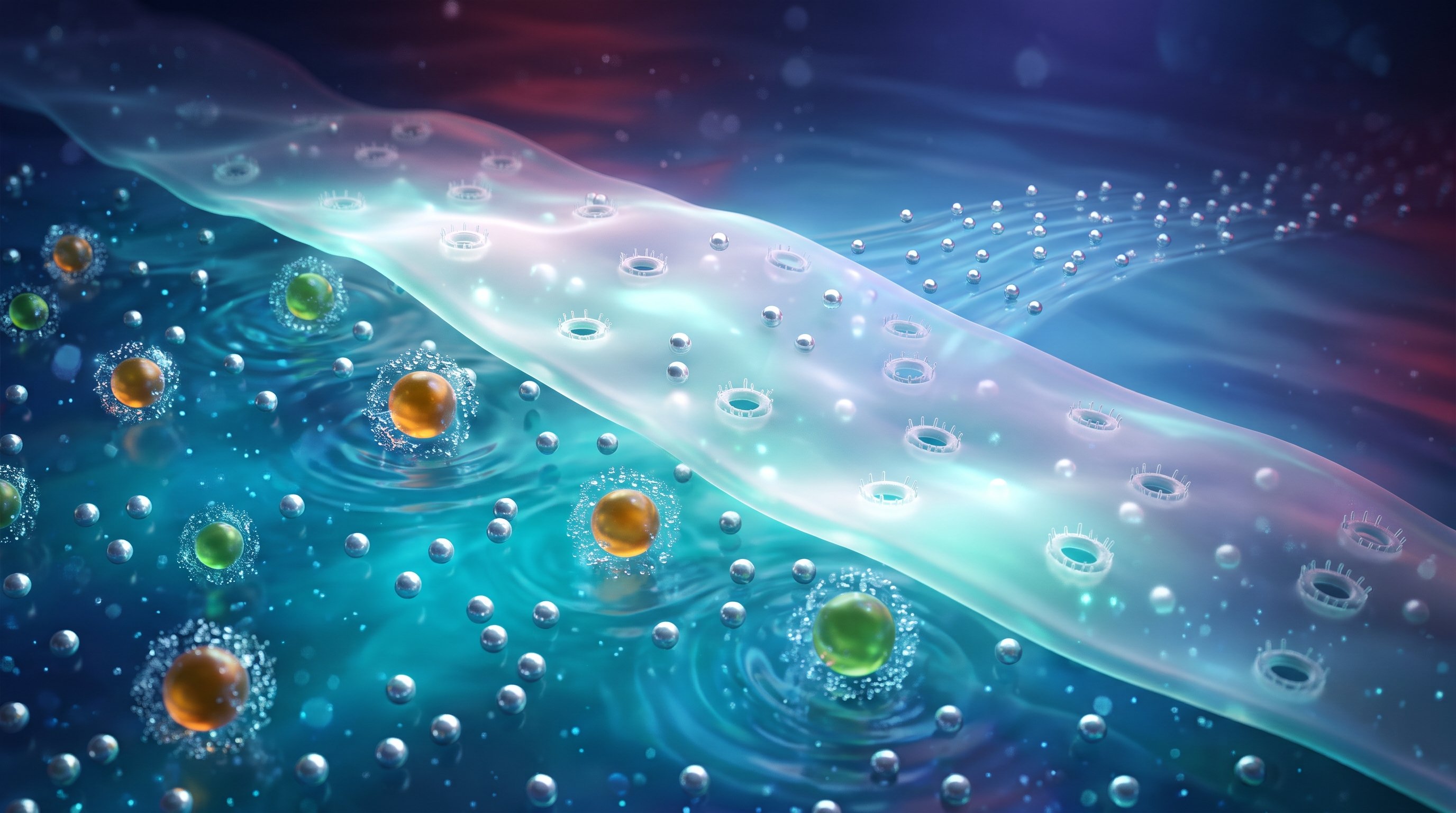
- negatively charged particles that gather at the positive side of the battery and push the water away there, so the charged iodine comes into less contact with water;
- a second kind of negatively charged particle, which makes water hold on less tightly to the protecting substances. This leaves those substances free to grab the iodine.
What the tests showed
In batteries with zinc, 96 per cent of the capacity remained after 1,000 rounds of charging and discharging at a current of 1 ampere per gram of iodine, according to the researchers, and 94 per cent after 2,000 rounds at 2 amperes per gram. It worked with all four protecting substances, and also in a battery with an aluminium-zinc alloy instead of zinc at the negative side. A cost calculation using standard assumptions shows lower costs in theory, because the corrosive liquids and expensive parts of the cell are not needed.
There is also a point to watch. With more iodine on the positive side, part of the iodine is lost for good. To keep the two steps going for a long time, follow-up research needs to bring the iodine in the whole cell under control. The cells also still have to prove themselves on a larger scale.
What does this mean for the road to the singularity?
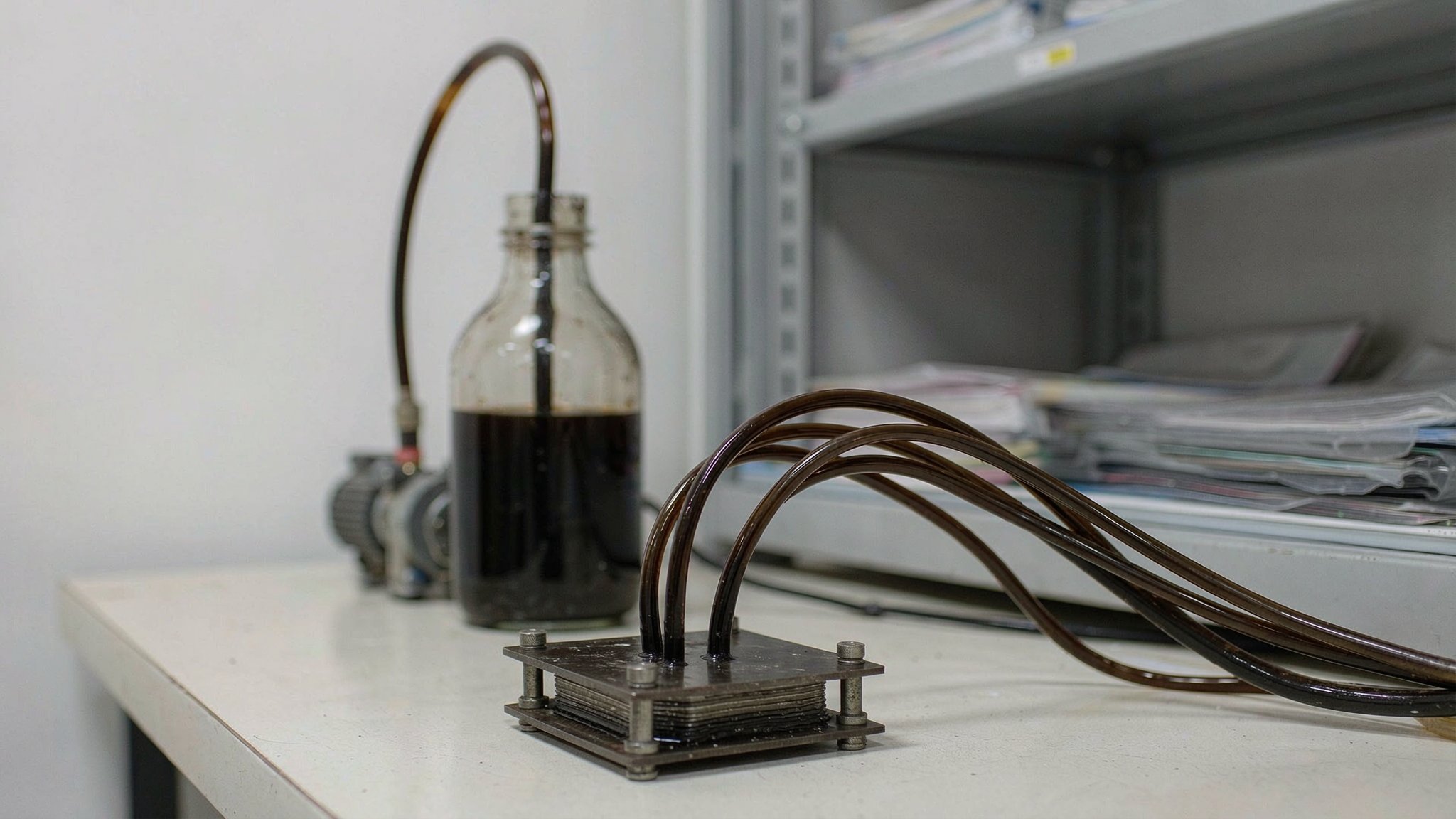
Cheap storage of electricity is one of the bottlenecks for an energy system that runs largely on sun and wind. There is more than one route: Chinese researchers showed in the lab that a battery with manganese in liquid tanks can store much more charge per litre, also with cheap raw materials. The iodine design tackles a different bottleneck: the liquid no longer attacks metal.
If this approach holds up, cells no longer need to be made from expensive, corrosion-resistant parts. That could make storage cheaper. A cheaper way to store power also forces the other routes, lithium batteries included, to lower their prices. For ordinary people, that ultimately means power from sun and wind that is also there in the evening and when there is no wind, at lower cost. Whether it gets that far depends, among other things, on how much iodine is lost in the cell.
What is the technological singularity? Read the explanation →