Nederlands
Tiny channels fish lithium out of salt water far more selectively
Researchers at the University of Texas at Austin made artificial channels that let lithium through and hold other substances back. That could make lithium mining for batteries faster and cleaner. The next step is tests with real salt water.
Lithium is in the batteries of phones, electric cars and the large battery systems that store power from the sun and wind. Getting that lithium is still difficult. A team at the University of Texas at Austin has now made tiny channels that can pick lithium out of a mixture of salts far more selectively. The research was published in October 2026 in the Journal of the American Chemical Society.
Why getting lithium is difficult
Lithium is found mainly in brine: very salty water deep underground, for example beneath the salt flats of Chile and Argentina. Brine is simply a liquid, like the brine that gritting trucks spray on roads in winter, but far more salt is dissolved in it than in seawater. Lithium is also found in rock and in old batteries. It is always mixed with other substances, such as sodium, potassium, magnesium and calcium. In water these look a lot like lithium: they are all small, electrically charged particles, called ions.
To get the lithium out, brine is now often left in large ponds in the sun for months until the water evaporates. According to the researchers, the current methods are slow, use a lot of energy and leave harmful waste. As the water evaporates, toxic substances build up: in Bolivia, researchers found almost 50 milligrams of arsenic per kilogram of brine in the last pond, more than five times as much as in the original brine.
A filter that works like a cell
Living cells solved this problem long ago. Their walls contain channels that decide exactly which ions may enter. The potassium channel in nerve cells, for example, lets potassium through about a thousand times more easily than sodium, even though sodium is smaller. Professor Manish Kumar's team made artificial versions of such channels. They are so small that they can only be seen at the level of single molecules.
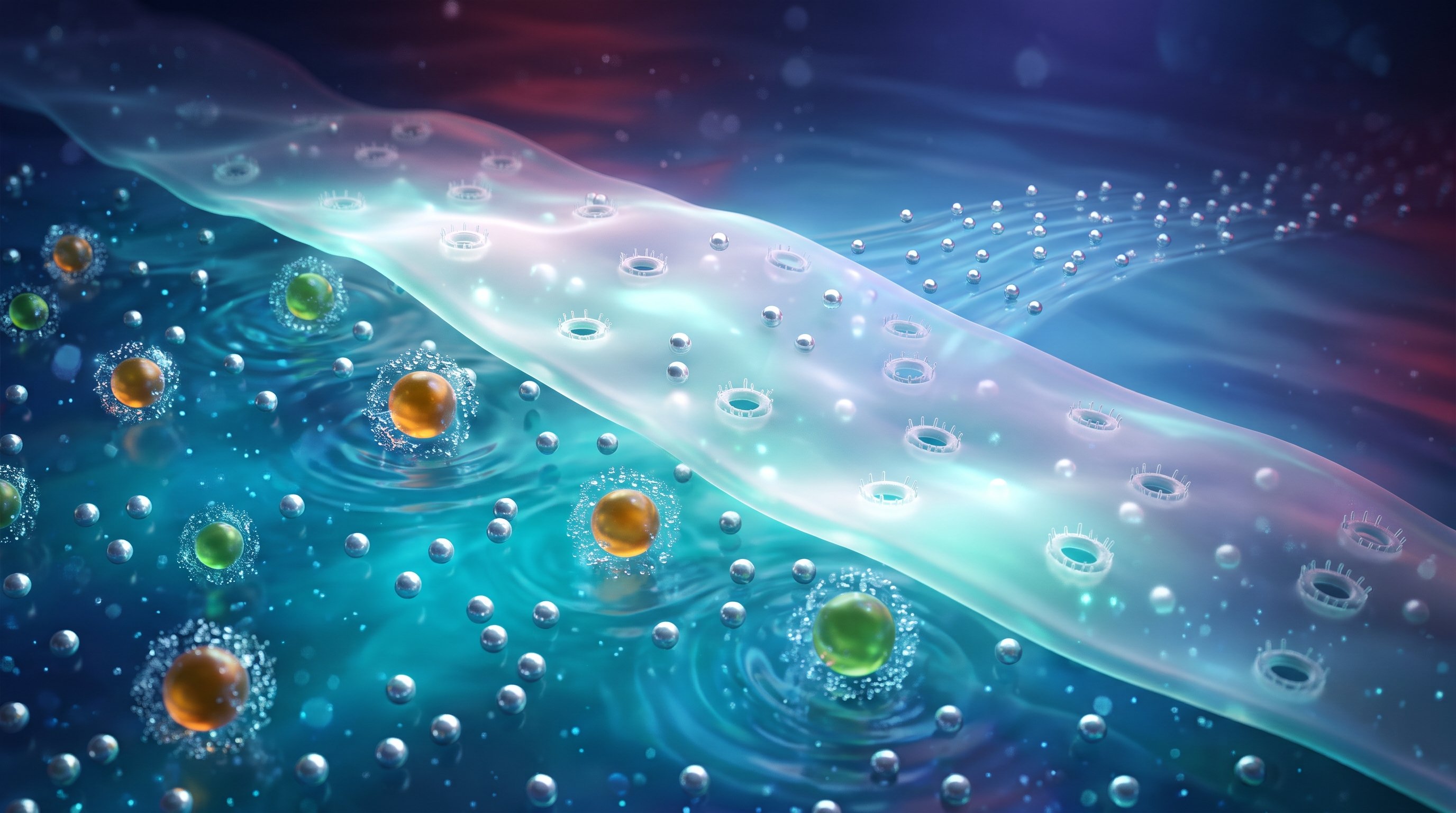
The channels are made of ring-shaped molecules with small chemical bumps at the entrance. These act like a doorman. Every ion in water carries a jacket of water molecules with it. Lithium easily takes off this jacket to slip in at the entrance. Magnesium and calcium hold on to their water jacket much more tightly. Taking it off costs too much energy, so they stay outside.
The result: according to the researchers, lithium passes through the channel at least 94 times more easily than sodium, at least 136 times more easily than potassium and at least 286 times more easily than magnesium. That makes the channels two to five times as selective as other artificial lithium channels described recently. Kumar says the goal is a process that is faster, cleaner and easier to run.
The next steps
So far it works with single channels in the lab. The team now wants to put millions of them at once into larger membranes, a kind of filter. For this they are using a material they developed earlier, built from layers that resemble cell walls. This should lead to a continuous process that does not need harsh solvents. After that come tests with real brine, which contains many salts at once, and on a larger scale.
The researchers see more uses. The same approach could be used to recover lithium from old batteries. In the long run, such channels might even be used inside batteries. According to researcher Harekrushna Behera, they now have a toolkit, not a one-off result: what they learned about how ions behave also helps to design channels for other important raw materials.
What does this mean for the road to the singularity?
Electric cars, robots and the storage of green power all need batteries, and so lithium. The faster and cleaner that lithium can be mined, the more easily all this technology can grow. These channels show that the precision of a living cell can be copied to fish one substance out of a mixture. If they can be built into large filters and also work in real brine, lithium mining could use a lot less energy. And if the same approach also works for other scarce raw materials, the foundation under the technology of the future becomes a good deal stronger.
What is the technological singularity? Read the explanation →