Nederlands
Nvidia posts 115.8 billion dollars in revenue, Vera Rubin brings in almost 20 billion
Nvidia's revenue in the third quarter of its 2027 financial year was 115.8 billion dollars, twice as much as a year earlier. Its new Vera Rubin platform already brought in almost 20 billion dollars in its first quarter.
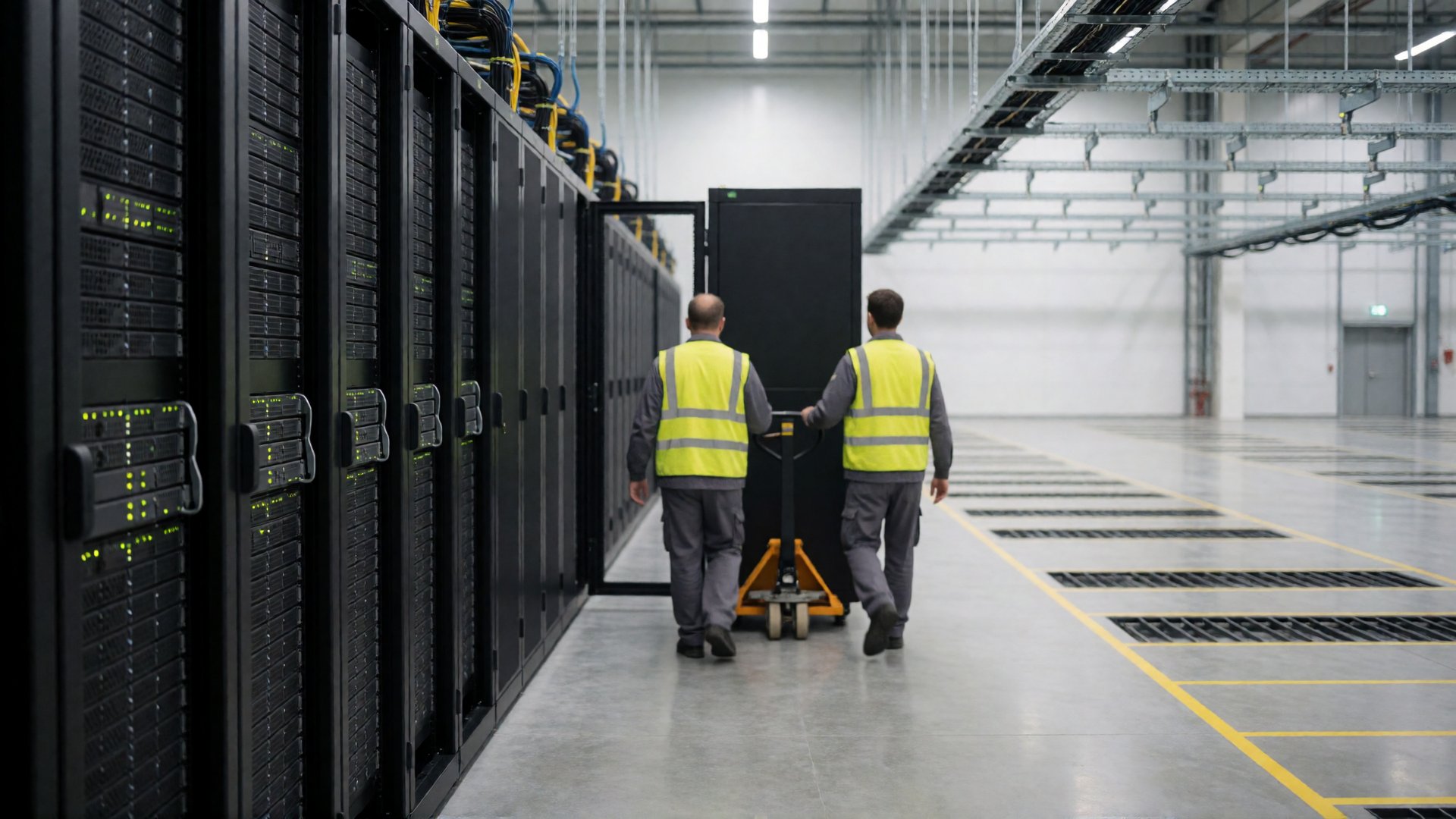
Nvidia's new AI systems, called Vera Rubin, are adding to revenue faster than any product the company has ever made. That is clear from the quarterly results Nvidia published . At the same presentation, the company also announced the takeover of Hugging Face, the platform where developers share open models, and its plans for such models; our article on Nvidia's bet on open models covers that part. This article is about the figures.
The quarter ended on 25 October 2026 and falls in Nvidia's 2027 financial year, which runs until the end of January 2027. Revenue of 115.8 billion dollars (about 105 billion euros) was 103 per cent higher than a year earlier. Net profit was 65.3 billion dollars (about 59 billion euros). The division that sells chips and systems for data centres brought in 107.6 billion dollars (about 98 billion euros), roughly 93 per cent of the total.
Vera Rubin
Vera Rubin is Nvidia's new generation of AI systems: complete server cabinets with AI chips and processors, which companies use to train and run AI models. In the first quarter in which they were delivered to customers, they brought in almost 20 billion dollars (about 18 billion euros). Nvidia calls it the fastest product launch in its history. The systems are already running at CoreWeave, Google Cloud, Microsoft Azure, Oracle Cloud Infrastructure and Nebius, among others.
Capacity secured for years
To keep up with demand, Nvidia is booking production at its suppliers years in advance. The value of these purchase agreements rose to 390 billion dollars (about 355 billion euros), up from 279 billion dollars a quarter earlier and 119 billion dollars at the end of the first quarter. According to Colette Kress, this secures memory and chip packaging. Kress is the chief financial officer and has temporarily led the company since Jensen Huang stepped down as chief executive.
Nvidia also has 32 billion dollars (about 29 billion euros) in agreements with smaller cloud companies that mainly rent out AI computing power. In addition, the company guarantees up to 105 billion dollars (about 96 billion euros) for a data centre campus in Pike County, in the US state of Ohio, which will compute only for OpenAI under twenty-year leases. These guarantees only take effect when the rent starts; the first data centres there are expected in Nvidia's 2029 financial year.
For the fourth quarter, Nvidia expects revenue of about 130 billion dollars (about 118 billion euros), give or take 3 per cent. That quarter has an extra week, and revenue from selling AI chips for data centres in China is not included. For the 2028 financial year, the company now expects growth of about 75 per cent.
What does this mean for the road to the singularity?
AI companies are already building large data centres to train and use models. Nvidia's purchase agreements show that this needs not only chips, but also memory and factory capacity booked years ahead. Whoever reserves that capacity now helps decide how much computing power will be added in the coming years.
If demand keeps growing, such long-term agreements give suppliers the certainty to expand their factories. More capacity could in the end give more researchers and companies access to computing power, for example for uses in science and healthcare. At the same time, it may become harder for smaller chipmakers to get the same parts if the biggest buyer has already reserved them years in advance. So for wider access to AI, what counts is not only how fast the chips are, but also who can buy the production.
What is the technological singularity? Read the explanation →