Nederlands
Overlooked immune cells can recognise and kill small-cell lung cancer
Australian researchers discovered that a little-known type of immune cell can track down an aggressive form of lung cancer, even when it hides from the rest of the immune system. Two existing medicines made that attack stronger in the lab. The next step is research in patients.
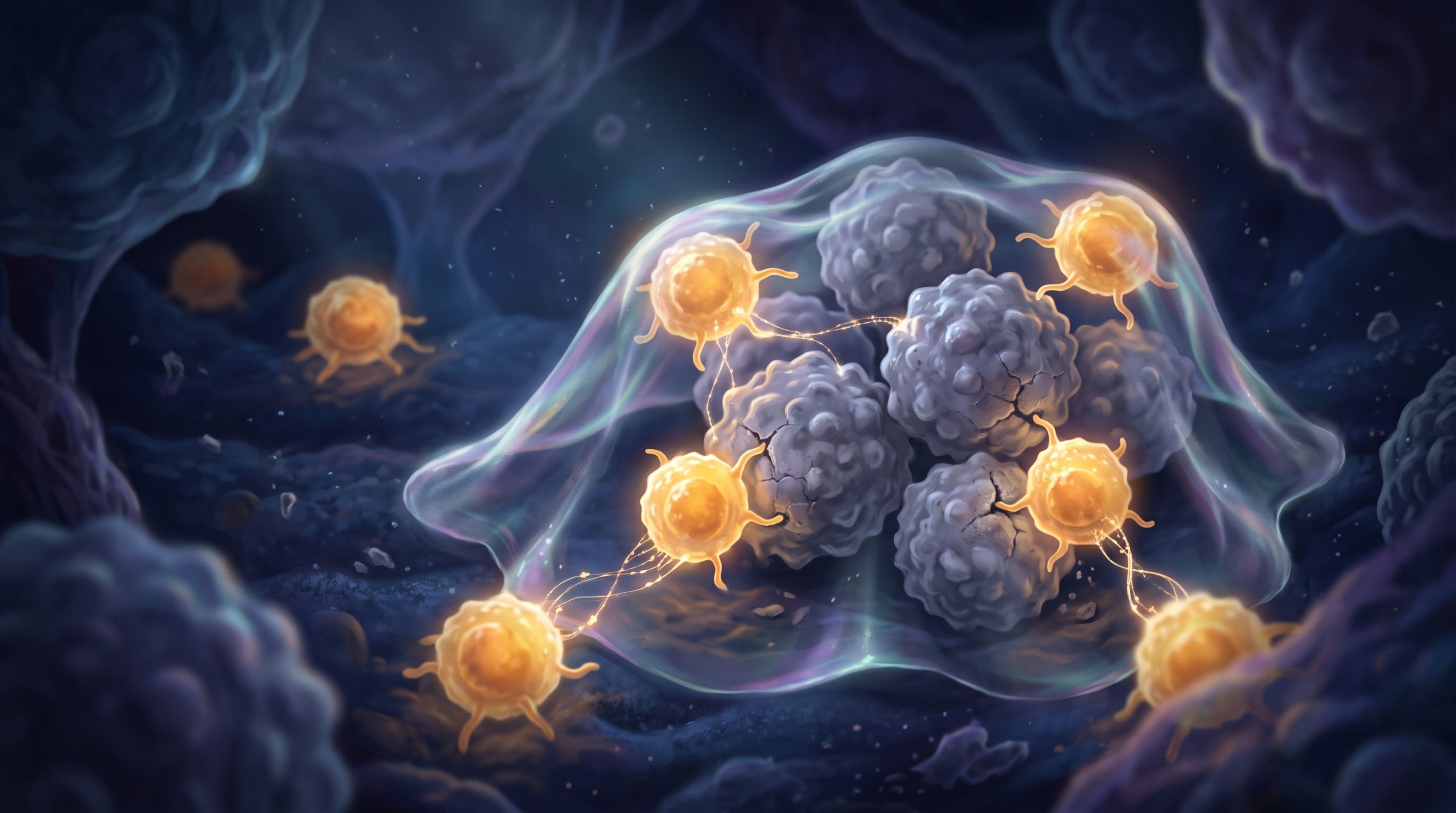
Small-cell lung cancer is one of the deadliest forms of cancer. Researchers at the Walter and Eliza Hall Institute (WEHI) in Melbourne have now found an immune cell that can still recognise and kill this cancer: the gamma delta T cell. In the lab, this attack became even stronger with two medicines that are already on the market. The research was published in the scientific journal Cancer Cell.
A cancer that hides
About one in eight people with lung cancer has the small-cell form. It grows fast and is strongly linked to smoking. Fewer than 7 per cent of patients are still alive five years after diagnosis. Chemotherapy together with immunotherapy, a treatment that uses the body's own immune system against the cancer, is the standard. Unfortunately, in most patients it only works for a short time.
That is because this cancer hides well. The immune system can be seen as a police force. The ordinary immune cells, T cells, check each cell's identity card, as it were: a piece of protein that the cell shows on its outside. If something is wrong, they strike. Small-cell lung cancer often simply stops showing that identity card, and so slips past the check.
Gamma delta T cells work differently. They do not look at the identity card, but watch for signs that a cell is in trouble, like a police officer who notices suspicious behaviour. According to Professor Kate Sutherland, who led the research, these cells can therefore see through the tumour's disguise.
What the researchers did
First the team examined tumour tissue from twelve patients, cell by cell. Gamma delta T cells turned out to be present in every patient's tumour. The researchers then looked at data from two large earlier studies with hundreds of patients. Those with many of these cells in the tumour lived longer on average: in one of those studies more than 15 months, against almost 11 months for patients with few of these cells.
Next, the researchers grew small artificial tumours in the lab from patients' cancer cells and added gamma delta T cells. This way they tested two existing medicines:
- Tarlatamab is already used for this form of lung cancer. It works like a kind of two-sided handcuff: one side grabs the cancer cell, the other side the immune cell. This pulls them towards each other. Gamma delta T cells also turned out to be able to find and kill the cancer cells this way.
- Zoledronic acid is a medicine against bone loss. It made the cancer cells more vulnerable and caused the number of gamma delta T cells to grow strongly.
From lab to patient
The researchers see two promising routes. The first is a new kind of immunotherapy that uses exactly these cells; WEHI is working on this with the Doherty Institute in Melbourne. In the second route, the cells are taken out of the body, multiplied in the lab and then given back to the patient. Such an approach is already being studied for other types of cancer.
Because these are medicines that already exist, the road to the patient can be shortened considerably. The research has so far been done in the lab. That patients with many of these cells live longer was seen in data from earlier studies; new research has to show whether the cells are really the cause of that. The next step is research in animals and then in humans, to determine which patients can benefit.
What does this mean for the road to the singularity?
This discovery shows how measuring huge amounts of data uncovers hidden opportunities. By examining thousands of individual cells and using computers to link that data to the outcomes of hundreds of patients, a cell type came into view that had long been overlooked in this cancer. That kind of detective work in large datasets is exactly what AI is getting better and better at. The research also shows a second way to move faster: not always developing a new medicine, but cleverly combining what already exists. This way the immune system is increasingly becoming something we can understand and steer. A good deal of research is still needed to get from the culture dish to the patient, but the direction is promising.
What is the technological singularity? Read the explanation →