Nederlands
Precise DNA correction used inside a patient's body for the first time
Prime Medicine has for the first time treated a patient with prime editing directly inside the body. A single infusion is meant to repair a DNA error in the liver in Wilson's disease, an inherited copper disorder. The study has just begun; first results are expected in 2027.
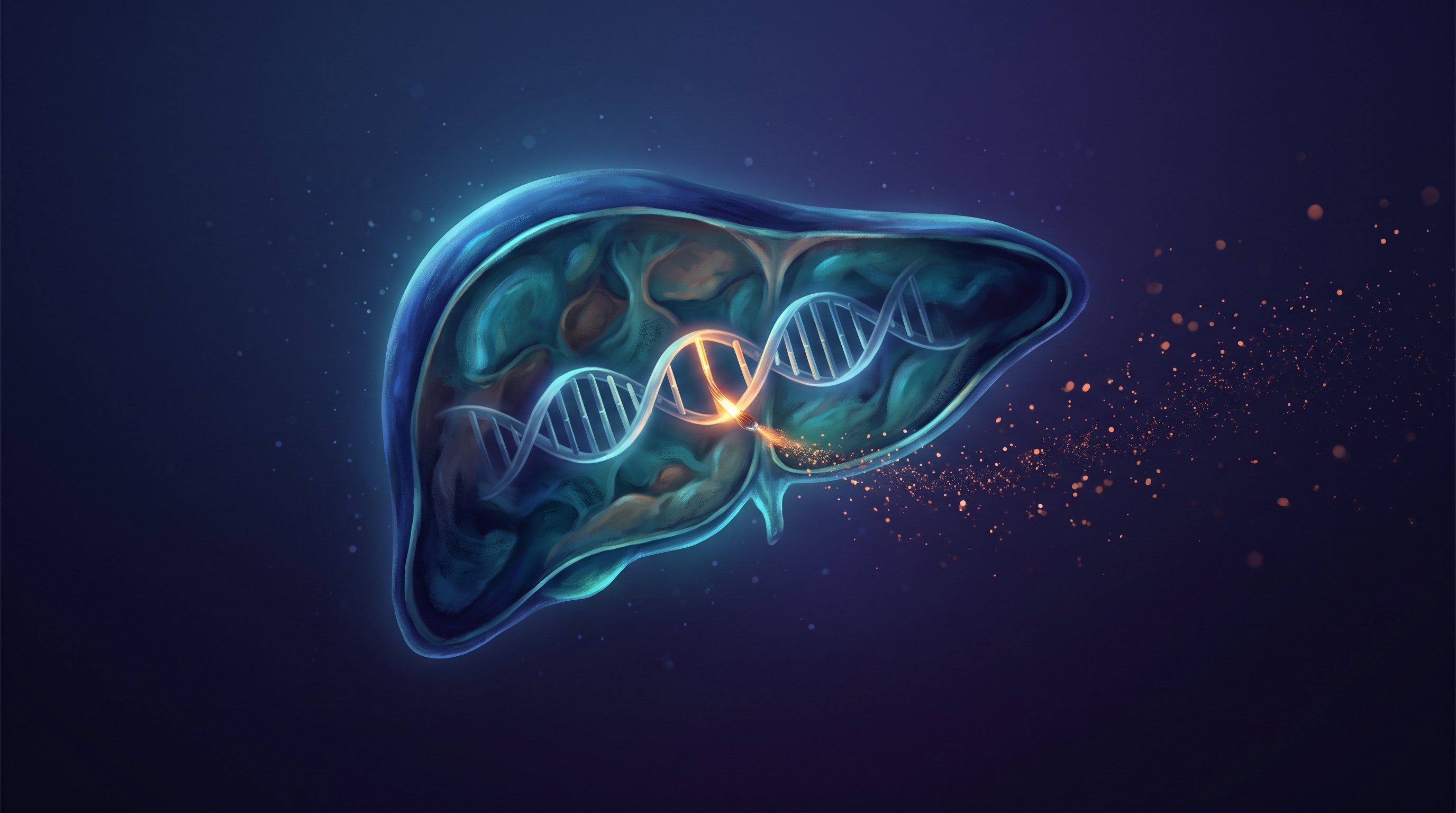
People with Wilson's disease take medicines every day, for life. Because of an error in one gene, the liver cannot get rid of excess copper. The body needs a little copper, but too much of it builds up in the liver and later in the brain. Without treatment that leads to damage to the liver and nerves. The disease is rare: it affects about 1 in 30,000 people.
The American biotech company Prime Medicine from Cambridge (Massachusetts) wants to repair that error at the source. On 5 October 2026 the company announced that the first patient has received an experimental treatment called PM577a. According to the scientific journal Nature, it is the first known time that the DNA technique prime editing has been used directly inside a human body.
Find and replace in the DNA
Our DNA is a long text written with four letters. In Wilson's disease there is an error in the gene for a protein that removes excess copper from the liver. Everyone has two copies of that gene, one from each parent. You only become ill if both copies are broken. That is why, in principle, one repaired copy per liver cell is already enough.
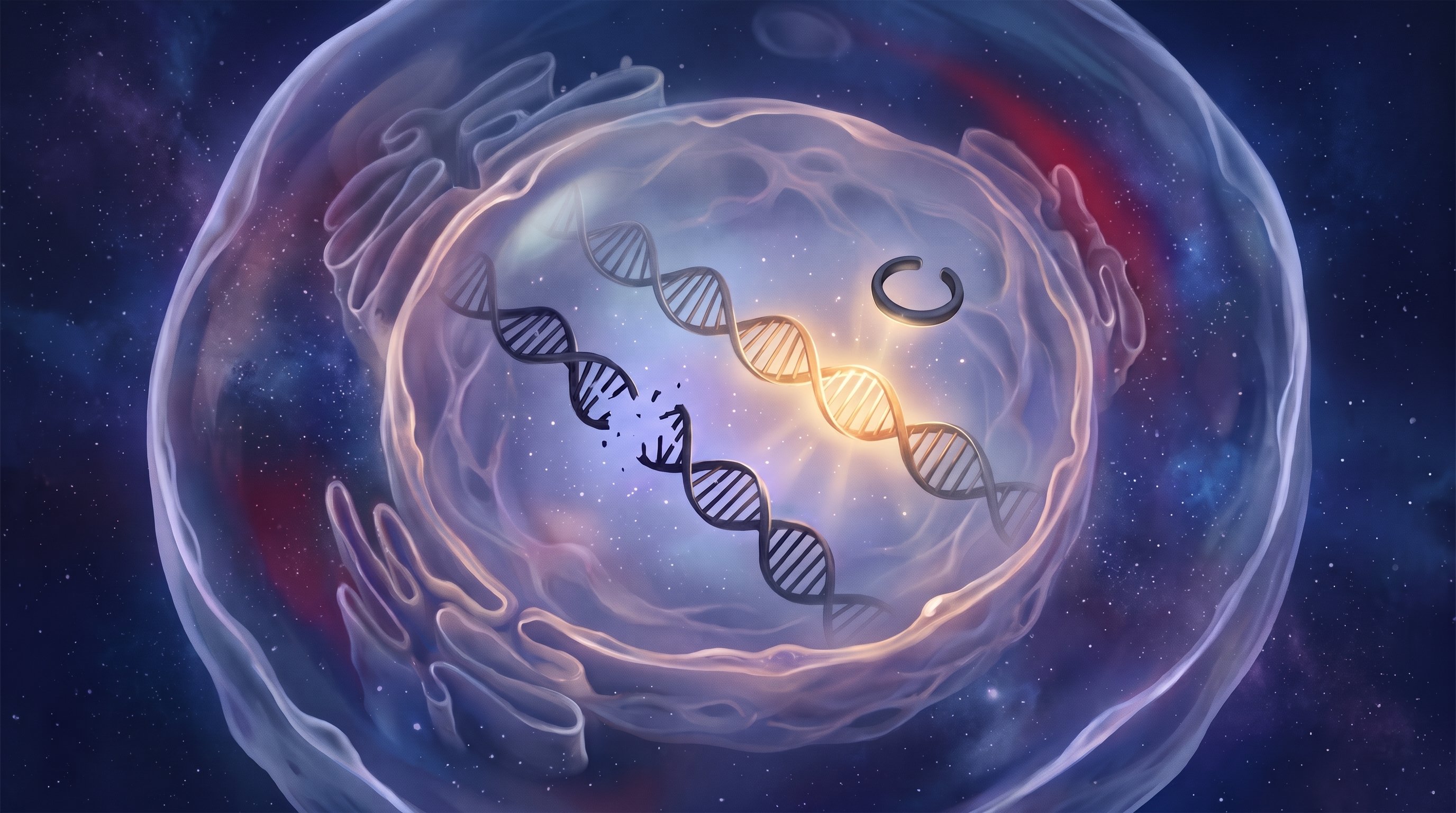
The best-known DNA scissors, CRISPR-Cas9, cut the DNA and are often used to switch a gene off. Prime editing works more like the "find and replace" function in a word processor. It finds the right place and rewrites a small piece of DNA there, without cutting completely through the double DNA strand. The technique was devised in 2019 in the lab of David Liu at the Broad Institute in the United States. Liu is also a co-founder of Prime Medicine. A simpler variant, base editing, can replace single DNA letters. According to Nature, it cannot make the corrections needed for the most common errors in Wilson's disease.
PM577a targets the error that is most common in Europe and North America. The medicine is given once through an infusion. Tiny fat droplets carry the repair instructions to the liver cells. Prime Medicine calls it a one-time treatment that could possibly cure the disease.
The study
The patient is taking part in an international study that first tests safety and should give a first impression of whether the treatment works. Participants receive a higher dose step by step. First, adults whose disease is under control with their usual medicines take part. Later, teenagers can also join. All participants have at least one copy of this specific error.
Among other things, the researchers can see with a special scan how well the liver removes copper, and measure copper and other substances in blood and urine. They will also look at whether participants can stop taking their usual medicines. Prime Medicine expects the first results in 2027.
Why this is a milestone
Until now, DNA corrections in patients were mainly done outside the body. Doctors take cells from the patient, change them in the lab and give them back. This is also how Casgevy works, the only DNA editing treatment that the American regulator FDA has approved so far, for two inherited blood diseases. Prime Medicine had already treated two people with a rare immune disease with prime editing, but in that way: blood stem cells were changed outside the body and then given back.
Editing inside the body itself can be cheaper and faster, because a tailor-made treatment does not have to be made from each patient's own cells. An approved treatment that edits DNA inside the body does not exist yet. The first one may arrive soon: the FDA is expected to decide in early 2027 on a CRISPR treatment inside the body for hereditary angioedema, a disease that causes severe swelling.
For patients this is big news. Rhonda Rowland, president of the American patient organisation Wilson Disease Association, tells Nature that she never thought she would live to see this for her rare disease. According to her, patients would very much like one treatment instead of their complicated daily schedule of medicines.
Safety first
A DNA correction inside the body is permanent, so safety comes first. Biomedical engineer Krishanu Saha of the University of Wisconsin–Madison points out in Nature that editing inside the body has its own challenges. According to him, it depends on which risks you are willing to take. With similar liver treatments there were sometimes reactions to the infusion and temporarily raised liver values. That is why the study starts carefully and the participants are followed for a long time. The data from 2027 should show how safe the treatment is and whether the liver removes copper again.
Prime Medicine is also working on a second medicine, for the error that is most common in East Asia. That medicine is still being developed in the lab.
What does this mean for the road to the singularity?
Here, medicine is shifting from suppressing symptoms to repairing the cause itself, with a single treatment. If that works in the liver, the way is open to similar corrections for other inherited diseases, without cells having to be edited in a lab for every patient.
There are, however, many different errors. In this one gene alone, hundreds of variants are known that can cause Wilson's disease, and each error calls for its own design of the repair instructions. AI could play a big role here in the future. Models trained on enormous amounts of DNA data can help predict which design works best and where unwanted changes might occur. A tailor-made treatment for a rare error then becomes feasible much faster, and a DNA repair for every patient comes a step closer.
What is the technological singularity? Read the explanation →