Nederlands
Personalised mRNA vaccine cuts the risk of melanoma returning by 42 per cent
A vaccine made to measure for each patient cut the risk of recurrence or death by 42 per cent in a large study of 1,137 people with melanoma. The full results have now been presented at the European cancer congress ESMO.
Melanoma is a dangerous form of skin cancer. Even when a surgeon removes the tumour completely, the disease can come back later or spread to other places in the body. That is why patients at high risk often receive the drug Keytruda for a year after the operation, which helps the immune system clear away cancer cells.
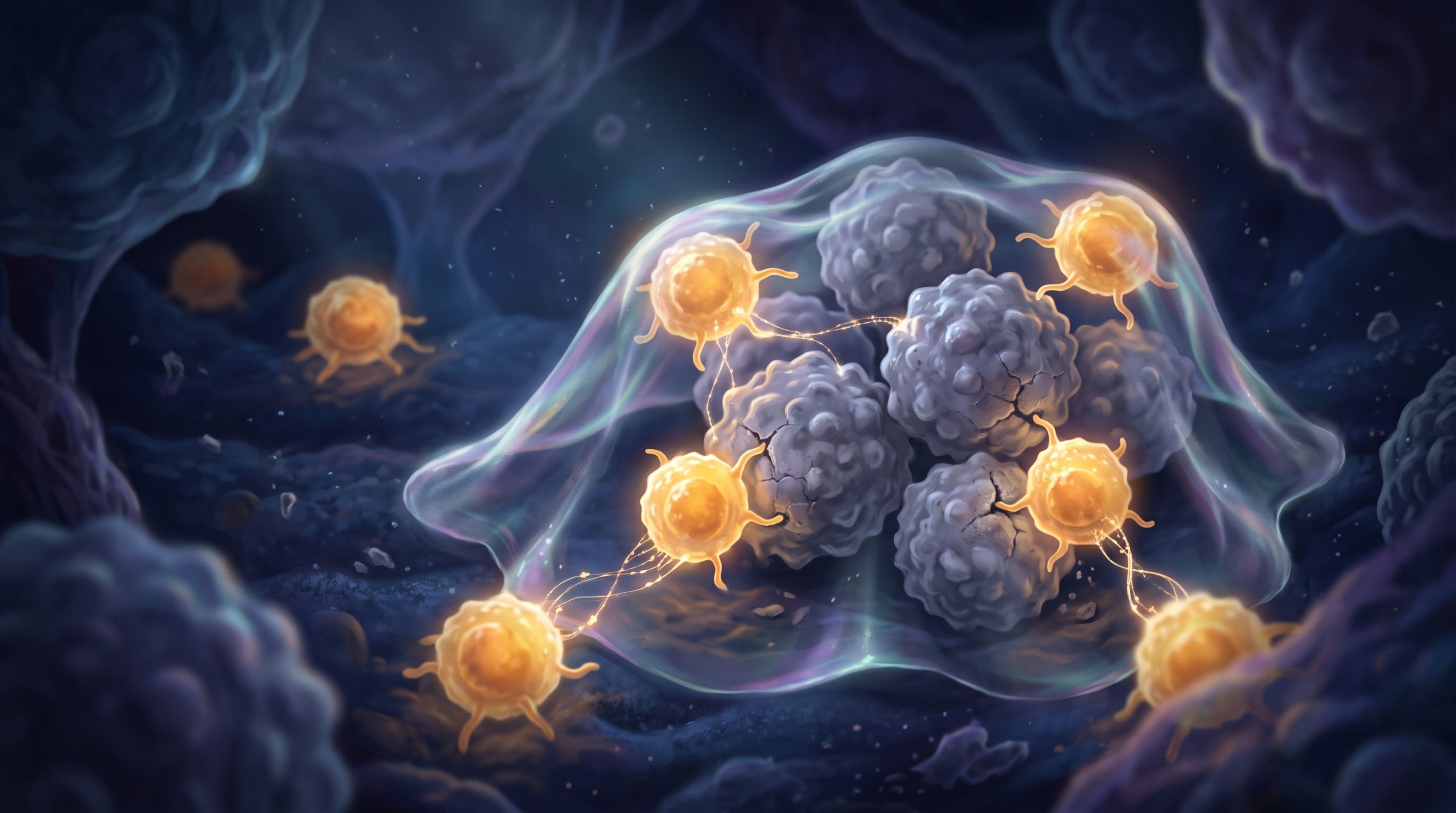
Moderna and Merck have now tested a vaccine that is given on top of that. It is not a vaccine that prevents disease, but a treatment that trains the patient's own immune system to recognise the cancer. James Larkin, one of the leaders of the congress who was not involved in the study, stressed that difference: this is something very different from vaccinating healthy people to prevent cancer. According to the companies, the combination cut the risk that the cancer came back or that the patient died by 42 per cent, compared with Keytruda alone.
Merck and Moderna announced the key figures on 22 October 2026. Since then, lead researcher Georgina Long of the Melanoma Institute Australia in Sydney has presented the full results at the major European cancer congress ESMO in Madrid. They will also appear in the medical journal The New England Journal of Medicine.
A vaccine for one patient
The vaccine is called intismeran. Every patient gets their own version. First, the genetic material (DNA) of the tumour is compared with that of healthy cells. This shows the makers which small errors are found only in the cancer cells. Algorithms and machine learning, a form of AI that learns patterns from examples, then choose the features to which the immune system will probably respond most strongly. The vaccine contains the building instructions, in the form of mRNA, for up to 34 of these features. It works with the same technique as Moderna's coronavirus vaccine: the immune system learns to recognise the features and can then recognise cancer cells that are still in the body.
The results
The study included 1,137 people whose tumour had been removed by surgery and whose cancer had a high risk of coming back. Two out of three participants received the vaccine plus Keytruda, the others a dummy vaccine (placebo) plus Keytruda. It was a phase 3 study: the last and largest step of research in people before a drug can be approved.
After two years, the cancer had not come back in 82 per cent of the vaccine group, compared with 70 per cent in the group with Keytruda alone. The risk of spread to other organs or death also fell, by 38 per cent: after two years, 88.5 per cent of the vaccine group were free of such spread, compared with 80 per cent in the other group. The benefit was about the same for patients with a lower and a higher risk. According to Long, more time without melanoma is in itself a meaningful gain for a patient.
The effect does not start straight away. In the first six months, both groups did about equally well. After that, the vaccine group pulled ahead. That fits with how it works: the immune system needs time to learn to recognise the cancer cells.
Side effects and next steps
The side effects of the vaccine were mostly mild, such as fever, pain at the injection site and tiredness. Serious side effects caused by the treatment occurred about equally often in both groups: in 14 per cent of the vaccine group and 13 per cent of the group with Keytruda alone. Slightly more people in the vaccine group did stop treatment because of side effects: 14 per cent, compared with 9 per cent. Nobody died because of the vaccine.
Whether patients also live longer because of the vaccine is something the rest of the study has to show. The participants have now been followed for about two years; that is still too short to measure a clear difference in survival. They will be followed for several more years. An earlier, smaller study showed a similar effect. Dean Li, head of research at Merck, calls it the first phase 3 study to show a clear improvement over Keytruda alone in these patients. The stock market still reacted with disappointment: Moderna's shares fell by almost 18 per cent on the day of the announcement.
The companies are in talks with the regulators about approval. Moderna hopes the treatment can become available in 2027. According to the American cancer centre Memorial Sloan Kettering, which treated patients in the study, the vaccine will at first be meant for people with a newly diagnosed high-risk melanoma whose tumour can be removed completely. People who have already had surgery do not qualify: the vaccine is made from the tumour tissue removed in that operation. Meanwhile, the vaccine is being tested in nine studies in total, including in other forms of cancer, such as lung cancer, bladder cancer and kidney cancer.
What does this mean for the road to the singularity?
This is an important step for personalised medicine: a medicine designed for one patient works in a large study with more than a thousand people. Making such a vaccine takes a lot of computing. From thousands of small errors in the DNA of a tumour, the features to which the immune system responds best have to be chosen, and algorithms and machine learning are already used for that. The faster and cheaper that design becomes, the more patients can receive such a personal vaccine. The next step is to show that this also works for other types of cancer and can be affordable on a large scale.
What is the technological singularity? Read the explanation →