Nederlands
Patent for a robot arm that can be shown a task
George Devol is granted a patent for a programmable machine that moves objects. A magnetic drum remembers the movements, and they can also be demonstrated by hand. Later this year such an arm, the Unimate, starts work at General Motors.
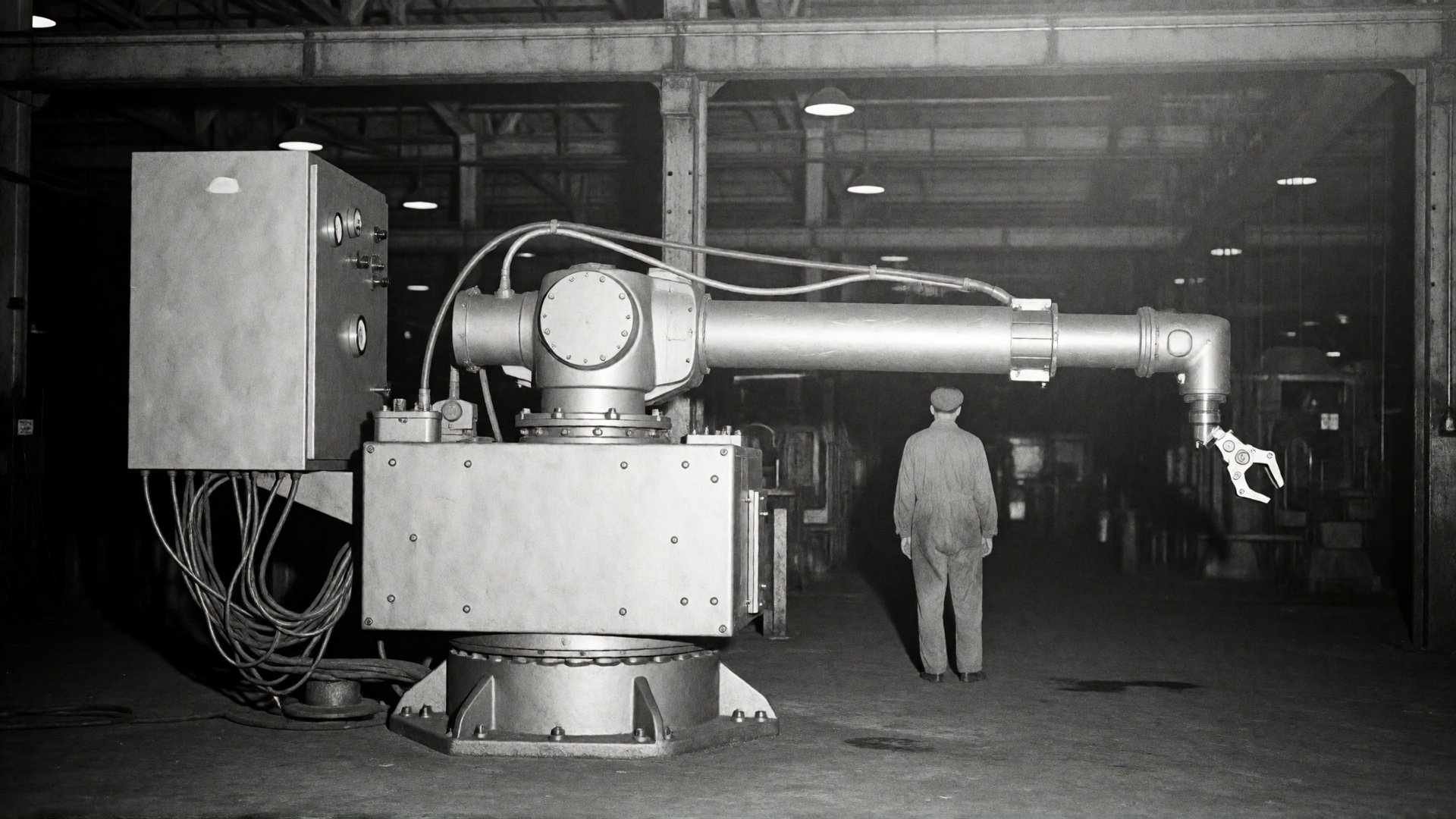
WASHINGTON, JUNE 1961 - On 13 June the US patent office granted patent number 2,988,237 to George Devol of Greenwich, Connecticut, for 'programmed article transfer': a machine that moves objects according to a stored programme. Devol applied for it in December 1954. The machine, which will be called Unimate, is being installed in a General Motors factory for the first time this year.
What the machine does
A factory is full of work that is the same every time: taking a heavy part out of a mould, lifting a box off a pallet, putting something down on a conveyor belt. Until now this has been done by people, or by special machines that can do only one thing. Devol's machine is different. Its task can be changed without rebuilding it.
How it remembers
The machine consists of an arm with a gripper that is moved by pistons driven by oil under pressure, as on an excavator. A programme controller decides the movements. It uses a magnetic drum, a rotating cylinder with a magnetic coating, on which a series of positions is stored: where the arm must be, and when the gripper opens or closes. Because this is done magnetically, it can be erased and recorded again, as on a tape recorder. So a new task is a new recording.
How does the arm know where it is? Along its path lie strips of iron with small notches, which together form a code for each position. Sensors read that code while the arm moves. The arm keeps moving until the code it reads matches the code from the programme. Just before the target, a separate part slows the arm down so that it does not overshoot.
Demonstrating instead of programming
What makes it special is that the machine does not have to be programmed with formulas. A worker can guide the arm by hand through the desired movement. The machine records the positions along the way and then repeats them by itself, again and again. The example in the patent is a machine that takes boxes off a pallet and puts them on a conveyor belt to fill an order.
The first factory
Devol works with Joseph Engelberger, with whom he founded the company Unimation, the world's first robot manufacturer. The first Unimate goes into a General Motors factory in Ewing Township, New Jersey, in 1961. It weighs about 1,800 kilograms, can move in five directions, and takes castings out of the die-casting machine and passes them on. That work is dangerous for people.
Looking back from 2026
The Unimate started a new branch of industry: the industrial robot. Later it also provided entertainment, when on The Tonight Show with Johnny Carson it putted a golf ball into a cup, poured a beer and waved a conductor's baton.
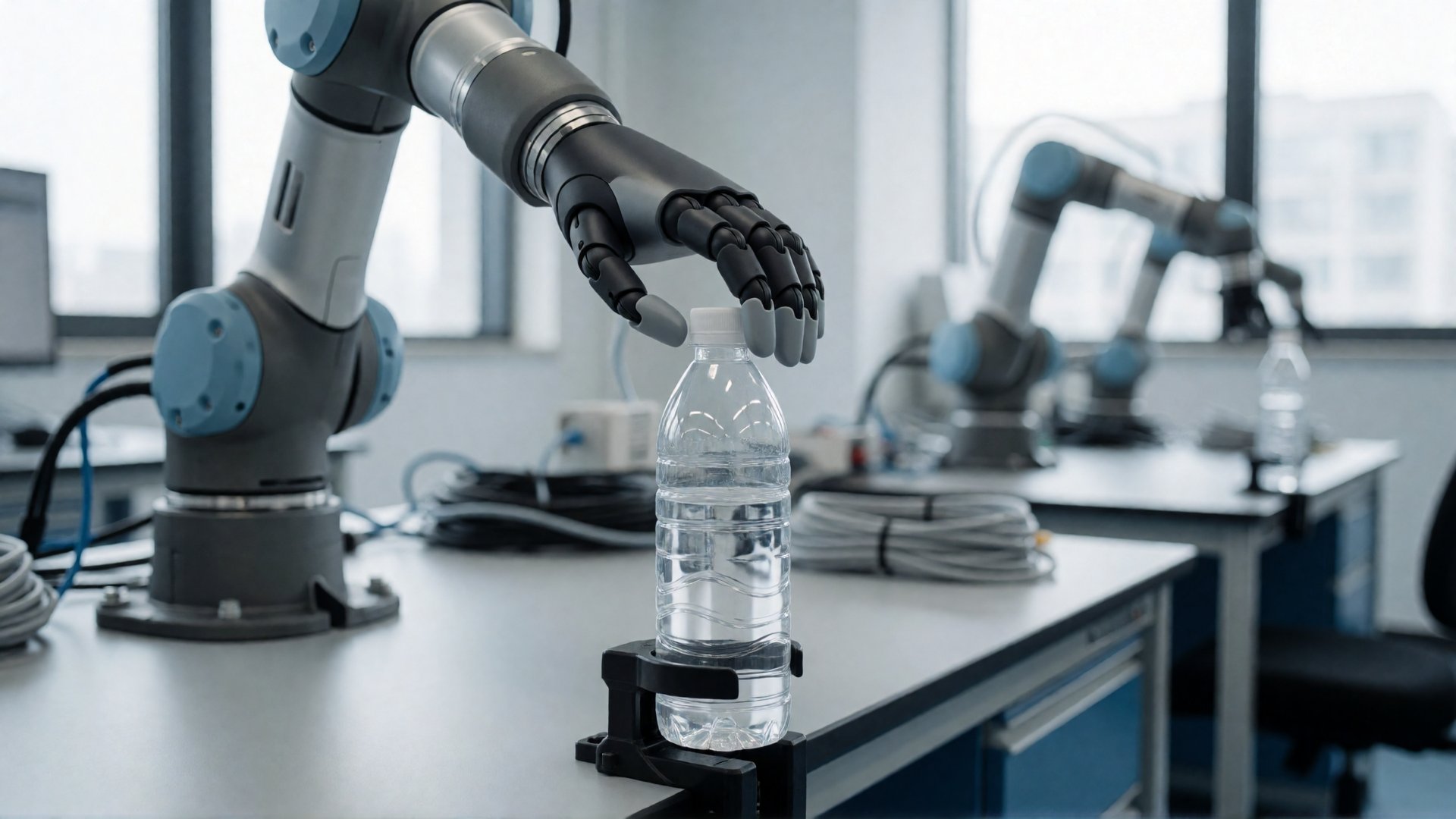
The way of learning has stayed. Today, too, robots often learn by watching or copying a task, only with much more powerful software around it. The arm that moved a casting aside in 1961 stood at the start of machines that take over more and more physical work from people.