Nederlands
Peacebird tests eight humanoid sewing robots in clothing factory
Chinese fashion brand Peacebird has eight humanoid robots preparing simple sewing work in its factory in Ningbo. The robots were developed together with Aitu Tech and are first being tested on a small scale.
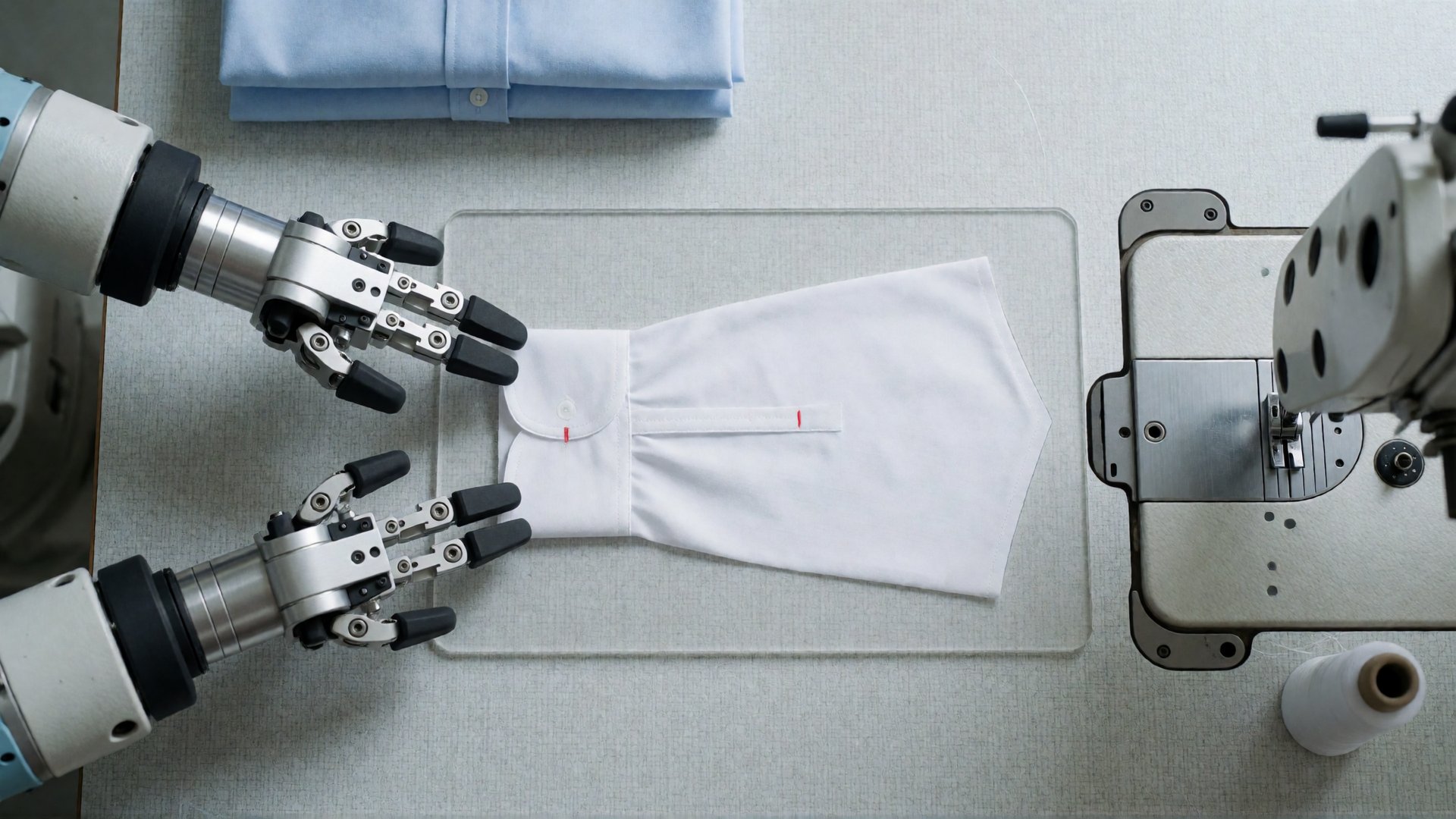
In Peacebird's factory, the humanoid robots pick up loose pieces of fabric and place them exactly right for an automatic sewing machine. The machine then does the stitching. For now, the robots work on simple parts of clothing, such as cuffs, collars and the button strip on the front of a shirt. Peacebird wants to assess the trial in its own factory first, before it decides when and how to use more robots.
Each robot has two grippers with a sense of touch. An AI model made especially for the clothing industry uses cameras to recognise the piece of fabric and the spot where it has to go. If the fabric is slightly out of place, the robot nudges it into position.
According to Zhang Hanwen, founder and chief executive of robot company Aitu Tech, the system was trained on more than a million examples from sewing work. The robot picks up a piece of fabric correctly at the first attempt in about 96 per cent of cases. For now, it works one and a half to two times more slowly than a person. One reason is that after placing the fabric, the robot waits until the machine has finished sewing. Zhang expects it to get faster through better software, and because the robot will soon place the next piece while the machine is still sewing.
Tricky material
Fabric is harder to grip than a solid part made of metal or plastic: it is floppy and changes shape easily. Garments, fabrics and working methods also differ a lot from each other. That is why the robots keep learning from factory data: every seam and every deviation is stored.
The trial covers the simplest work. Difficult jobs, such as putting in a zip or sewing on buttons, are still beyond the robots for the time being. Peacebird and Aitu Tech have also agreed with China's Donghua University and telecoms company Ningbo Mobile to build a pilot factory together, where AI helps to make clothes.
An important reason for the investment is the shortage of skilled workers. A Chinese analysis of the textile and clothing sector estimates a shortfall of about 1.15 million skilled technical workers for the years 2024 to 2026, mainly for sewing and pattern making.
What does this mean for the road to the singularity?
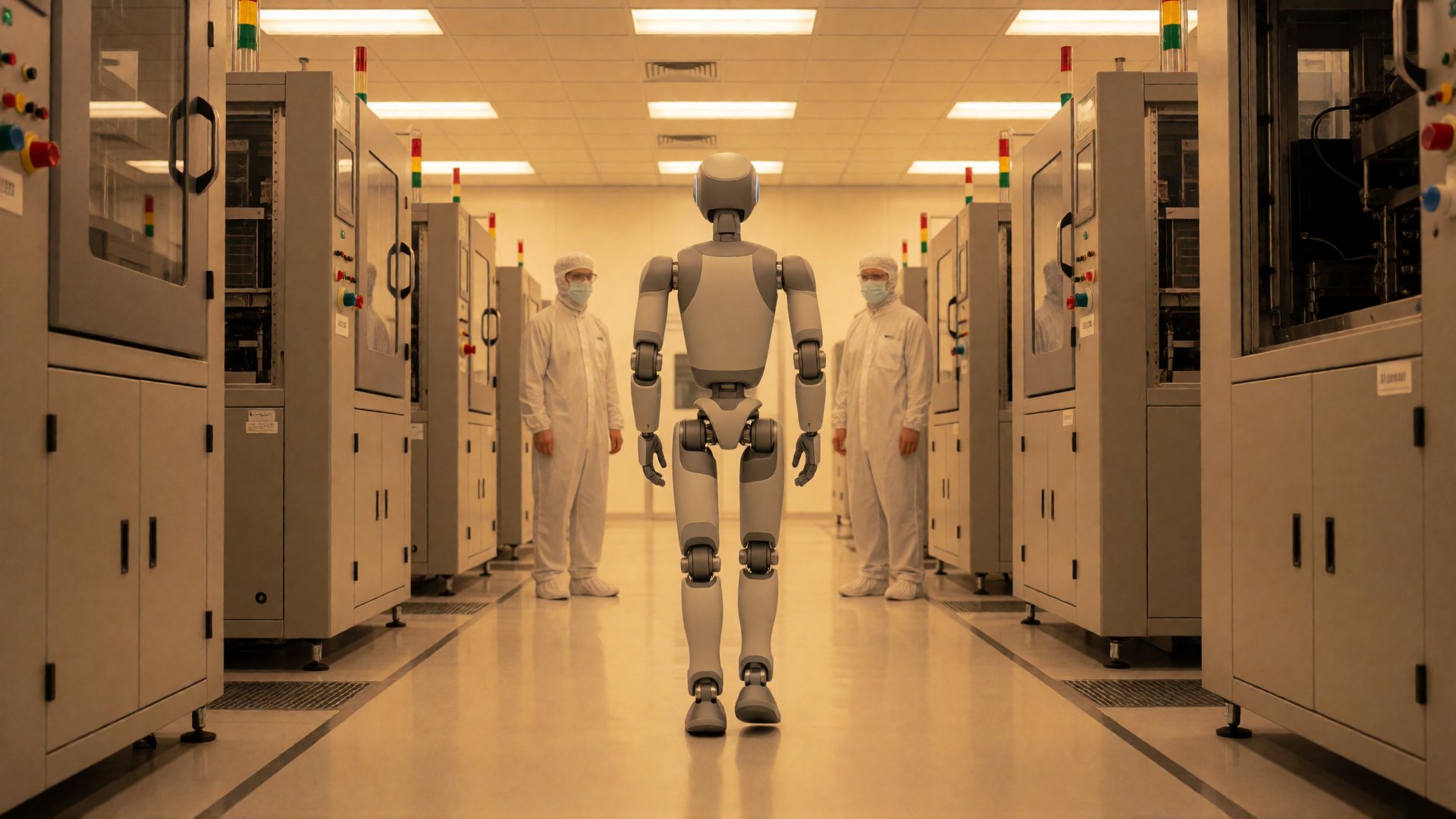
Robots that move solid parts are already very common in factories, and humanoid robots are now also being tested outside the car industry, for example at chip maker GlobalFoundries. What changes here is the material: floppy fabric that falls differently with every touch. A company that learns to handle it opens up a part of the factory that until now was almost entirely human work.
A factory that works like this produces not only clothes but also data on how fabric behaves. The more robots are running, the more examples there are to make them smarter. Such a lead grows by itself, and that puts pressure on other clothing makers to start as well. If that trend continues, factories could make small batches of clothing that better match what customers really buy, closer to the customer and with less left over. For the wider development, what matters most is that robots are learning to work with things that do not always react in exactly the same way. That is exactly what they need to become useful outside the factory floor.
What is the technological singularity? Read the explanation →