Nederlands
Humanoid robot
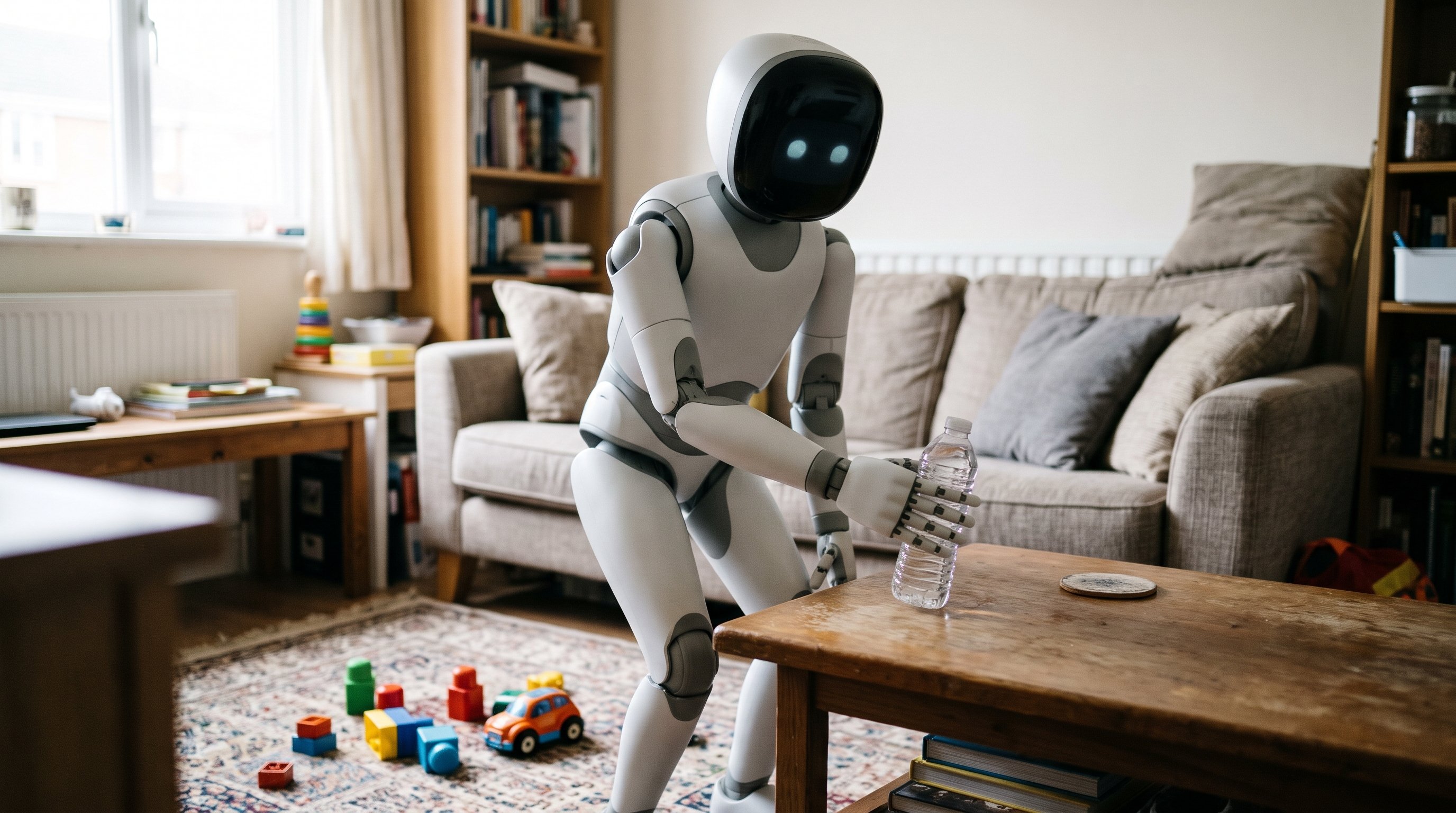
A humanoid robot is a robot with a human-like body: a torso, two arms and usually two legs. That lets it fit into a world built for people, from stairs to tools.
A humanoid, or human-like, robot has roughly the build of a person: a torso, a head, two arms and usually two legs. There is a reason for that. Our world is built for people, with stairs, doors, workbenches and tools at hand height. A robot with the same shape can use much of that without modifications.
How does it work?
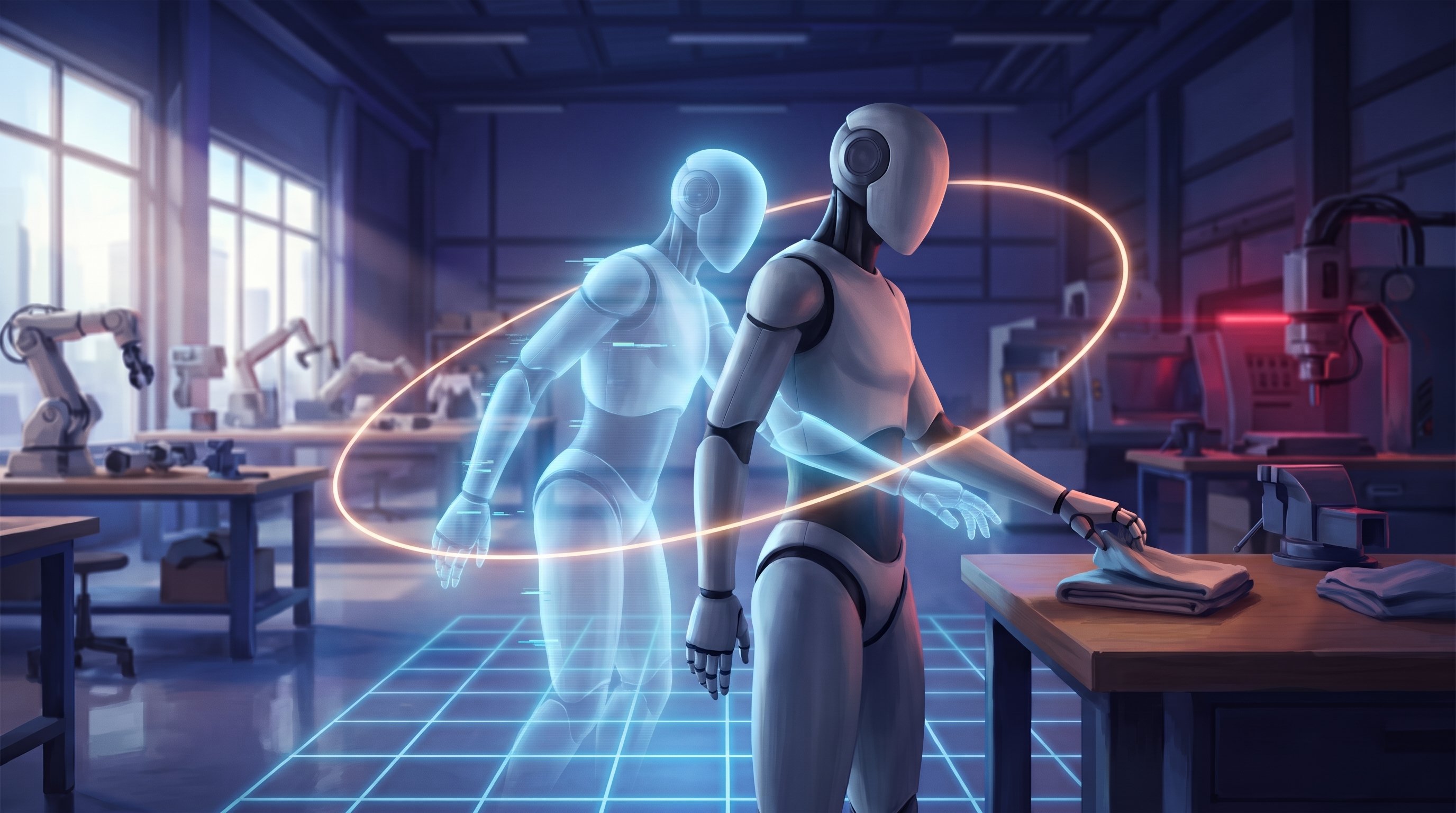
Every joint contains a small drive: a motor with gears that turns an arm or straightens a leg. These parts are called actuators. Sensors measure the position of the joints, the force and sometimes touch. An AI model processes what the cameras see and decides what the robot does. Walking and keeping balance are hard, especially on uneven ground.
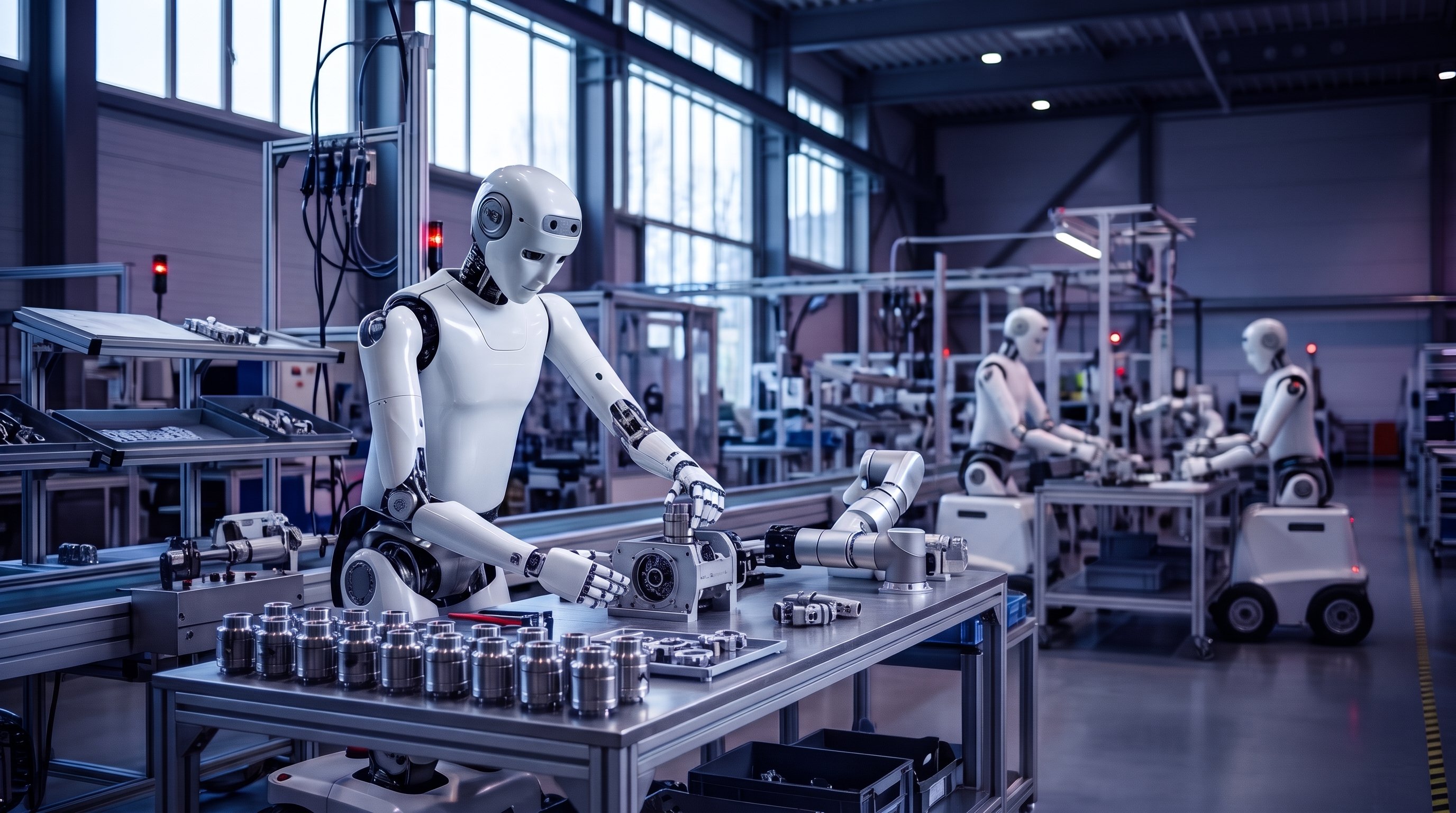
Not every robot called humanoid has legs. There are human-like robots with a torso, head and two arms on a wheeled base. Such robots are handy on a flat factory floor.
Why it matters
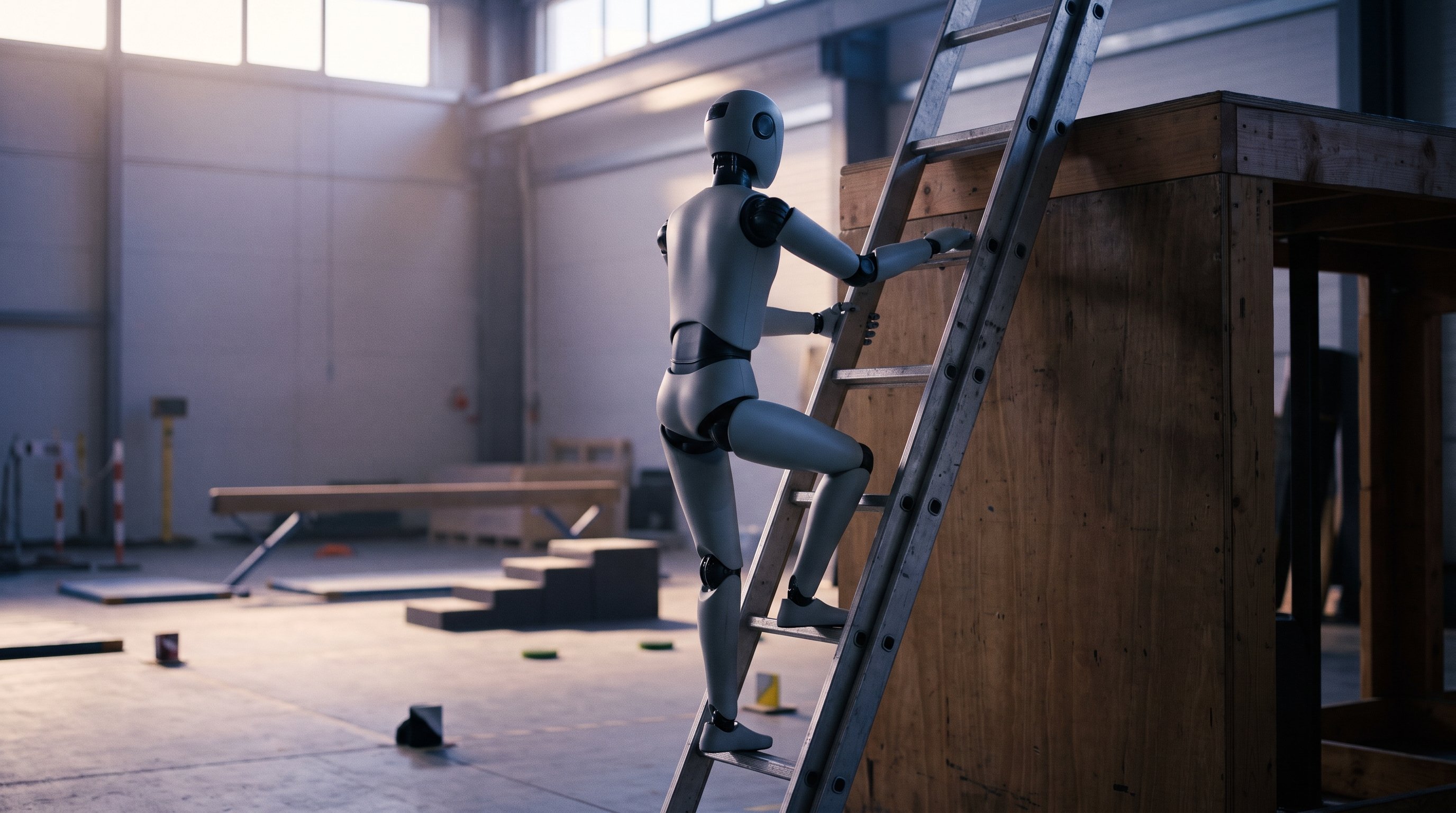
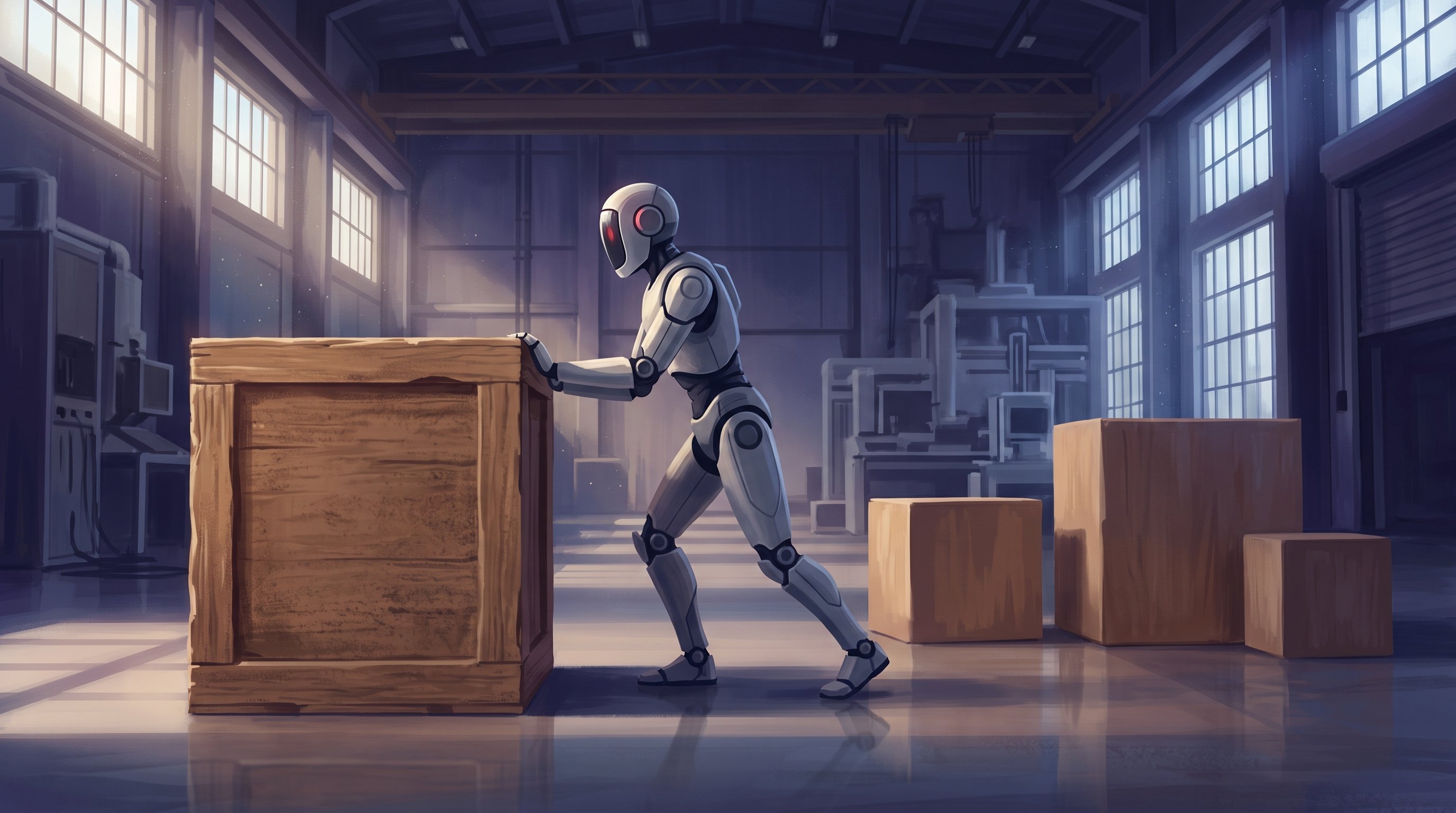
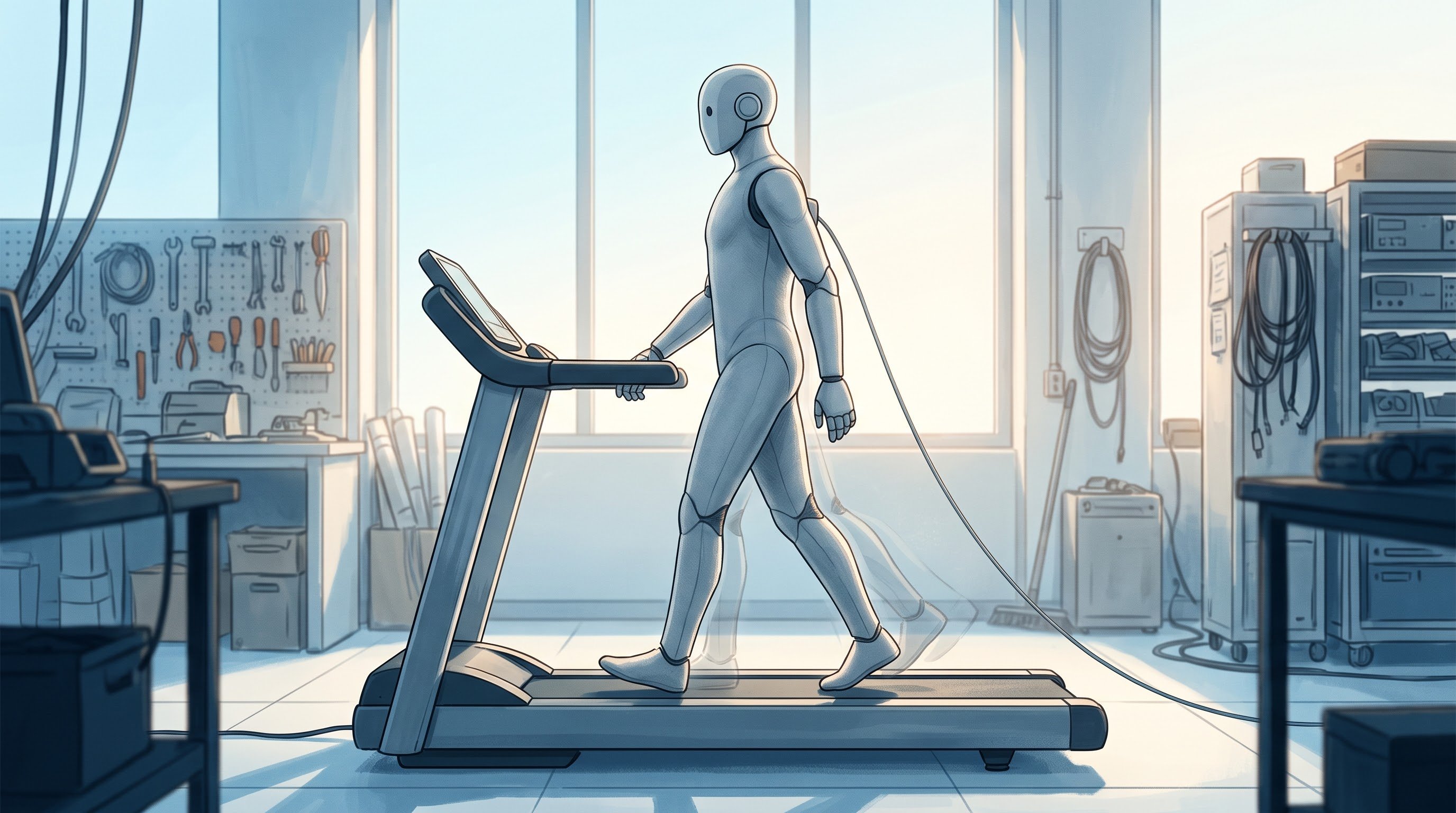
The news shows how fast physical skills are growing. Researchers at KAIST in South Korea had their humanoid robot push objects of up to 35 kilos and lift up to 20 kilos while walking (link). At ETH Zurich, a robot with a single learning system is taught to climb ladders, jump over obstacles and get back up on its own after a fall (link). And Figure AI has had a robot walking on a treadmill for nine days in a row, more than 560 kilometres, to track down weak spots in the hardware, according to chief executive Brett Adcock (link).
They are also starting work in factories. The German company Schaeffler opened a plant in Taicang, China, where humanoid robots assemble the joints for new robots, and according to the company, mass production of those parts begins there (link). If robots can assemble part of their own components, production can grow along with demand. The coming years will show how often a human still has to step in and how such robots perform in practice.
Articles about Humanoid robot
-
Xpeng's small open AI model locates objects better than GPT-6 Astra
Carmaker Xpeng and several universities have released GroundingPI, an open AI model that helps robots and cars see exactly where things are. On 34 tests it scores slightly higher on average than OpenAI's much larger GPT-6 Astra, according to its makers.
-
Meta built a humanoid household robot with a Chinese company
According to The Information, Meta and China's Fourier built a humanoid robot, codenamed Max, in about three months. It is meant to help around the house. Meta calls it research: selling it is not planned.
-
Google cuts criminals off from 1.3 million TV boxes with a built-in backdoor
Google and six partners have shut down the servers that were used to control more than 1.3 million Android TV boxes remotely. According to Google, the manufacturer Videostrong built the hidden software in itself. The company may no longer make devices with Google's certification.
-
Humanoid robot helped manage traffic at Hangzhou marathon
At the Hangzhou marathon on 1 November, humanoid robots from DEEP Robotics helped manage traffic. They watched junctions, warned about rule-breaking and gave safety tips to 36,000 runners.
-
Google DeepMind's Genie 4 builds interactive worlds, now with sound
Google DeepMind has presented Genie 4, an AI that creates a world you can control while you watch. What is new is that this world also has sound and conversations. A small group of testers is trying it out now; more users will follow.
-
In this Chinese factory, humanoid robots build parts for new robots
The German company Schaeffler has opened a factory in Taicang, China, where humanoid robots assemble the 'joints' of new robots. According to the company, mass production of these parts starts there.
-
ETH Zurich humanoid robot climbs ladders and gets back up by itself after a fall
Researchers at ETH Zurich have a humanoid robot climb ladders, jump over obstacles and get up after a fall, all with one learning system. In a simulation, the robot completed 92.5 per cent of the obstacle courses.
-
Unitree lets AI improve the software of its robots by itself
Robot maker Unitree is working on Rehearsal: AI reads research by itself, writes robot code, tests it in a simulated world and then puts it on real robots. Founder Wang Xingxing now expects robots to handle most tasks on command in 2027 or 2028.
-
Four-legged robot solves a giant Rubik's Cube using only its legs
Researchers at ETH Zürich and Nvidia taught a four-legged inspection robot to solve a giant Rubik's Cube using only its legs. It tips the cube over and turns the layers, without human help. All three attempts succeeded, each in eight to nine minutes.
-
Anthropic tests Claude Duet, an AI assistant that comes to you with tasks itself
With Claude Duet, the AI assistant does not wait until you ask: it sends a summary in the morning, keeps an eye on your apps and keeps working when your laptop is off. You approve important steps yourself first. The test version has been available to paying users in the US since 21 October.
-
Unitree has humanoid robot do kung fu and lift cars as a bodyguard
The Chinese robot maker Unitree shows the H2-X, a humanoid robot that fights, jumps and lifts a car to rescue someone. It is mainly a demonstration of what the underlying H2 platform can do; there is no price or sale date yet.
-
Humanoid robot from South Korea pushes 35 kilos and lifts 20 kilos while walking
Researchers at KAIST in South Korea had their humanoid robot push objects of up to 35 kilos and lift up to 20 kilos while walking. Legs and arms are controlled together by a single AI system. It is a demonstration in the lab; more tests will follow.
-
Work robot Digit 5 recharges in nine minutes and can then keep going for an hour and a half
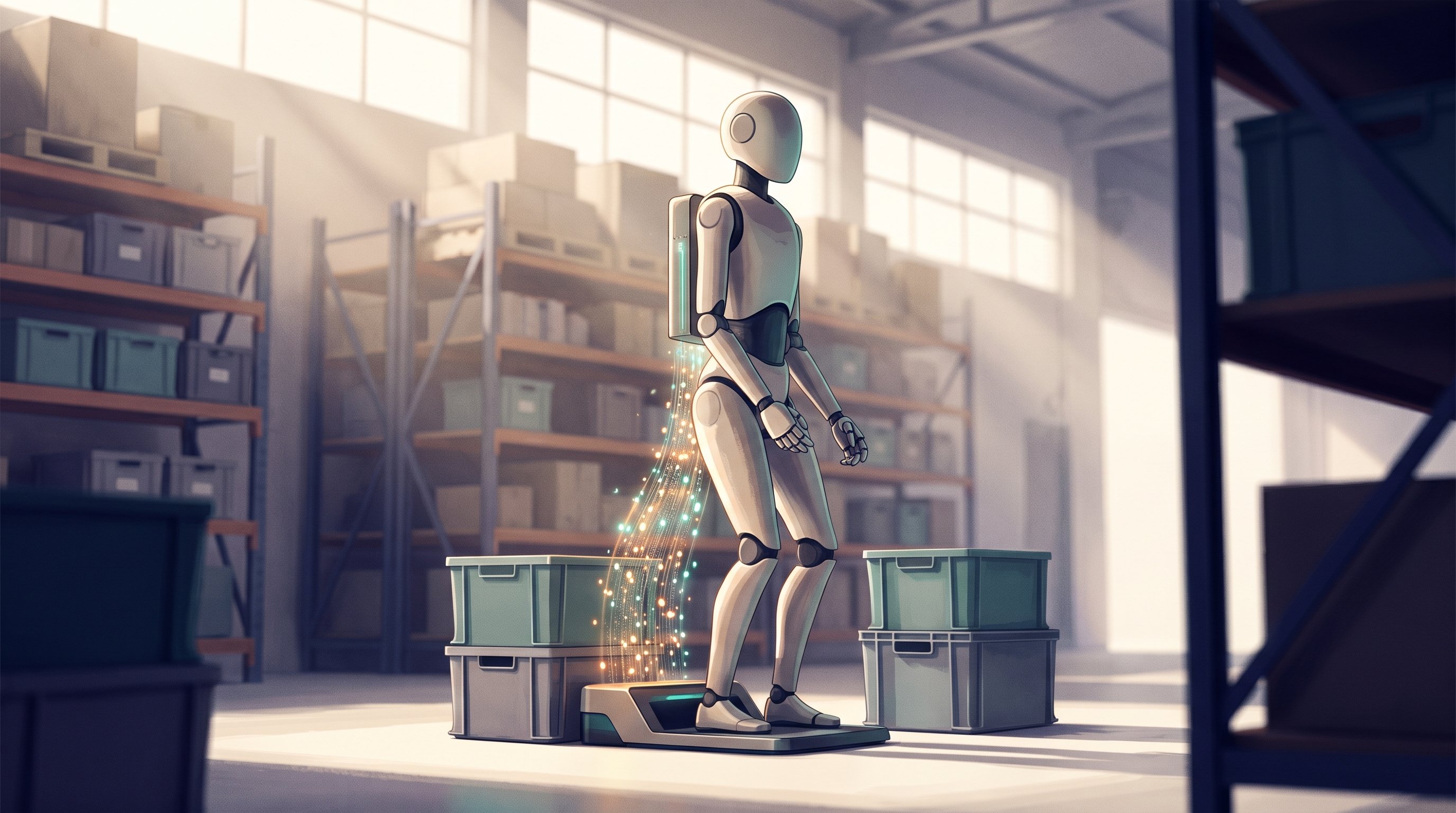
Agility Robotics is getting a fast-charging battery from the British company Nyobolt for its humanoid robot Digit 5. After nine minutes of charging, the robot works for another hour and a half. According to Agility, this lets it stay at work for more than twenty hours a day.
-
Robot Digit 5 swaps its bird legs for human legs to work safely alongside people
Agility Robotics has completely redesigned its humanoid robot Digit. The fifth version lifts heavy crates, recharges in nine minutes and sits down by itself when someone comes too close. Co-founder Jonathan Hurst explains why.
-
Humanoid robot walks 560 kilometres on a treadmill in nine days
A humanoid robot from the American company Figure AI has been walking on a treadmill for nine days in a row: more than 560 kilometres and 1.2 million steps, reports chief executive Brett Adcock. The trial is meant to find weak spots in the hardware and is still running.