Nederlands
Retinal implant lets people with macular degeneration read again
Science Corporation's Prima implant has been allowed in Europe since July for an advanced form of macular degeneration. In a study, more than 80 per cent of participants could read clearly more letters after a year. In the US, the application is still under way.
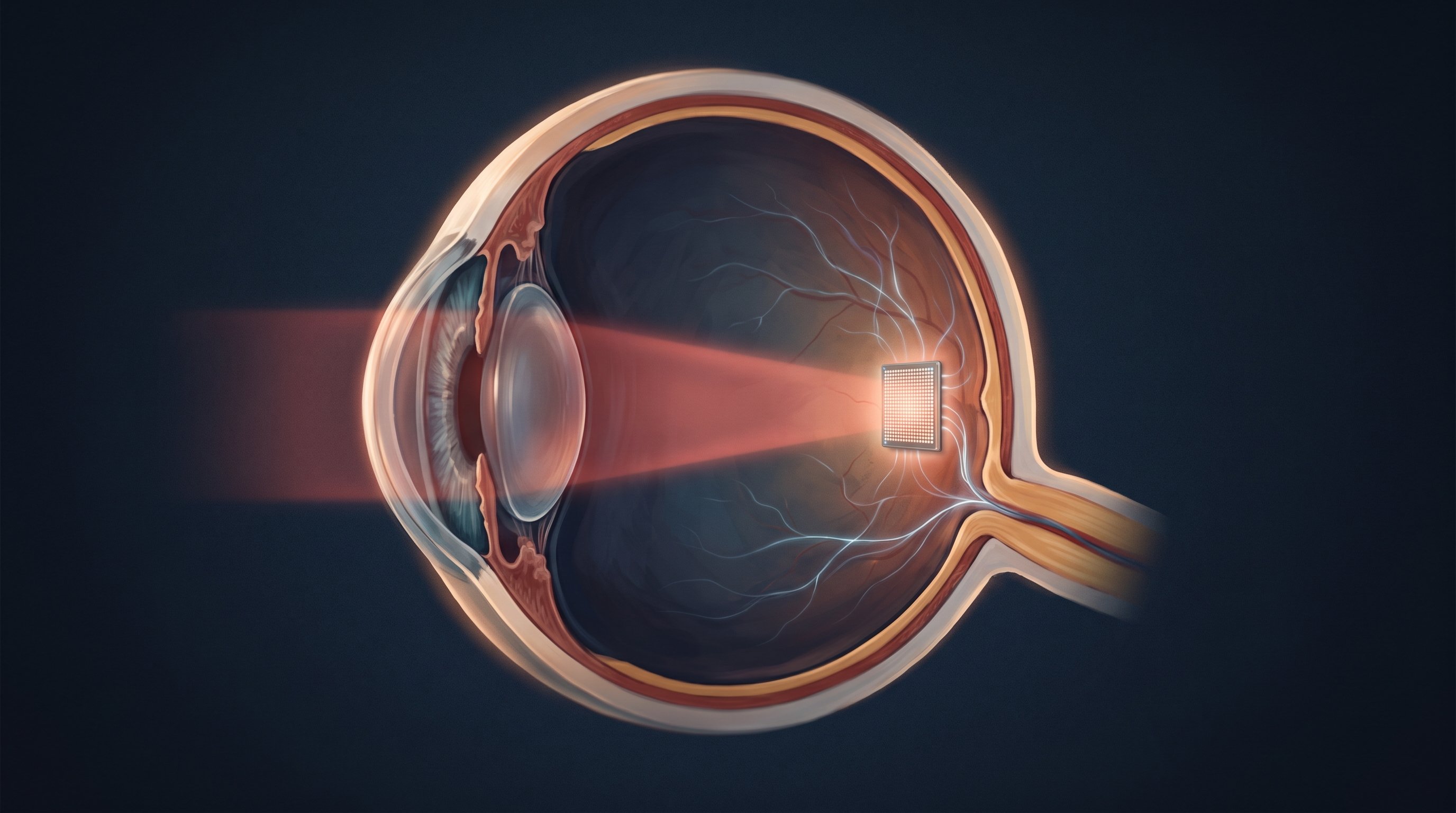
People with macular degeneration see the world with a hole in the middle. The edges of the image are still there, but exactly where they look, there is a blind spot. Reading, recognising faces or using a phone then becomes almost impossible. For the advanced 'dry' form of this eye disease, geographic atrophy, there was until now no treatment that brings back lost sight. Worldwide, an estimated 5 million people have this form.
The American company Science Corporation is now changing that. Their system, called Prima, a tiny implant in the eye with special glasses to go with it, received a CE marking in July 2026. This means it may be used in 30 European countries in adults with severe loss of central vision due to geographic atrophy. In October 2026, MIT Technology Review put the system in the spotlight in a detailed article.
Reading letters and words again
The European approval is based on the PRIMAvera study, which appeared in October 2025 in the medical journal The New England Journal of Medicine. In it, 38 people aged 60 and over received the implant, in 17 hospitals in five European countries. Of the 32 participants examined after a year, 26 (81 per cent) could read at least two more lines on a letter chart than before the treatment. On average, it was more than five lines. According to Science Corporation, after training participants can read letters, numbers and words again. MIT Technology Review also mentions doing crossword puzzles and using the phone.
The vision at the edges, which these people still had, did not get worse on average. The new central vision is not normal vision, but it does give people back something they had lost completely. Lead researcher Frank Holz, professor of ophthalmology at the University Hospital Bonn, says that participants who had completely lost their central vision can now read letters, numbers and words again.
How the system works
Prima makes clever use of how the disease works. In macular degeneration, it is mainly the light-sensitive cells in the retina that die: the cells that convert light into an electrical signal. The nerve cells behind them, which process that signal and send it on to the brain, usually remain healthy. The implant takes over the task of the lost cells. Frank Brodie is an ophthalmologist at the University of California in San Francisco and is medically in charge of Prima at Science Corporation. He says the system thus makes use of the body's own workings to process and pass on the information.
The system consists of three parts:
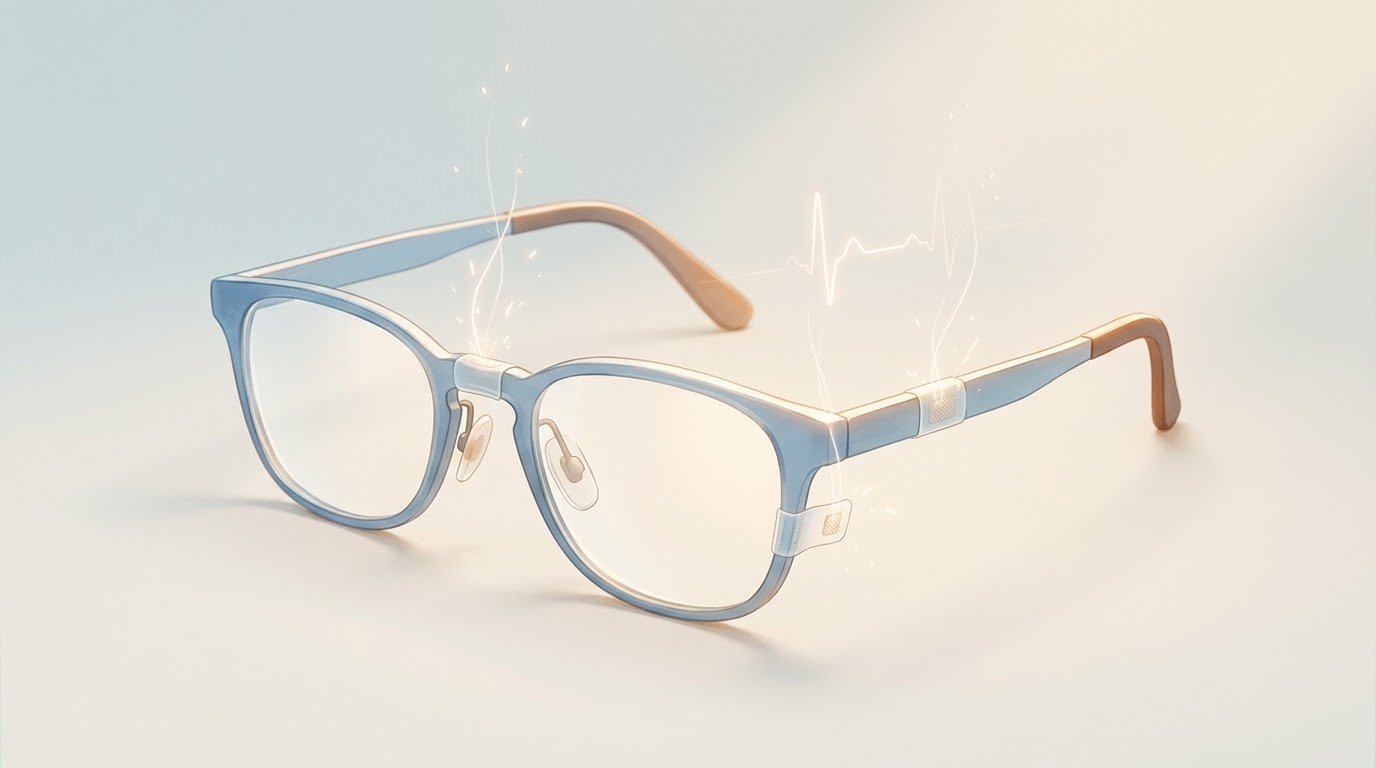
- The glasses have a small camera at the front that films what the wearer sees in front of them.
- A box the size of a phone, which can lie on a table or fit in a pocket, processes that image. With buttons, the wearer adjusts contrast, brightness and zoom.
- A projector in the glasses sends the processed image as flashes of invisible infrared light through the pupil to the back of the eye.
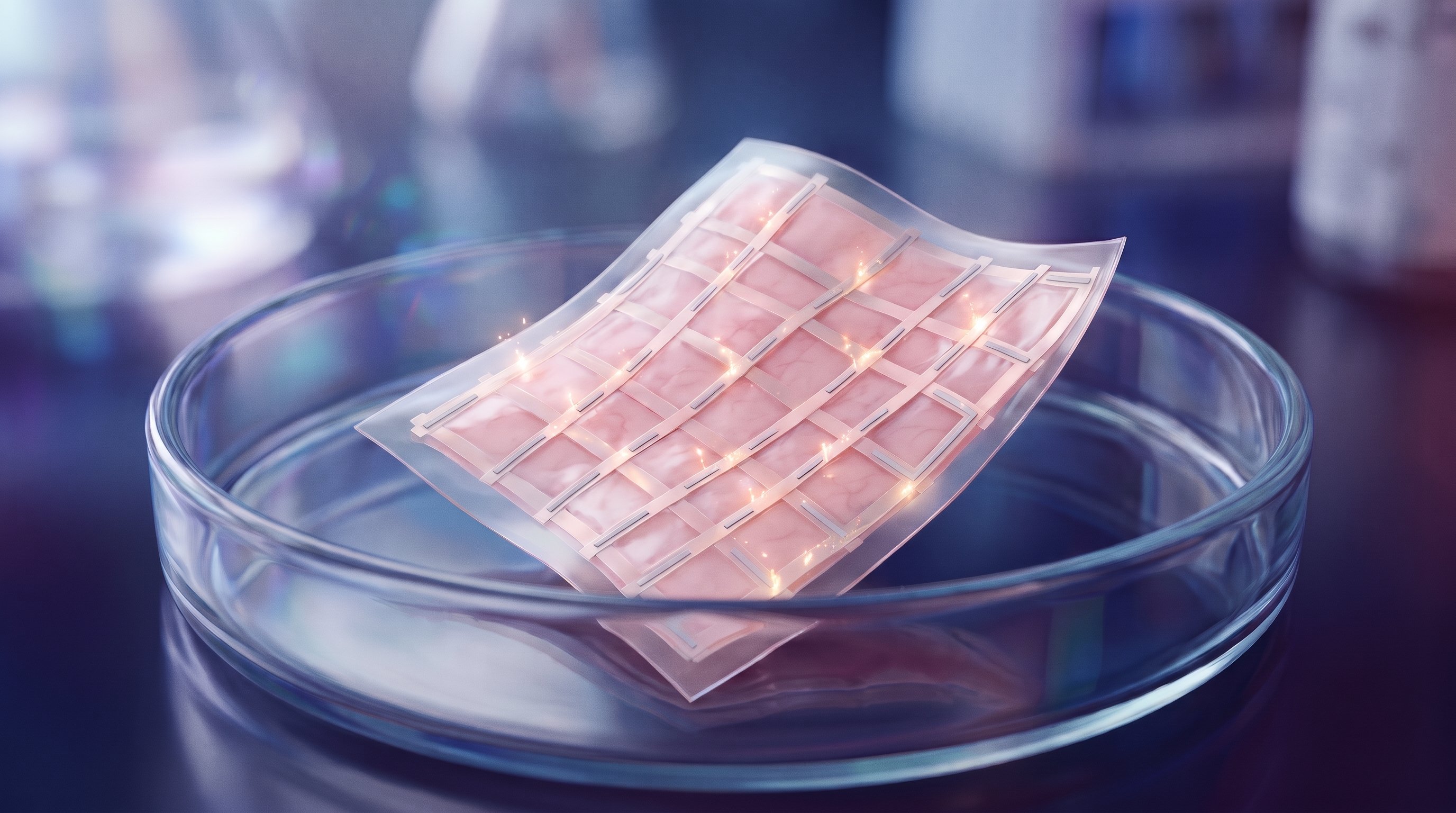
That is where the implant sits: a tiny chip of 2 by 2 millimetres and thinner than half a hair. It has 378 pixels. Each pixel works like a tiny solar panel: it catches the infrared light and turns it into a small current that stimulates the healthy nerve cells. Because the light itself supplies the energy, the implant needs no battery and no wires.
The idea of such a wireless implant that runs on light comes from Daniel Palanker, a professor at Stanford University. The French company Pixium Vision developed it further and started the studies in humans. Science Corporation took over Prima in 2024.
An operation, training and the next steps
The implant is placed under the retina through eye surgery. As with any operation, there are risks. Of the 38 participants in the study, 19 experienced one or more serious side effects, 26 in total. All of them were caused by the operation and not by using the device. Most occurred in the first two months and also disappeared again within two months. The study's independent monitoring committee judged that the benefits outweigh the risks. After the operation, people learn to use their new vision in training sessions.
The first treatments outside a study are expected in Germany. Science Corporation is now working on preparing hospitals in other European countries for the treatment, and is applying for reimbursement from health insurance country by country. In the United States, the regulator FDA has designated Prima as a breakthrough device and as a device for a rare condition, both for geographic atrophy and for the hereditary eye disease Stargardt disease. That speeds up the assessment, but is not yet an approval. The company is working on an application to be allowed to offer the system there as well.
What does this mean for the road to the singularity?
Prima is one of the first links between a computer and the nervous system to reach the hospital as a regular treatment. Science Corporation itself calls it a brain-computer interface: a camera and a computer supply the image, and the body does the rest. That is a real step: not an experiment in a lab, but a treatment with which people can read again.
The image is still simple, with 378 pixels. Future versions with more and smaller pixels could give sharper vision. And because the image first passes through a computer, smarter image processing could improve it even further later on, for example by enhancing important details such as faces or text. In this way, Prima shows how technology and biology are working ever more closely together to give people back something they had lost.
What is the technological singularity? Read the explanation →
Sources
- MIT Technology Review
- Science Corporation: PRIMA-resultaten in NEJM
- NEJM: Subretinal Photovoltaic Implant to Restore Vision in Geographic Atrophy Due to AMD
- MobiHealthNews: Europese lancering van PRIMA
- New Atlas: CE-markering voor 30 landen
- Science Corporation: Frank Brodie medisch directeur Vision en PRIMA