Nederlands
Isomorphic Labs raises $5 billion to develop medicines with AI
Isomorphic Labs, Alphabet's AI drug company, is raising $5 billion (about €4.3 billion). It wants to use the money to expand its AI system for drug design and to bring its first candidate medicines to tests in humans.
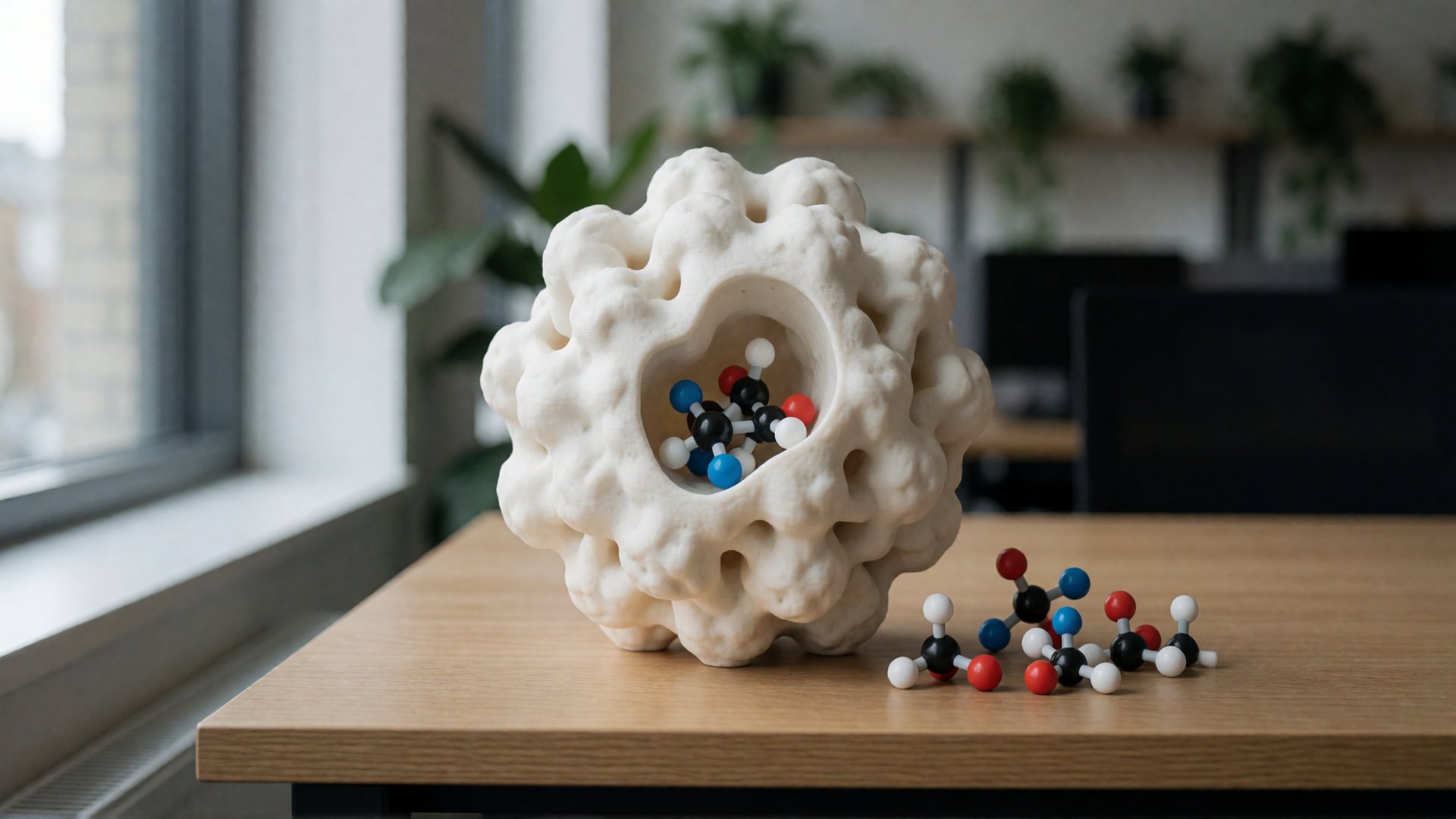
Isomorphic Labs designs new medicines with the help of AI. The company belongs to Alphabet, Google's parent company, and started in 2021 as a spin-off from Google DeepMind. It builds on AlphaFold, the AI system that predicts the shape of proteins and for which Demis Hassabis and John Jumper won the Nobel Prize in Chemistry in 2024. That shape determines where a medicine can attach to a protein, which is why AlphaFold is so useful for drug design. Hassabis still leads Isomorphic Labs. At Google DeepMind he has been chair since August 2026, and he is also Alphabet's chief scientist.
The new $5 billion funding round is led by the investors Greenoaks and Sequoia Capital. Demand from investors was higher than the company needed. New backers include Andreessen Horowitz and other investors, Alphabet is again investing heavily, and all earlier investors are taking part again, including the British government's fund for AI. Isomorphic did not say how much the company is now worth.
The company previously raised $600 million in March 2025 and $2.1 billion in May 2026. With this round, the total raised from outside investors comes to about $7.7 billion.
What the money should deliver
Most of the money goes to IsoDDE, Isomorphic's own system for drug design. It consists of AI models that calculate how possible drug molecules behave, for different diseases and types of medicine. The company's own AI agents, programs that carry out tasks on their own, help by reasoning about how processes in the body are connected.
According to the company, IsoDDE delivers good results in early research, in the lab and in animals, on cancer and on diseases of the immune system. That applies to its own programmes and to work with partners such as Novartis, Eli Lilly and Johnson & Johnson. More than twenty programmes are under way. Hassabis says the company is working on a system that can design hundreds of medicines a year. Isomorphic also wants to go beyond medicines made from small molecules, like most pills. It is also looking at biological medicines: large molecules that are made in living cells.
The next step: tests in humans
Isomorphic has not yet tested a medicine in humans. In January 2026, Hassabis expected the first clinical trials, the tests in humans, to start by the end of 2026. He does not give a new date now, but he says the applications to regulators are on schedule and there will be more news in 2027. No medicine designed with AI has yet been approved anywhere in the world, so Isomorphic's first trials will be an important test for the whole approach.
What does this mean for the road to the singularity?
That AI can design possible medicines is no longer new. What is new is the scale of the effort. The investor Sequoia says it is taking part because Isomorphic has found a consistent pattern in its models: the more computing power and data go in, the better the predictions become, and in a predictable way. If that holds, drug design will start to look like building language models: whoever has the most money and computing power pulls ahead. Pharmaceutical companies will then have to choose between investing heavily themselves or working with one of the few companies that can afford it.
Designing would then move faster than testing, because every candidate medicine still has to go through years of clinical trials. The biggest gain therefore lies in models that predict better in advance which candidates will pass those trials. If that works, fewer medicines will drop out at a late stage, and development becomes cheaper. It could then also pay off to make medicines for diseases with few patients, which are now often left aside. At the same time, this knowledge would end up with a small number of companies with a lot of computing power. How the results then become available and affordable for everyone is a question that still has to be answered.
What is the technological singularity? Read the explanation →