Nederlands
10-dollar light sensor from Cambridge can recognise substances in skin, food and plastic
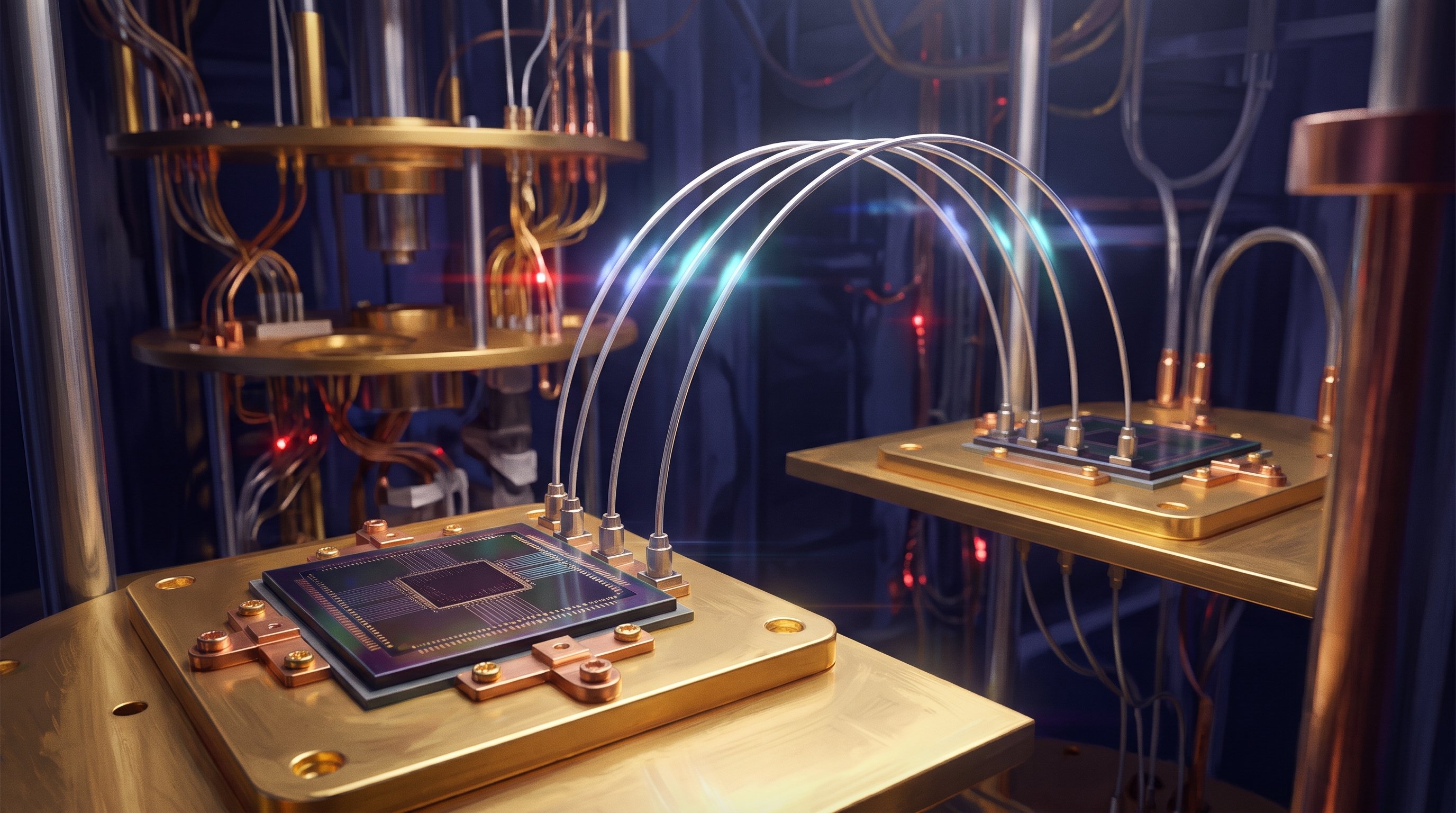
Researchers at the University of Cambridge made a spectrometer on a chip of a few centimetres, for about 10 dollars. It recognises substances by the light they absorb. In one volunteer it tracked blood sugar without a finger prick; the next step is testing in more people.
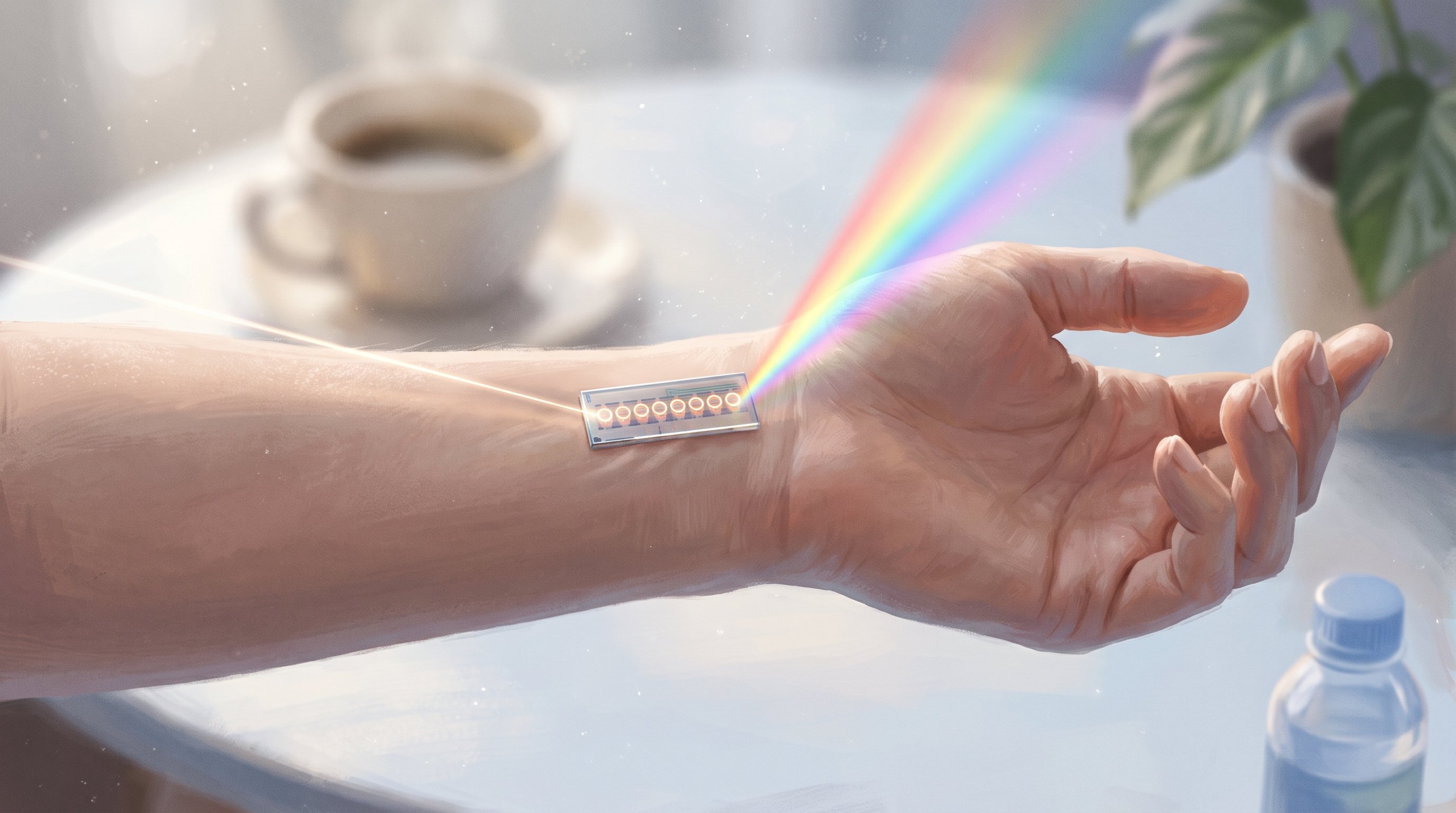
Every substance absorbs a few colours of light and lets the rest through. Which colours those are differs per substance, a bit like a fingerprint. A device that measures that pattern is called a spectrometer. Laboratories have used them for decades to see what is in a sample, from medicines to coffee. But good spectrometers are large and expensive, and so they usually stay in the lab.
Researchers at the University of Cambridge have now made a spectrometer that fits on a chip of a few centimetres and, according to them, costs about 10 dollars, less than 9 euros. They worked with GlitterinTech, a young company that grew out of the same research group. The research appeared this year in the scientific journal Nature Photonics.
Calculating with the light itself
Small spectrometers already exist, but they usually give something up. They see fewer colours, measure less sharply, or need a lot of computing power and complicated tuning to get the right pattern out of a messy signal. That makes them sensitive to noise.
The team led by lead researcher Chunhui Yao chose a different route. The chip sends the light through a row of small, identical light circuits, each of which lets through a repeating pattern of colours. In this way the light already does part of the calculation on its way. After that, a standard calculation is enough to recover the complete colour pattern. According to Yao, this avoids many of the limits that have held small spectrometers back until now: they measure accurately, are not very sensitive to noise and need little computing power.
The chip measures in infrared light, just beyond the colours our eyes can see. That light goes a small way into the skin, and many substances in the body and in food leave a clear fingerprint in it. A measurement takes less than a second.
From coffee to blood sugar
In the lab, the team had the chip tell plastics, medicines, coffee, flour and tea apart. According to the researchers it did so correctly in every case. When measuring how much of a substance was dissolved in a liquid, it was accurate to about one hundredth of a per cent. In those tests that was better than the large spectrometers that laboratories now have on their benches.
The researchers then turned to health. Under conditions similar to those in the body, they measured the moisture in the skin and the levels of alcohol, lactic acid and sugar in the blood. In one volunteer they tracked blood sugar over a longer period without any need for a finger prick. For people with diabetes, who now often prick their finger several times a day or wear a sensor under the skin, such a measurement through the skin is a long-held wish.
The chip also worked reliably at temperatures from minus 20 to 80 degrees Celsius. That is important for a device you wear on your wrist or hang up in a factory.
Ready for production, not yet for patients
Project leader Qixiang Cheng stresses that it is not only about performance in the lab, but about how ready the technology is for use. According to Richard Penty, a colleague on the project, the design is simple, scalable and suitable for making in large numbers. The chip is built on a type of chip material the industry already uses.
It is not yet a ready-made watch that measures your blood sugar. The measurement in humans was done in one volunteer. The next step is testing in many more people, and a medical device must then also be approved. Besides health, the researchers mention other uses: quality control in factories, checking whether food is still fresh and measuring pollution in the environment.
The team's goal is big: to make spectrometers as ordinary as the temperature and motion sensors that are already in every phone and every sports watch.
What does this mean for the road to the singularity?
Cheap sensors change what we know about the world. A spectrometer that costs only a few euros can end up in watches, kitchen appliances, factory machines and measuring posts along the road. Where you now send a sample to a lab and wait days for the result, a steady stream of measurements will then come in.
AI can do a lot with that. Reading a light pattern is pattern recognition, and AI models are strong at that. A model that follows thousands of measurements of one person over months can notice small changes that stay out of sight in a single measurement. And because the same chip can measure coffee, plastic and skin, an AI model that knows all those fields at once can make connections that a food scientist or a doctor alone would not see. In this way a sensor costing about 10 dollars, together with smart software, can bring a piece of the laboratory to everyone.
What is the technological singularity? Read the explanation →