Nederlands
Low-power brain implant recognises mental state from how brain regions work together
Researchers at EPFL have built a chip of 4 by 2 millimetres that measures how brain regions work together and so recognises concentration and emotional arousal. It uses very little power. The chip already works on recordings from people and in rats; patients are the next step.
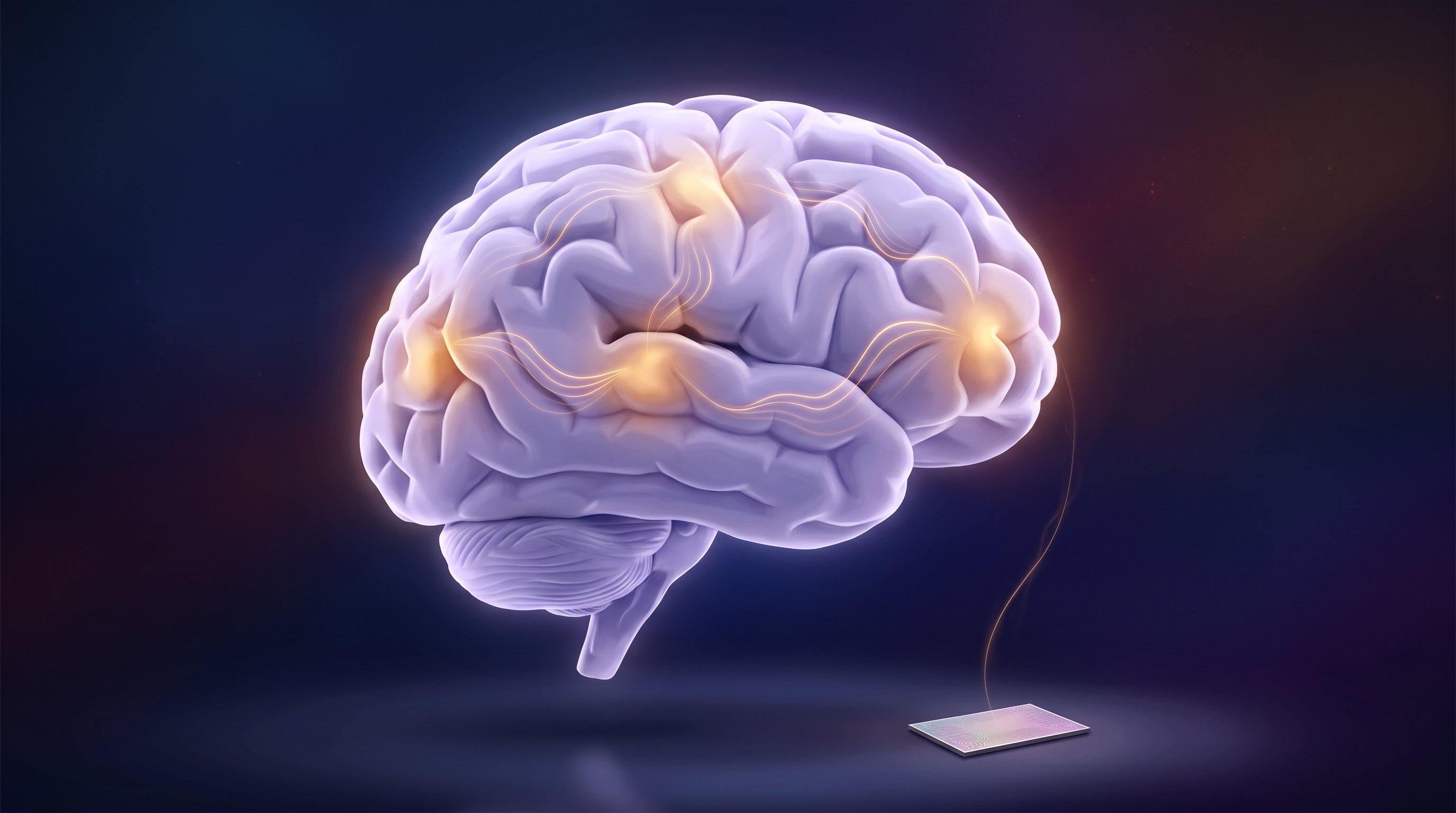
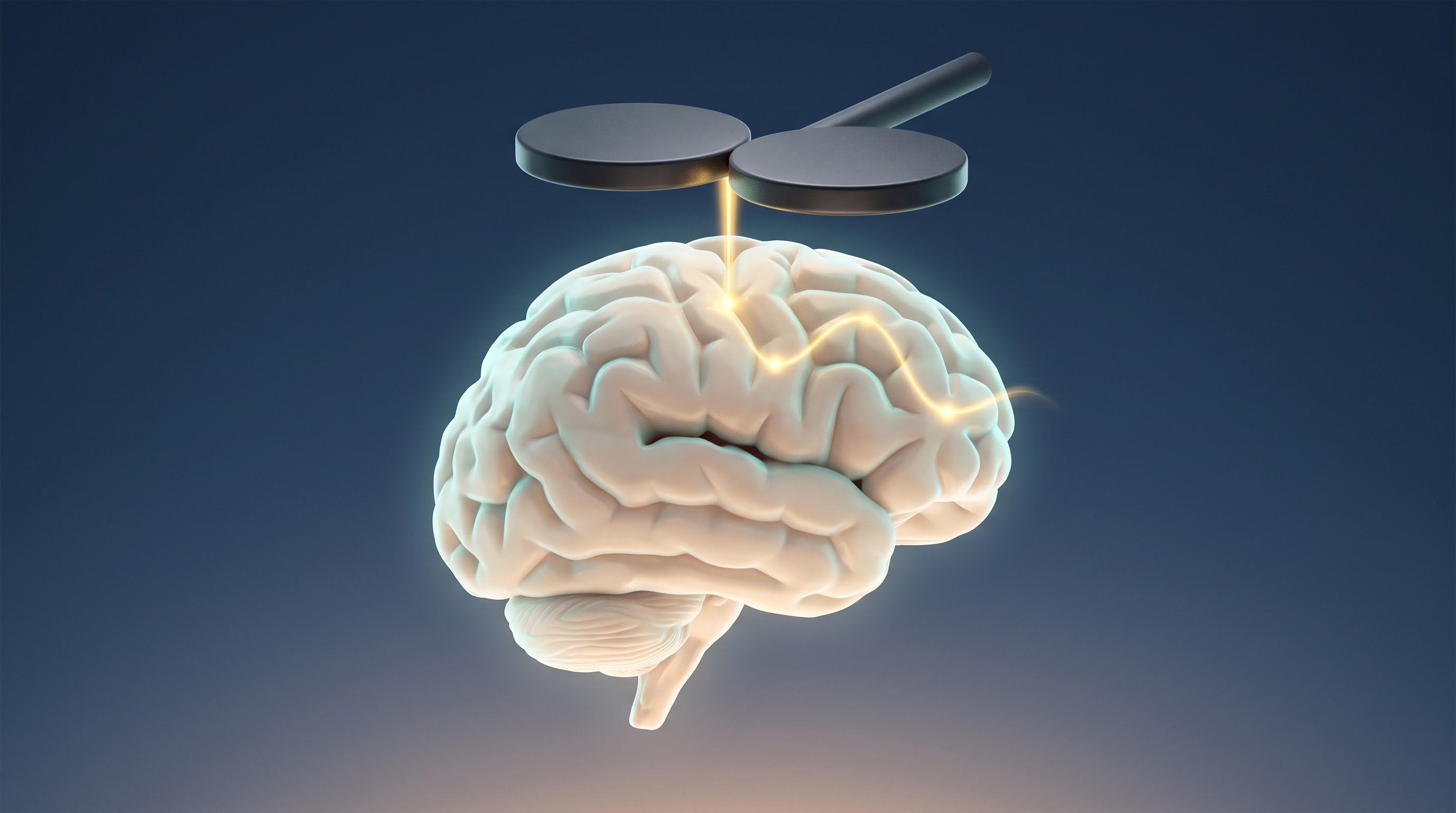
Researchers at the Swiss technical university EPFL have built a tiny chip that can be implanted and that recognises in real time what mental state someone is in. It does this by measuring how different brain regions work together. The chip, called LogSync, is about 4 by 2 millimetres in size and uses less than 200 microwatts: thousands of times less than an ordinary LED bulb. The team of Mahsa Shoaran at the Integrated Neurotechnologies Lab describes the work in the scientific journal IEEE Journal of Solid-State Circuits.
Why the interplay between brain regions matters
In serious mental illnesses such as severe depression, post-traumatic stress disorder (PTSD) or obsessive-compulsive disorder, more and more research suggests that the problem is not one brain region that falters. More often, the problem lies in the communication between regions. Compare it with an orchestra: not one instrument is out of tune, but the musicians are no longer playing in time with each other.
A well-known treatment is deep brain stimulation. Here an implant gives small electrical pulses to a specific brain region. It is already widely used for Parkinson's disease, and doctors are also studying it for severe mental illnesses. Most of these systems now work with fixed settings: they stimulate according to a preset pattern, whatever is happening in the brain. Systems that do adapt usually listen to a single brain region.
What the chip does
LogSync listens to several brain regions at once. It measures two things: how strong the brain waves are, the rhythmic rise and fall of electrical activity, and how closely those waves are in step in different regions. A self-learning algorithm on the chip recognises a particular state from this and then gives a signal to stimulate.
The hardest part was power. An implant in the head may use almost nothing and must not get warm. The researchers therefore designed the calculation rules and the chip together. They use a clever calculation trick with logarithms: it makes heavy calculations much simpler, roughly the way a slide rule replaces multiplying with adding.
Tested on recordings and in rats
The researchers first tested the chip with brain recordings of people from earlier studies. In one recording, people did a thinking task; in the other, they watched video clips that triggered emotions. Based on the brain signals alone, the algorithm could tell when someone was concentrating and when someone became emotionally aroused. This was followed by experiments with rats at the University of Minnesota in the United States. There the implant followed the brain waves and gave a signal to stimulate at exactly the right moment in the rhythm.
The next step is research with patients. The researchers also see uses outside psychiatry: stimulation that adapts in Parkinson's disease, and stimulation from outside the body, for example with targeted sound waves (focused ultrasound).
The work is funded in part by the US National Institute of Mental Health, with a grant of 6.6 million Swiss francs (about 7 million euros) for implants against severe mood and anxiety disorders, and by a European ERC grant funded by Switzerland. The lab is also working on algorithms that learn by themselves which brain signals are important. Shoaran also co-founded the EPFL company Infera Neuro.
What does this mean for the road to the singularity?
This is a step on the path where humans and machines come together. A chip that reads brain signals itself, understands them and responds straight away, and does so using almost no power, is exactly what is needed for implants that adapt to what is happening in the brain at that moment. If this also works in patients, a brain implant could in future step in only when it is needed, like a personal conductor who gets the orchestra playing in time again.
What is the technological singularity? Read the explanation →