Nederlands
AlphaGenome predicts what small changes in DNA do
Google DeepMind presents AlphaGenome: an AI model that reads a stretch of DNA a million letters long and predicts how genes there are switched on and off. It also estimates what a small change does, especially in the part that does not make proteins.

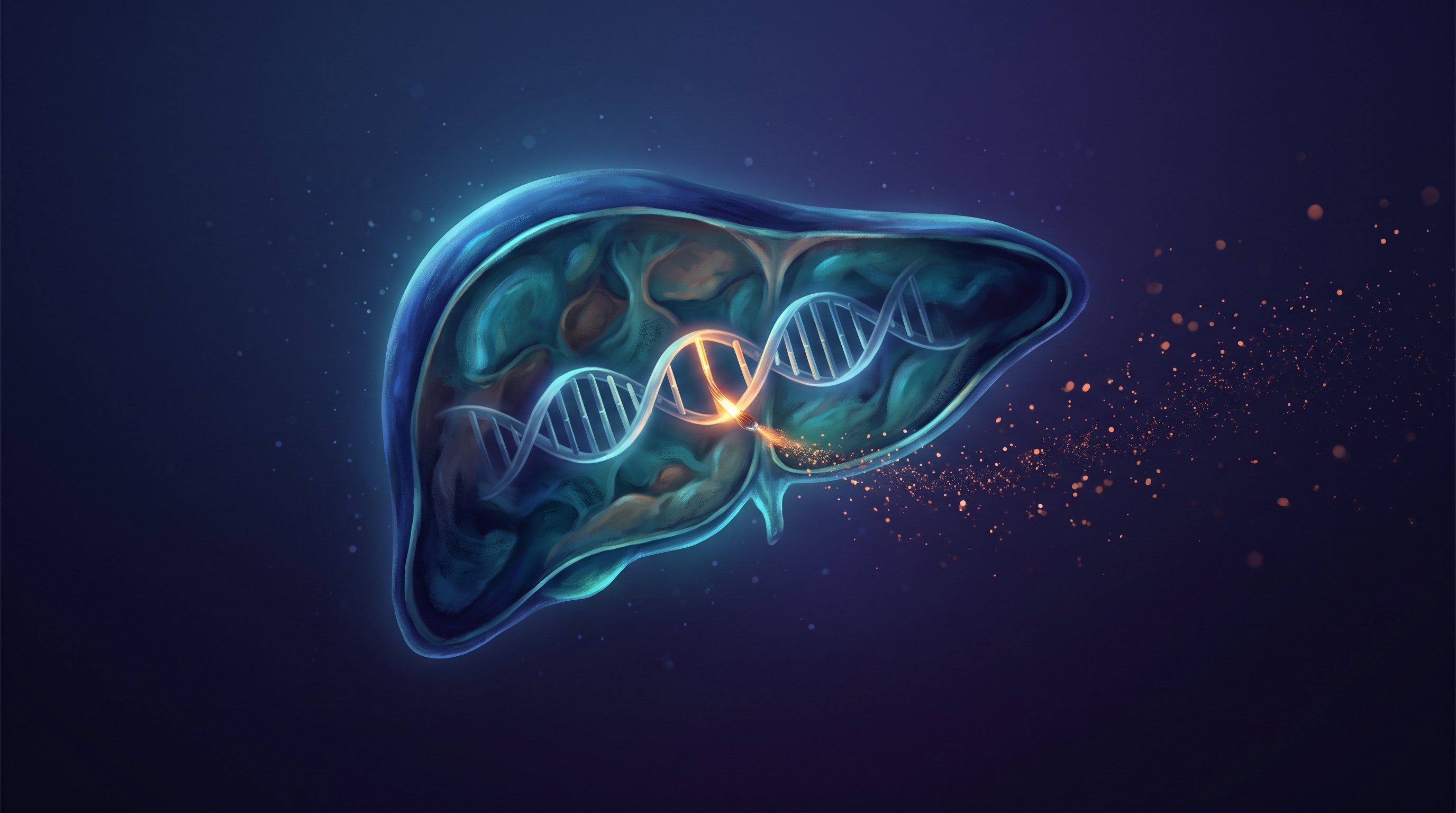
LONDON, JUNE 2025 - Google DeepMind has presented an AI model that predicts what happens when a single letter in DNA changes. It is called AlphaGenome, and it reads a stretch of DNA of up to 1 million letters in one go. From that, the model predicts how the genes in that stretch are switched on and off. This matters most in the part of DNA that does not make proteins, which is the largest part. With it, researchers can find more quickly which errors in DNA lead to disease.
Most of DNA consists of switches
DNA is a long row of four kinds of letters. A small part of it, about 2 per cent, holds the recipe for proteins, the substances that do the work in the cell. The other 98 per cent or so does not make proteins. That does not make this part useless: it decides which gene is switched on, when and in which cell. A brain cell and a liver cell have the same DNA, yet they behave very differently. The difference lies in the switches.
Many changes in DNA that are known to go together with diseases lie in this controlling part. For researchers, it is hard to find out what exactly such a change does.
What AlphaGenome does
The model receives a stretch of DNA of up to 1 million letters and gives predictions for each letter. Among other things, it predicts:
- where genes start and end, for each type of cell and tissue;
- how the message of a gene is cut up and joined together again;
- how much of that message is made;
- which parts of DNA are accessible, which lie close together and where certain proteins attach.
To see what a small change does, the model reads the DNA twice: once as it is, and once with the change. The difference between the two predictions is the effect. This takes about a second, for all the predicted properties at once.
The model works in three layers. The first layer looks for short patterns in the letters. The second layer makes sure information can be exchanged between all positions in the stretch of DNA. The final layers then turn that into predictions. For training, DeepMind used public data from large research projects such as ENCODE, GTEx, 4D Nucleome and FANTOM5, with measurements on hundreds of types of cells and tissues from humans and mice.
What it can do, and what it cannot yet
According to DeepMind, AlphaGenome did better than the best other model in 22 of 24 tests on a single stretch of DNA. When predicting the effect of a change, it did at least as well as the best other model in 24 of 26 tests. It is also the only model that predicts all these properties at the same time.
As an example, DeepMind took changes that occur in a form of leukaemia. The model predicted that they switch on a nearby gene, TAL1, because a site for a certain protein appears there. This matches what was already known from research.
The model cannot do everything yet. Sites that lie more than 100,000 letters away from the gene remain difficult. It was not designed for the DNA of one individual person, and the predictions are for research only and have not been checked for medical use. Researchers can use it for non-commercial work through an interface.
Looking back from 2026
DeepMind published AlphaGenome in Nature in January 2026. The model builds on Enformer, an earlier model, and complements AlphaMissense, which assesses changes in the part of DNA that does make proteins.
Switches in DNA are also where medicines act. The first medicine made with CRISPR, Casgevy, edits such a controlling piece of DNA: it switches off the switch that holds back the production of fetal haemoglobin. That piece of DNA was found after years of research. A model that predicts in a second what a change at such a site does can help speed up that search. It remains a tool for researchers, and every prediction has to be confirmed in the laboratory.