Nederlands
Amazon's Trainium3 is cheaper than tested NVIDIA chips in a preliminary AI agent test
In a preliminary test by SemiAnalysis, Amazon's Trainium3 delivers up to 2.28 times as much AI text per dollar as tested systems from NVIDIA and AMD. Google's TPU now takes part too. NVIDIA's newest system was not in the comparison.
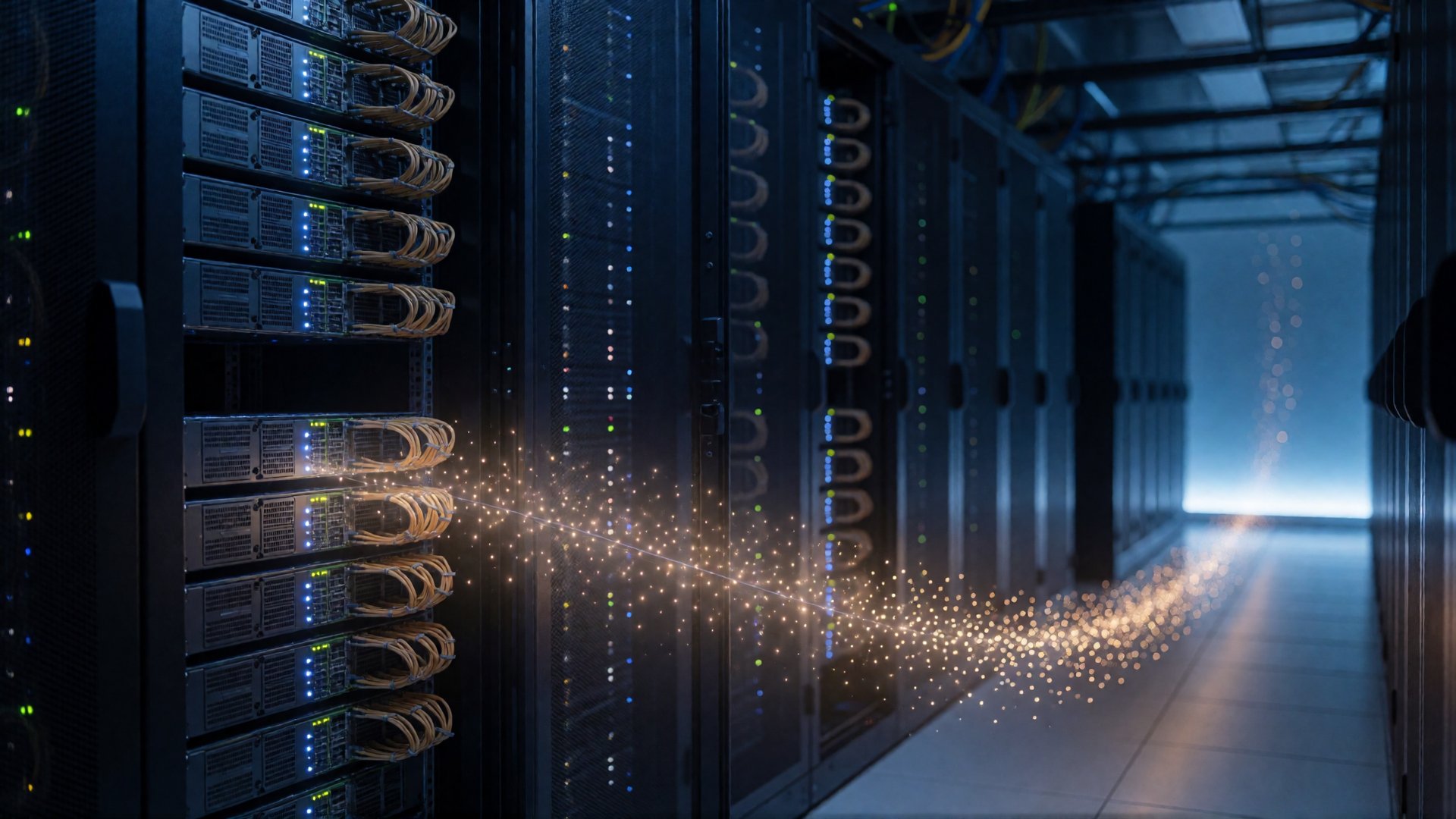
, the research firm SemiAnalysis published the first results of Amazon's Trainium3 UltraServer on AgentX. This test measures the cost and speed of running AI models on tasks that resemble the work of AI agents: programs that complete a task in several steps on their own.
The submission follows a statement by NVIDIA chief executive Jensen Huang in April 2026. On the Dwarkesh Podcast, he said that Google's TPU and Amazon's Trainium, the two companies' own AI chips, would not appear on InferenceMAX, SemiAnalysis's open comparison test for AI chips. AgentX is part of that platform.
What was tested?
SemiAnalysis compared how many tokens the systems deliver per dollar. Tokens are the small pieces of text from which a model builds its answer. The firm also looked at how fast a user receives those tokens.
The test used GLM-5.2/GLM-5.3 from Z.ai, an open model with 744 billion parameters, running on the software vLLM. The Trainium3 UltraServer achieved up to 2.28 times as many tokens per dollar as the tested NVIDIA GB300 NVL72 and B300 and the AMD MI355X. SemiAnalysis calls the figures an official preview: they may still change.
The difference lies mainly in the costs. Per chip, Trainium3 reached about the same speed as a GB300. But SemiAnalysis estimates that a large cloud provider spends 1.05 dollars per hour on owning a Trainium3 chip, compared with 2.31 dollars for a GB300. A customer who rents chips may pay a different price.
NVIDIA's newest system, the Vera Rubin NVL72, was not part of this comparison. On the same SemiAnalysis overview, that system delivers 3.3 times as many tokens per dollar as Trainium3.
Google's TPUv7 was already on AgentX. In a test with GLM-5.2, that chip delivered 1.2 to 2.7 times as many tokens per dollar as the NVIDIA B200 and B300 and the AMD MI355X, when all chips worked with the same calculation precision. NVIDIA chips came out cheaper with an even more economical number format, which TPUv7 does not support.
AgentX simulates long conversations, in which earlier text is reused again and again, and short bursts of work by helper agents. That places different demands on chips than a single chatbot question. Anthropic uses Trainium, among other things, to generate answers from Claude, and also has agreements on Google TPUs.
What does this mean for the road to the singularity?
AI agents can already carry out tasks in several steps, but every step costs new computing work. If the same work can be done more cheaply, developers can let agents handle longer tasks without the bill rising just as fast. That also puts such help within reach of smaller organisations.
The competition is not only about the chip itself. Developers also need to be able to run their models well on that hardware. That is why Google is making parts of its TPU software public. If alternatives to NVIDIA become easier to use this way, customers can switch more easily. That forces all chipmakers to become cheaper or to deliver better software, as NVIDIA is already showing with Vera Rubin. Cheaper computing power will, over time, give more room for AI systems that carry out ever larger tasks by themselves.
What is the technological singularity? Read the explanation →