Nederlands
Bismuth sulfide holds on to solar energy for longer: charge is lost about four times more slowly
Researchers at the University of Oxford have found out why bismuth sulfide captures sunlight well and also holds on to the charge for a long time. That gives a recipe for finding better, non-toxic materials for solar cells.
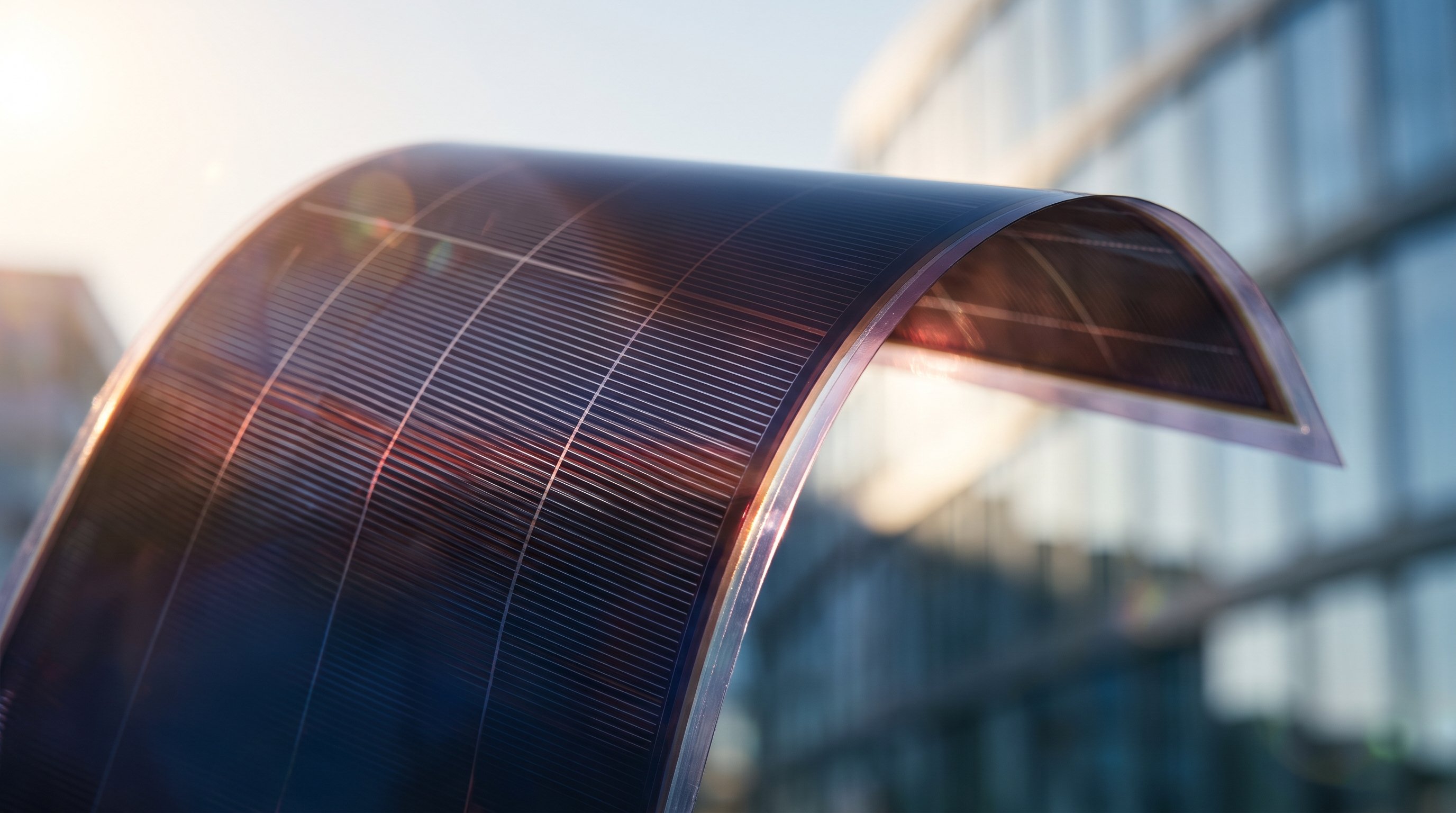
A solar cell has to do two things well. It must capture as much sunlight as possible, and it must hold on to the electrical charge that the light frees for long enough to turn it into electricity. Those two usually do not go well together. Researchers at the University of Oxford now show that the material bismuth sulfide can do both. They published their work on 28 October 2026 in the journal Nature.
The problem: good at capturing, quick to lose
When light falls on a solar cell, it frees an electron. This leaves behind a spot with a positive charge, called a hole. As long as the electron and the hole stay apart, you can get electricity from them. But they attract each other. If they come back together, the energy is lost because it is converted into heat.
For most materials the rule is: the better they capture light, the faster the electron and hole come back together. That is because they recombine along the same route through which the light was captured. An easy way in is then also an easy way back.
A waiting room that holds on to the charge
The team of physicist Laura Herz studied thin layers of bismuth sulfide with extremely short laser pulses. This let them follow what the charge does after the light has been captured.
The material turns out to have an unusual structure. It captures light mainly through one easy route. But just below it lies a second, slightly lower energy level. From that level the way back is much harder, so there the electron and hole come back together only very slowly. Because the two levels lie close together, the charge drops to that lower level after the light has been captured and stays there for much of the time. It works like temporary storage, where the charge waits until it can be used. This was shown by calculations from a second group of physicists in Oxford, led by Marina Filip. They worked out how the energy levels in the material are arranged.
According to the team's estimate, at room temperature the charge is lost about four times more slowly this way than in ordinary materials that capture light just as strongly. There is also a striking piece of evidence. In most materials charge is lost faster when you cool them, but in bismuth sulfide it is lost more slowly. That fits the researchers' explanation: the colder it is, the more charge stays in that storage.
According to Herz, the work shows that the trade-off between capturing light well and losing charge quickly is not unavoidable.
A recipe for new materials
The research is about how the material works, not yet about a solar panel. But it does provide a recipe. According to the researchers, it is now possible to search databases of materials for other substances with the same structure, or to design such substances. Charge that lasts longer can also help to make fuels from sunlight, such as hydrogen. Those are the next steps the team has in mind.
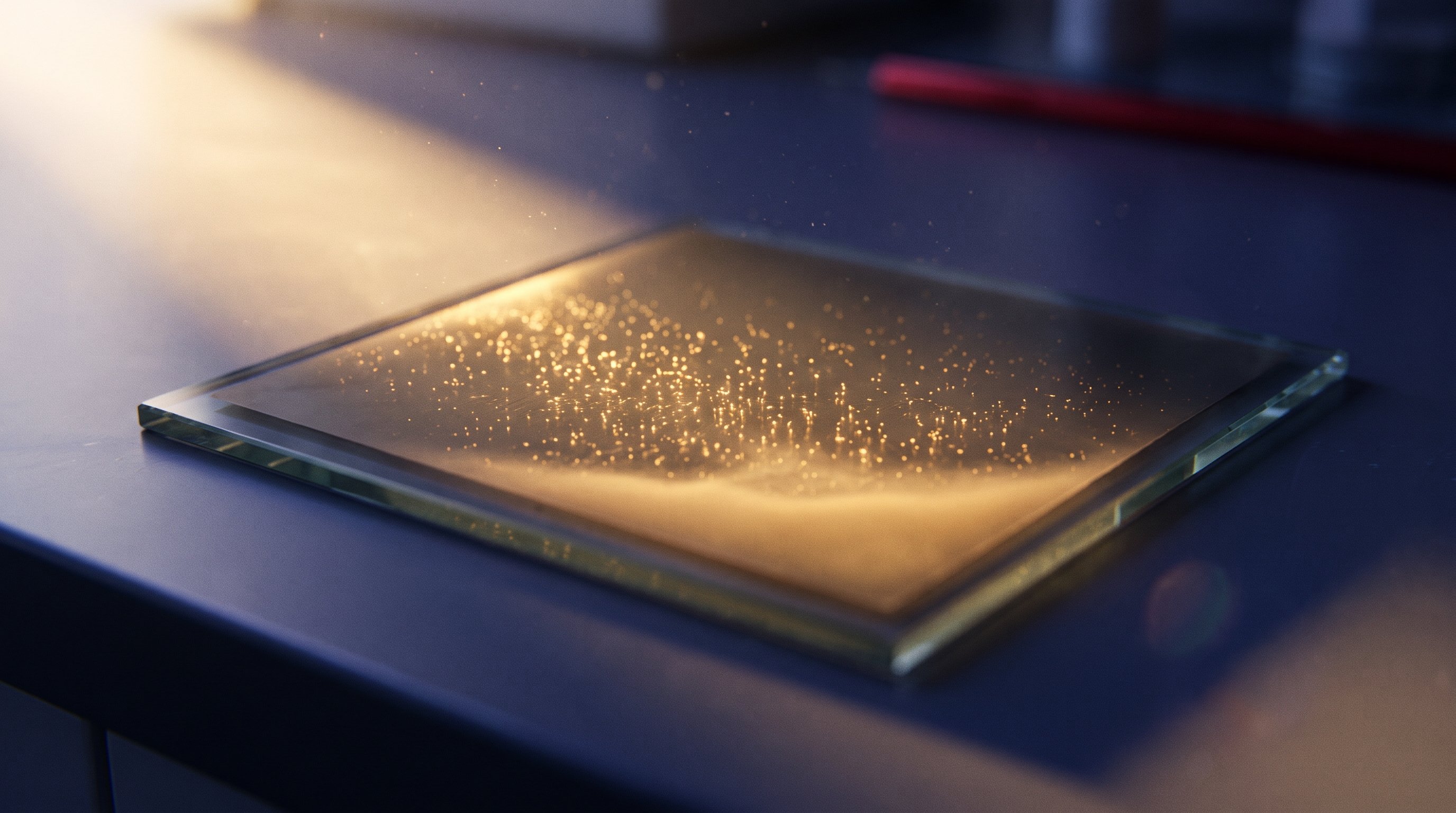
Bismuth sulfide itself also has practical advantages. It is widely available on Earth and not toxic, unlike some materials in solar cells that contain lead or cadmium. Thin layers of it can also be made in simple ways. For example, a liquid can be dropped onto a fast-spinning plate, so that it spreads out into a very thin layer. Or a plate can be placed in a warm bath, in which the layer grows on it by itself. This works at a much lower temperature than is needed for ordinary silicon solar cells, which makes it easier and cheaper.
Bismuth sulfide has attracted interest for some time. In 2022 a team led by Imperial College London showed that layers of sodium bismuth sulfide only 30 nanometres thick capture about as much sunlight as an ordinary silicon solar cell, which is around 10,000 times thicker. Those layers stayed stable in air for eleven months, without a protective coating.
What does this mean for the road to the singularity?
A future with much more computing power, robots and electric devices needs much more cheap, clean electricity. Solar cells made from non-toxic substances that are widely available can play a big part in that. This research tackles one of the basic problems of solar cells: charge that is lost before you can use it. Now that it is known how bismuth sulfide prevents this, researchers can search in a targeted way for more materials that can do the same.
What is the technological singularity? Read the explanation →