Nederlands
Chemical lock helps organic solar cells keep working well for longer
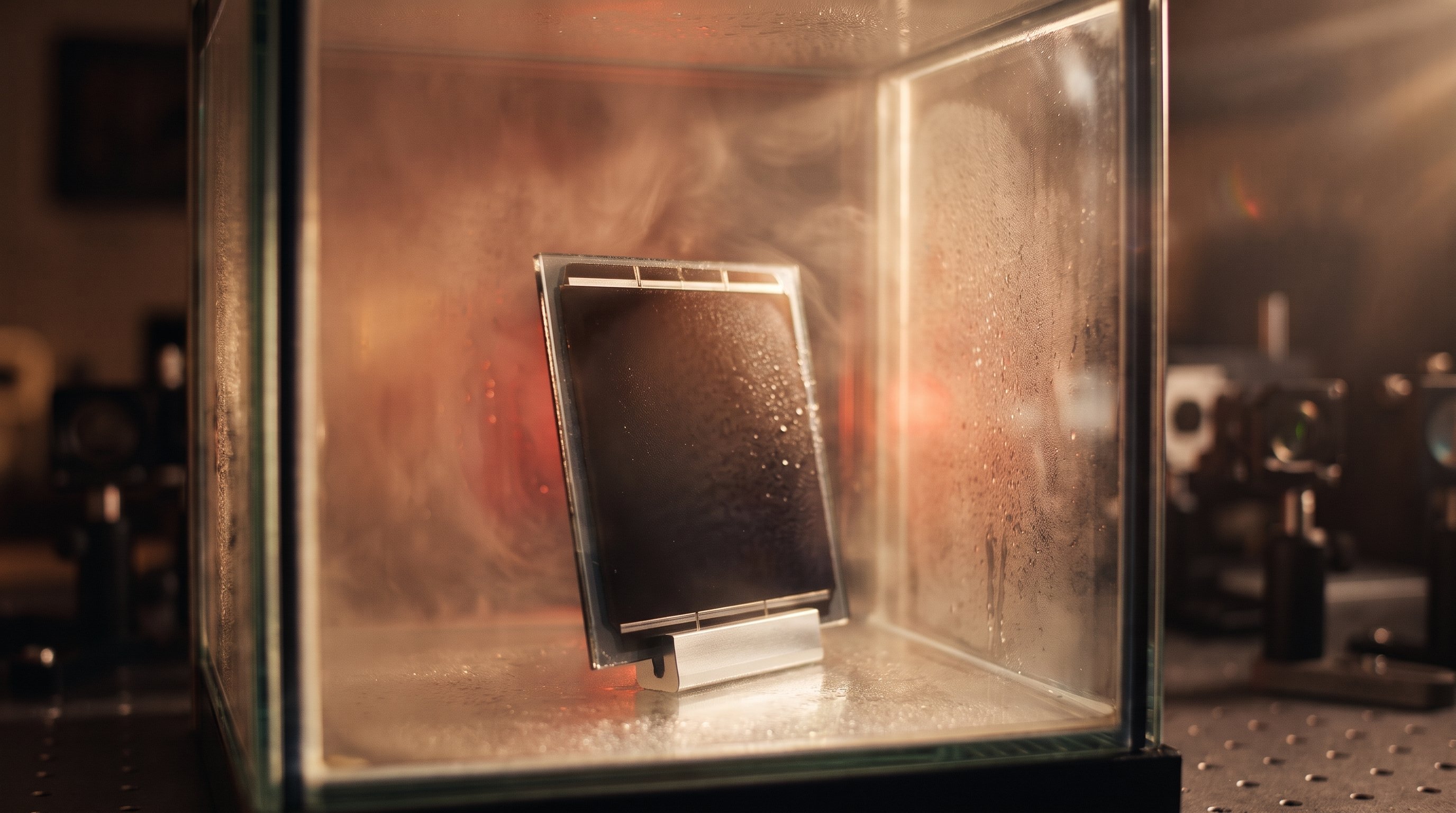
Chinese researchers have chemically fixed a very thin, fragile layer inside organic solar cells. Small cells reached 20.4 per cent efficiency, larger modules 18.8 per cent, and after 2,000 hours in the light the tested cells still delivered more than 85 per cent of their starting efficiency.
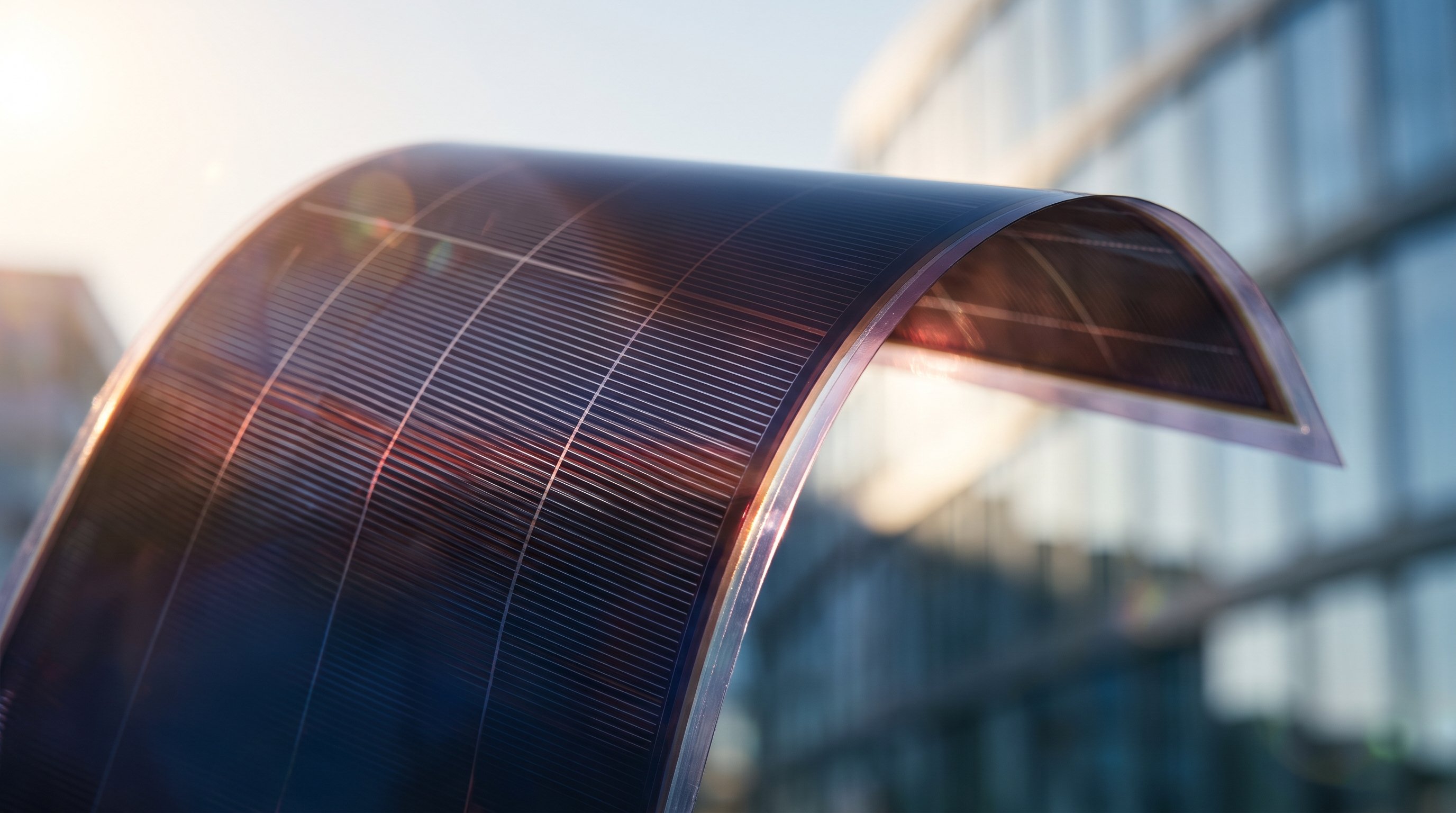
Researchers at the Ningbo Institute of Materials Technology and Engineering (NIMTE), part of the Chinese Academy of Sciences, have strengthened a weak spot in organic solar cells, a light and flexible type of solar cell. They chemically fixed a very thin layer of molecules, so that it no longer comes loose under heat and light. Their small test cells turned 20.4 per cent of sunlight into electricity, and larger modules reached 18.8 per cent. The research by the group of Professor Ge Ziyi appeared on 21 October 2026 in the scientific journal Joule.
Solar cells that are light and flexible
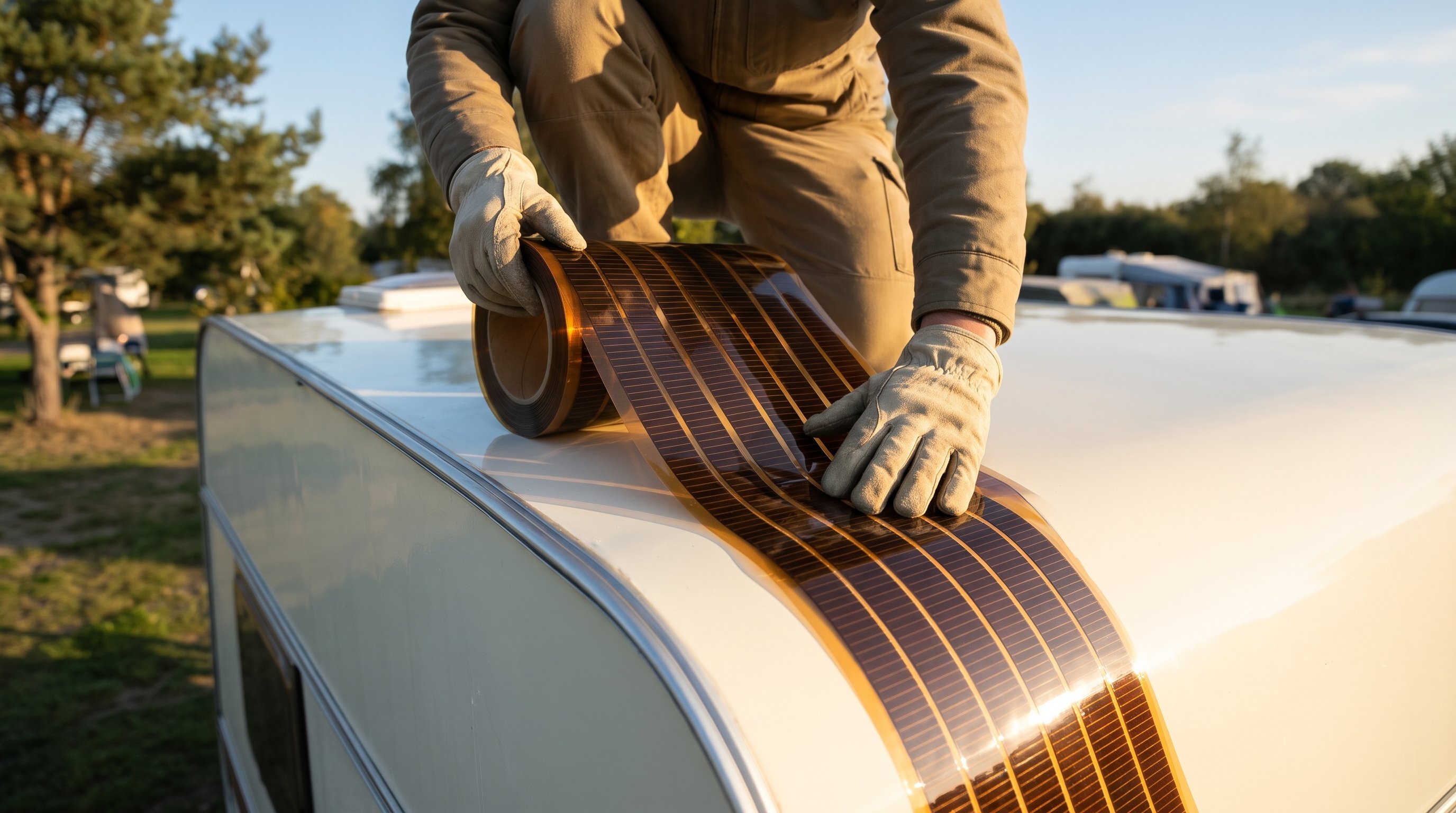
Ordinary solar panels are made of silicon: sturdy, but heavy and stiff. Organic solar cells use carbon-based materials, a bit like plastic. They are light and flexible, and they can be applied to large surfaces as a kind of ink. This means they could one day sit on windows, car roofs or the casings of devices.
The efficiency of these cells has risen sharply in recent years: in the lab, the best ones now turn more than a fifth of sunlight into electricity. What still needs to improve is how long they keep working well, and how well that works with larger pieces.
The weak spot
In many of these cells, a layer just one molecule thick sits against the transparent electrode, the layer that carries the current away. These molecules arrange themselves into a dense carpet and help bring the electric charge to the electrode. Each molecule is attached to the electrode by a single 'foot'. Under heat and long exposure to light, these feet come loose, and the cell starts to work less well.
The chemical lock
The team first applied an extremely thin layer of an indium compound to the electrode, by letting it settle in a vacuum chamber. When this layer is then heated, the loose chlorine particles disappear and a strong chemical network forms. In it, the molecules of the carpet are held in place by several bonds at once, like a tent held in the ground by several pegs instead of one. The researchers call this a molecular lock.
Results
According to the researchers, small test cells turned 20.4 per cent of sunlight into electricity. They then made larger modules: several cells connected together, about 4 by 4 centimetres in total (15.6 square centimetres). On the part of the module that generates electricity, these reached 18.8 per cent. According to Professor Liu Quan, who co-led the research, that is a record for modules of this kind.
The lifetime is good too. The researchers let the cells work non-stop in the light for 2,000 hours, almost twelve weeks, at 25 degrees Celsius, while they delivered as much power as possible the whole time. After that, they still had more than 85 per cent of their original efficiency.
Next steps
The tests were done in the lab, at a fixed temperature. The next step is research into how the cells perform outdoors, where it gets warmer and colder and the weather changes, and how the technique works in large-scale production and over a longer period. That the approach also works with larger modules, and not only with tiny test cells, is a good sign for that.
What does this mean for the road to the singularity?
AI is increasingly moving outside the data centre: into robots, drones, sensors and wearable devices. These need power in places where there is no socket and where stiff silicon panels do not fit. Light, flexible solar cells that generate electricity on such devices themselves make them less dependent on the grid. Lifetime in particular was still a bottleneck for these cells. This work tackles an important weak spot and shows that the solution also works with larger modules. The same research group is also working on transparent modules for windows that generate electricity. If such cells also keep working well outdoors for years, a world in which many more surfaces and devices generate their own electricity comes a big step closer.
What is the technological singularity? Read the explanation →