Nederlands
New solar cell survives 1,000 hours of heat and humidity thanks to a clean-up trick
Korean researchers filter the substance that makes perovskite solar cells wear out quickly out of the production process. After 1,000 hours at 85 degrees and in humid air, their cells still kept 95 per cent of their efficiency, an important step towards solar panels that last a long time.
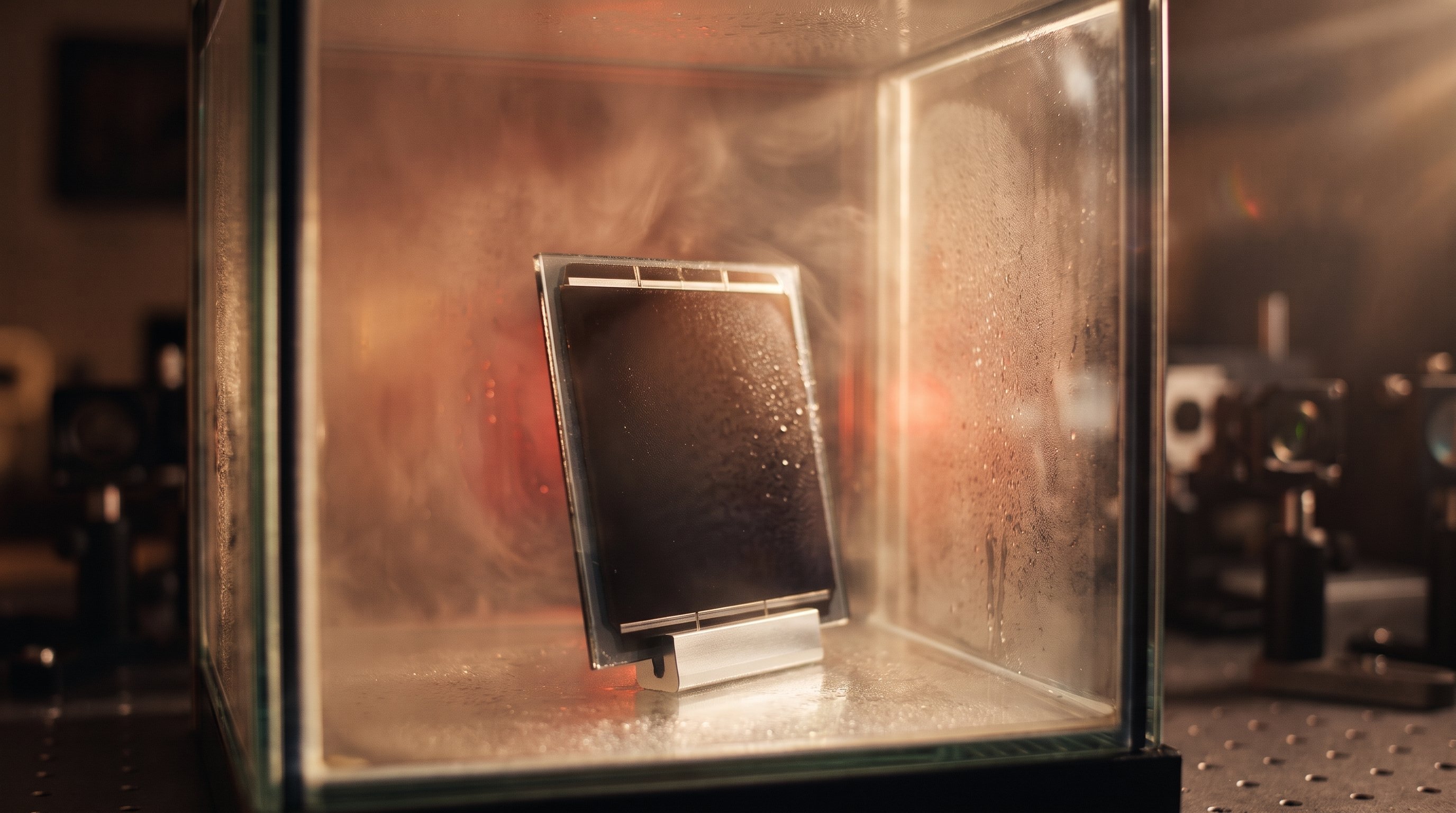
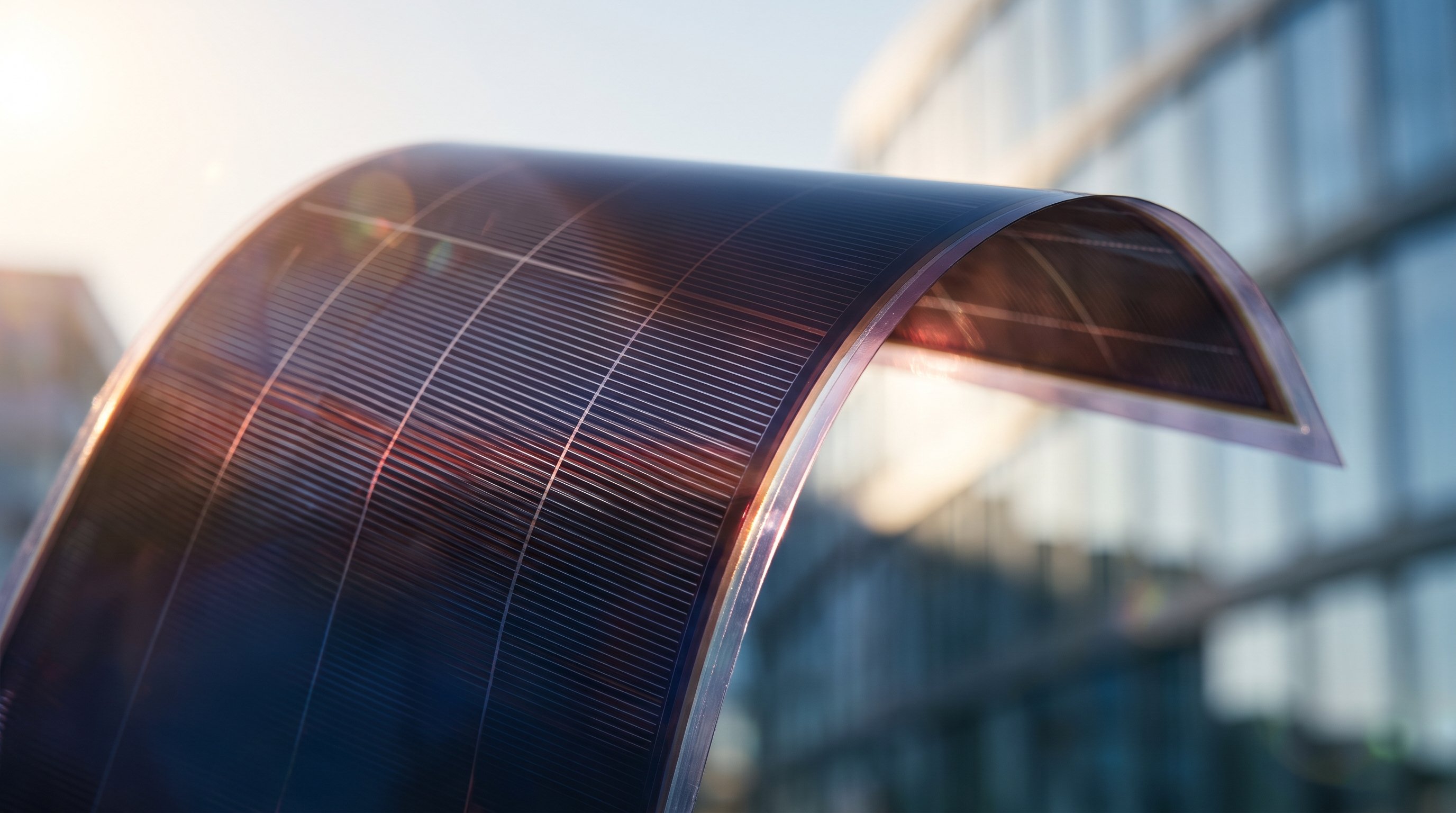
Perovskite solar cells are the great promise of solar energy. They are cheap to make, light and highly efficient. Perovskite is a crystal-like material that turns light into electricity very well. There is one big problem: the cells do not last long. They hold out for roughly two to ten years, while ordinary silicon solar panels last 25 to 30 years. Heat and moisture in particular damage them quickly.
A team from the Korea Institute of Energy Research (KIER) and the South Korean university UNIST has tackled an important cause of this. Their cells came through a tough test with heat and moisture with almost no loss.
Where is the problem?
A solar cell consists of thin layers stacked on top of each other. The perovskite captures the light. Other layers carry the current away, like wires that take the charge away. One of those layers only conducts well if a lithium salt is added to it during production. To dissolve that salt properly, extra helper substances are needed.
In the long run, these additives are the weak point. In heat and moisture the helper substances evaporate, and tiny holes form between the layers. The lithium does not stay in place either: it wanders through the cell and damages it from the inside. As a result, the cell loses more and more of its power.
A clean-up trick
The lithium salt is really only needed at the start, to set off a chemical reaction. After that it only gets in the way. The team led by researcher Se Jin Ahn of KIER therefore came up with a way to take the lithium out again before the layer is made.
They add a powder of nickel oxide to the liquid from which the layer is made. That powder strongly attracts the lithium, the way a magnet picks up iron filings. The researchers then filter the grains out, with the lithium attached to them. Because the grains are relatively large, this is easy. What remains is a clean liquid without lithium, without helper substances and without powder. They use it to make a layer that can no longer be damaged from the inside.
Resistant to heat and moisture
The researchers tested the cells for 1,000 hours, more than six weeks, at 85 degrees Celsius and 85 per cent humidity. This is a widely used, tough test to see whether solar panels can cope outdoors. Afterwards, the cells still had 95 per cent of their original efficiency.
This did not come at the cost of performance. The new cells turn 25.24 per cent of sunlight into electricity, slightly more than the 25.21 per cent of comparable cells made in the usual way. The research appeared as the cover article of the scientific journal Advanced Science.
According to Ahn, this is an important step towards solving the well-known lifespan problem of perovskite cells. That also matters for so-called tandem cells, in which a layer of perovskite sits on top of a silicon cell. This way the panel captures more of the sunlight than either material alone.
What still needs to happen?
The research was done with small cells in the lab. A six-week test shows that the cells cope much better with heat and moisture, but it does not yet say how many years a panel on a roof will last. The next step is to apply the method to larger panels and in factories, and to test them outdoors for longer.
What does this mean for the road to the singularity?
A world with ever smarter computers and robots needs an enormous amount of cheap, clean electricity. Perovskite cells can make solar panels cheaper and more efficient, especially as a tandem cell on top of silicon. What has held them back so far is that they wear out too quickly. This research tackles one of the main causes, with a simple filter instead of an expensive new material. If this can also be done in the factory, solar panels that deliver more electricity for less money come a good deal closer.
What is the technological singularity? Read the explanation →