Nederlands
Cornell cuts the first charging round of new batteries by up to 60 per cent
Every new lithium-ion battery has to be charged and discharged a few times in the factory before it is ready. Researchers at Cornell University found how this costly step can be up to about 60 per cent shorter, without making the battery any worse.
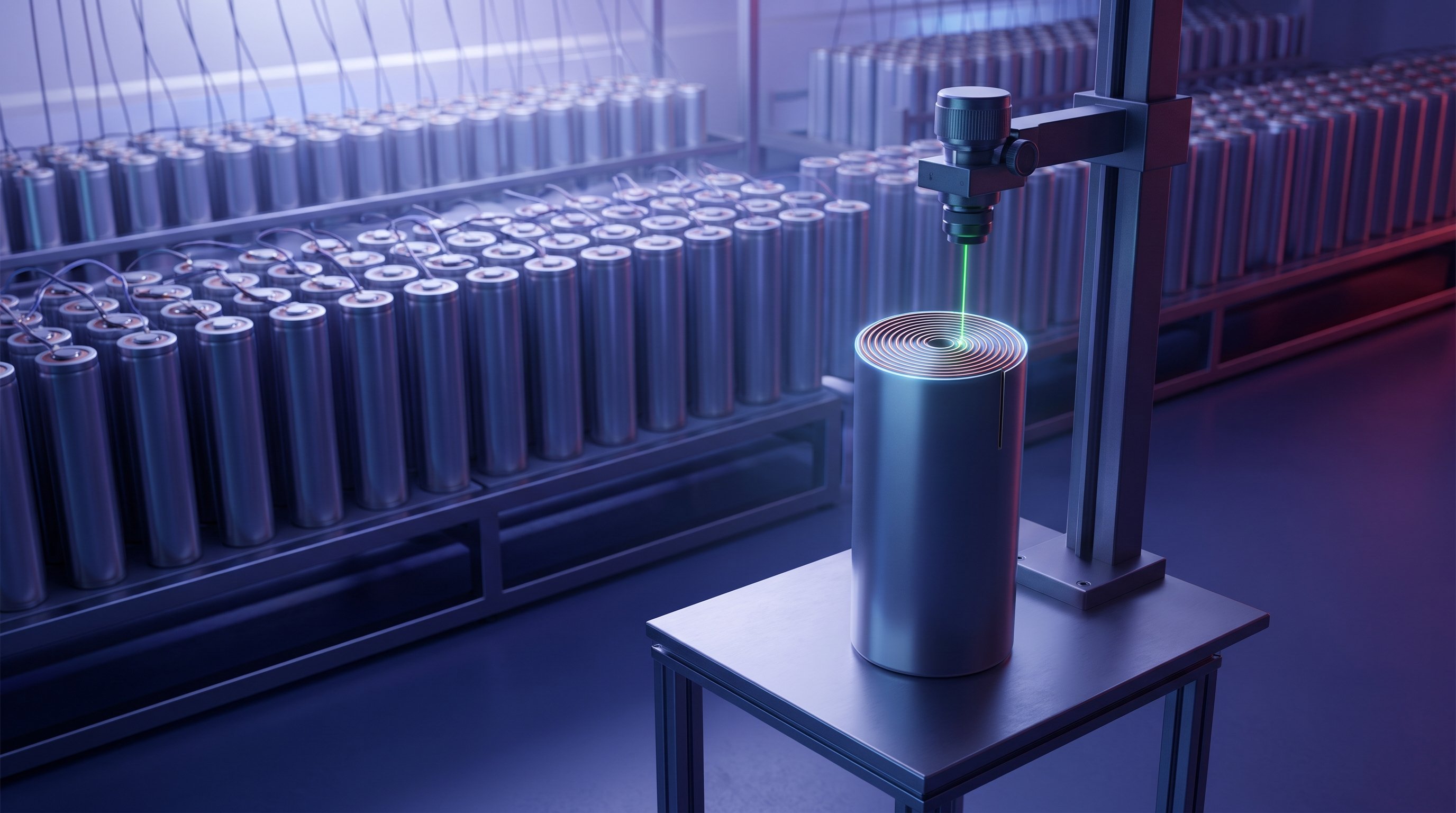
A new lithium-ion battery is not finished once it has been assembled. In the factory, it is first charged and discharged a few times, very slowly. This step is called formation. Researchers at Cornell University in the United States, working with the battery company Charge CCCV (C4V), have found a way to make this step up to about 60 per cent shorter. The research was published on 28 October 2026 in the scientific journal Energy Storage Materials.
Why that first charging round matters so much
During formation, thin protective layers grow inside the battery on the electrodes, the two poles between which the current flows. These layers work a bit like the varnish on a new floor: if they are done well, the battery lasts a long time and keeps performing well.
The problem is that formation takes a long time and costs a lot. According to the researchers, this step accounts for about a third of the production cost of a battery. It takes up around a quarter of the floor space of a factory, because thousands of batteries stand in racks charging at the same time. And it uses about a quarter of all the electricity in a battery factory.
Manufacturers are wary of simply shortening this step, because they cannot see what happens inside. Whether a faster method harms the battery in the long run only becomes clear after thousands of charges. Such a test takes months to years, says Vibha Kalra, professor of chemical engineering, who led the research.
Watching while the battery charges
So the team looked inside the battery live while it was charging. With one measuring technique, they used laser light to follow which substances form on the electrodes. With the other, they measured how the electrical resistance inside the battery changes. This let them see exactly when the protective layers were finished and stable.
That taught them two things. Slow charging remains important, because it makes the layers more even and stronger. But discharging can be much faster without harming the layers. The most important resistance measurements also turned out to be stable after just one and a half charging rounds. That makes it possible to see early on whether things are going well.
With this knowledge, the researchers designed two faster methods. They tested them at C4V in Binghamton, in the state of New York. The batteries performed just as well as with the company's usual method, while formation took up to about 60 per cent less time.
Less electricity and space needed
Shalabh Gupta, systems engineering manager at C4V, estimates that a factory would then use 10 to 15 per cent less electricity in total. Less factory space is also needed for the charging racks. For very large battery factories, the team says this could save up to 100 million dollars a year. These are the researchers' estimates; the next step is to show that the method works just as well in a large factory.
The research is part of the Energy Storage Engine in Upstate New York, a programme of the US science funder NSF in which universities and companies work together on batteries. Stan Whittingham, who received the 2019 Nobel Prize in Chemistry for his work on the lithium-ion battery, is its innovation director. He calls the work of Kalra's group a big step forward.
What does this mean for the road to the singularity?
Batteries are needed everywhere: in electric cars, in robots and in large storage systems that hold power from the sun and wind. The faster and cheaper factories can make them, the faster these uses can grow. This research shows that a step that relied mainly on experience and caution can be made much shorter with smart measurements. The same factory can then make more batteries with less electricity. If other manufacturers adopt the method, it could give battery production worldwide a strong push.
What is the technological singularity? Read the explanation →