Nederlands
South Korean solar device makes hydrogen with record efficiency for organic materials
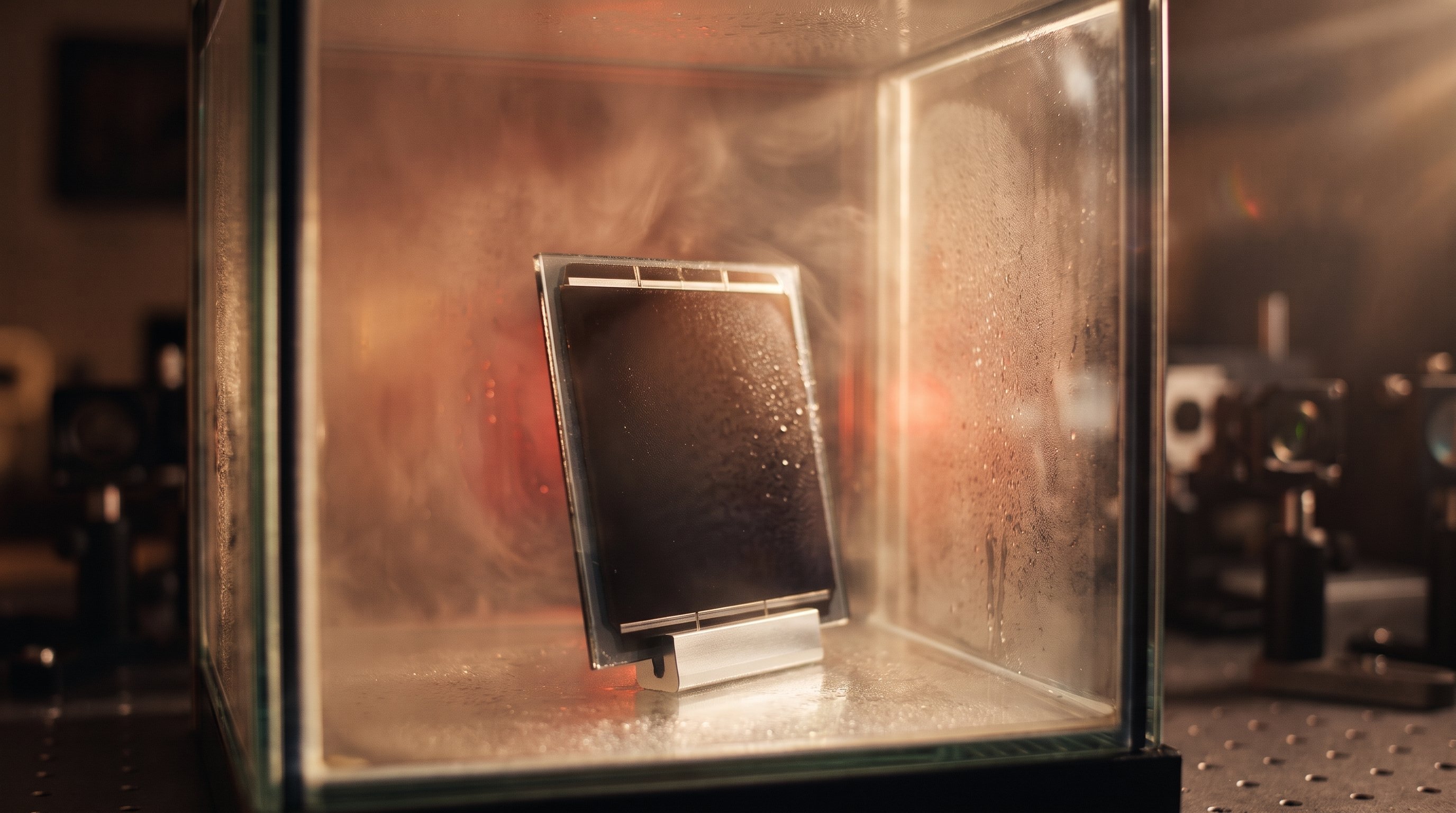
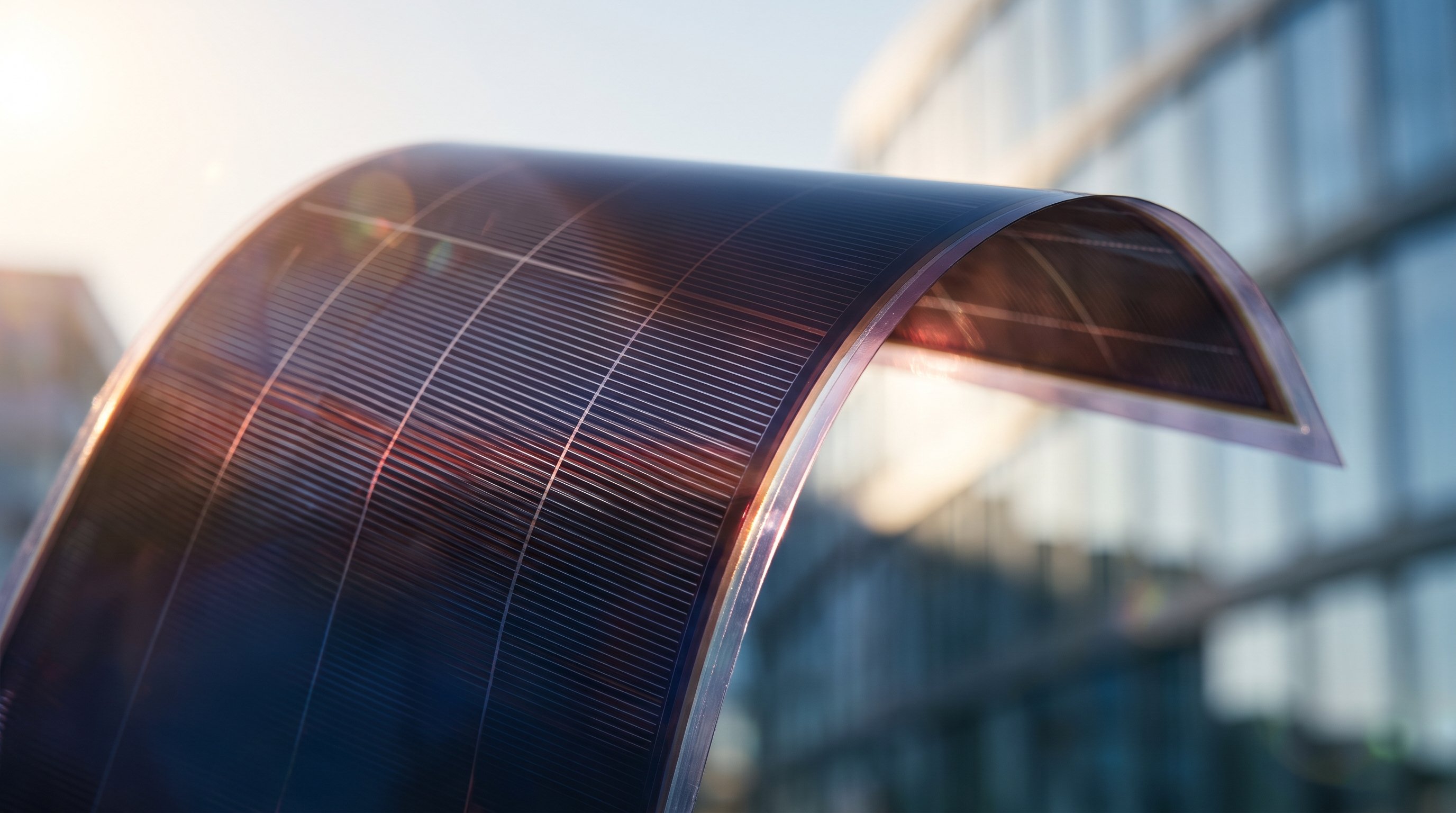
Researchers at UNIST in South Korea have built a device made of organic, carbon-based materials that splits water into hydrogen using sunlight alone. It reaches 7.9 per cent efficiency, a record for this type of device according to the team. The next step is a version that lasts much longer.
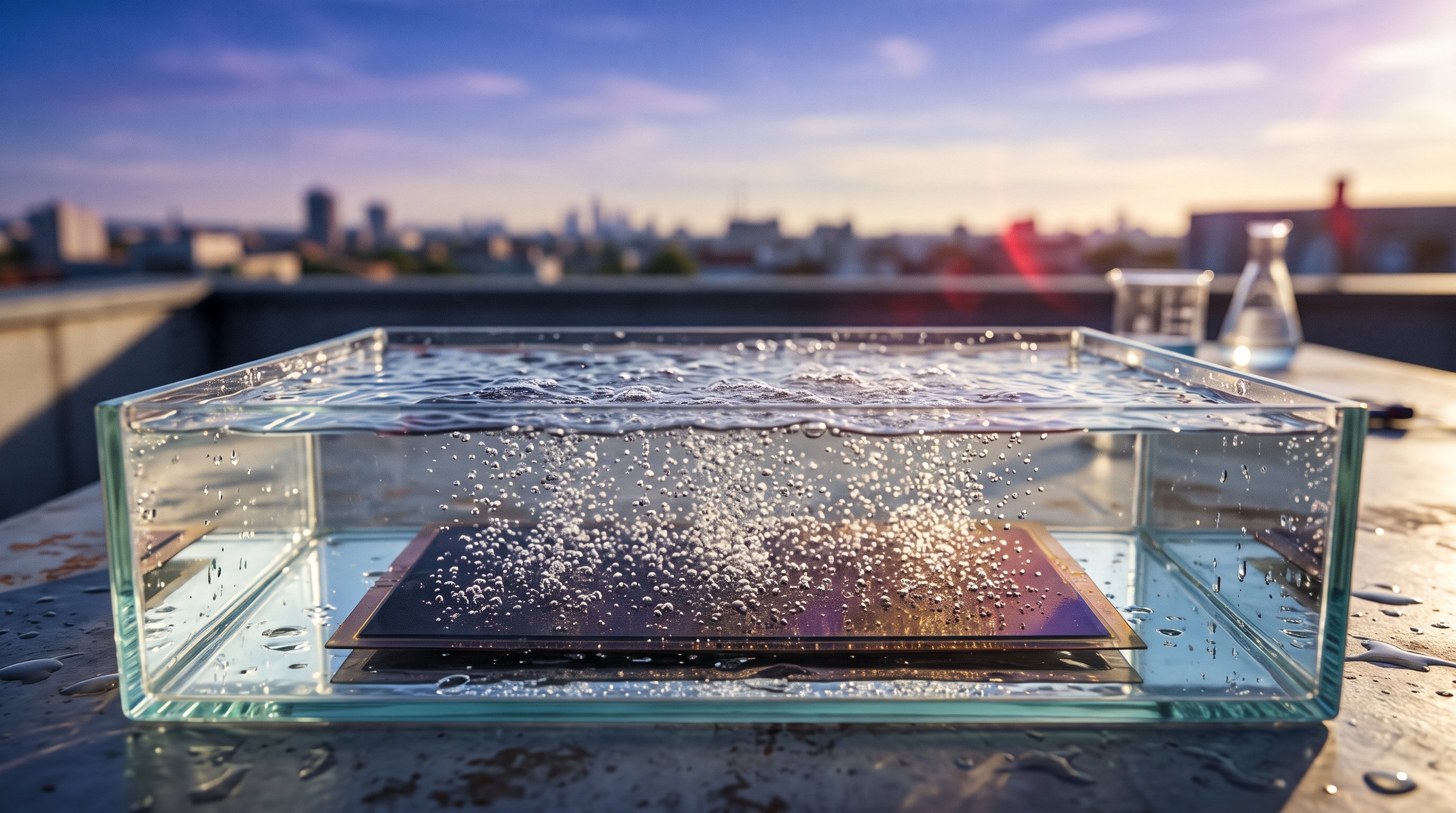
Hydrogen is a clean fuel: when it is used, only water is left. You can make hydrogen by splitting water, but that takes energy. Ideally, sunlight would do this directly, without a solar panel, cables and a power socket in between. A team at the Ulsan National Institute of Science and Technology (UNIST) in South Korea has taken a big step towards that.
Their device turns 7.9 per cent of the energy in sunlight into energy stored in hydrogen. According to the researchers, that is the highest efficiency ever reported for a device made of organic semiconductors that works without electricity from outside. Organic semiconductors are carbon-based materials that can turn light into electrical charge, as in flexible solar cells. They are cheap to make.
The research, led by professors Kim Jin-young, Lee Jae-sung and Lim Han-kwon, appeared online on 6 September 2026 in the journal Applied Catalysis B: Environment and Energy. UNIST announced it at the end of October.
Two layers, and a better connection between them
Splitting water needs a voltage of at least 1.23 volts. One layer of organic material does not deliver that. So the team stacked two light-catching layers on top of each other. Their voltages then add up, just like two batteries in a row.
The difficult part is the layer that connects the two. Usually a material called PEDOT:PSS is used for this. It is acidic and attracts moisture. Because of that, it quickly damages the layers around it, and the device soon starts to perform worse. The researchers replaced that layer with a combination of two substances. Molybdenum oxide is not acidic and holds little moisture. An organic molecule reduces small flaws in the material and passes on the electrical charge more easily.
It works. After ten hours of non-stop operation, the small test cell still delivered 86 per cent of the current it gave at the start. With the usual connecting layer, that was about 36 per cent. The cell is small: just over half a square centimetre. The team also built a larger version of 320 square centimetres, about the size of an A5 sheet of paper. Outdoors, in ordinary sunlight, it made hydrogen without electricity from outside.
Cheaper to make
The researchers also looked at costs. On the electrode where the hydrogen forms, the platinum has been cut to about 0.1 per cent of the weight. Platinum is an expensive precious metal. The other electrode, where oxygen forms, uses a catalyst of nickel, iron and cobalt: metals that are much cheaper. A catalyst is a substance that speeds up a reaction without being used up itself. Both electrodes sit in the same liquid (a potassium hydroxide solution), so no expensive membrane is needed to keep them apart.
The team also calculated what hydrogen from a large plant using this technology would cost. At the current efficiency and a production of 10 tonnes a day, it comes to 9.26 dollars per kilo, according to the researchers. If the efficiency rises to 16 per cent, the theoretical maximum for this design, and production to 30 tonnes a day, the price would fall to 4.26 dollars per kilo. At 10 per cent efficiency the device could already compete with similar devices made of inorganic materials, because the organic electrodes are cheaper to make.
Fast progress elsewhere too
Other teams are also working on hydrogen from sunlight without a power socket. In March 2025, researchers at Imperial College London and Queen Mary University of London described a different organic design in Nature Energy. A protective graphite sheet kept that device stable for days, where earlier designs got worse within hours. It reached 5 per cent efficiency. The Korean device reaches a higher efficiency; the British approach showed that such a device can also work for days on end.
In Singapore, a team built an artificial leaf that uses sunlight to get hydrogen from seawater while breaking down a toxic substance. That device catches the light with perovskite, another cheap material, and uses the toxic substance to make the reaction easier. The Korean team chose organic layers and a better connection between them. Different routes, then, with the same goal: cheap hydrogen, straight from sunlight.
The next steps
The Korean device has now been tested for ten hours in a row. For real use it has to last for years, and the efficiency also has to rise further to make hydrogen cheap enough. That is what the researchers now want to improve. The better connecting layer is an important building block for this, because it was exactly that layer that made earlier devices wear out quickly.
What does this mean for the road to the singularity?
A future with much more computing power, robots and industry needs a lot of clean energy, and a way to store it. Hydrogen can do that: you make it when the sun shines and use it when you need it. This device shows that cheap organic materials can do this directly with sunlight. With a record of 7.9 per cent and a first larger version that works outdoors, cheap hydrogen from sunlight is another step closer.
What is the technological singularity? Read the explanation →