Nederlands
Solar power overtakes nuclear power worldwide for the first time
In 2025, solar panels generated more electricity than all nuclear power plants combined for the first time, says a major annual report on nuclear power. This year the lead is already clear, while nuclear's share is at its lowest level in 45 years.
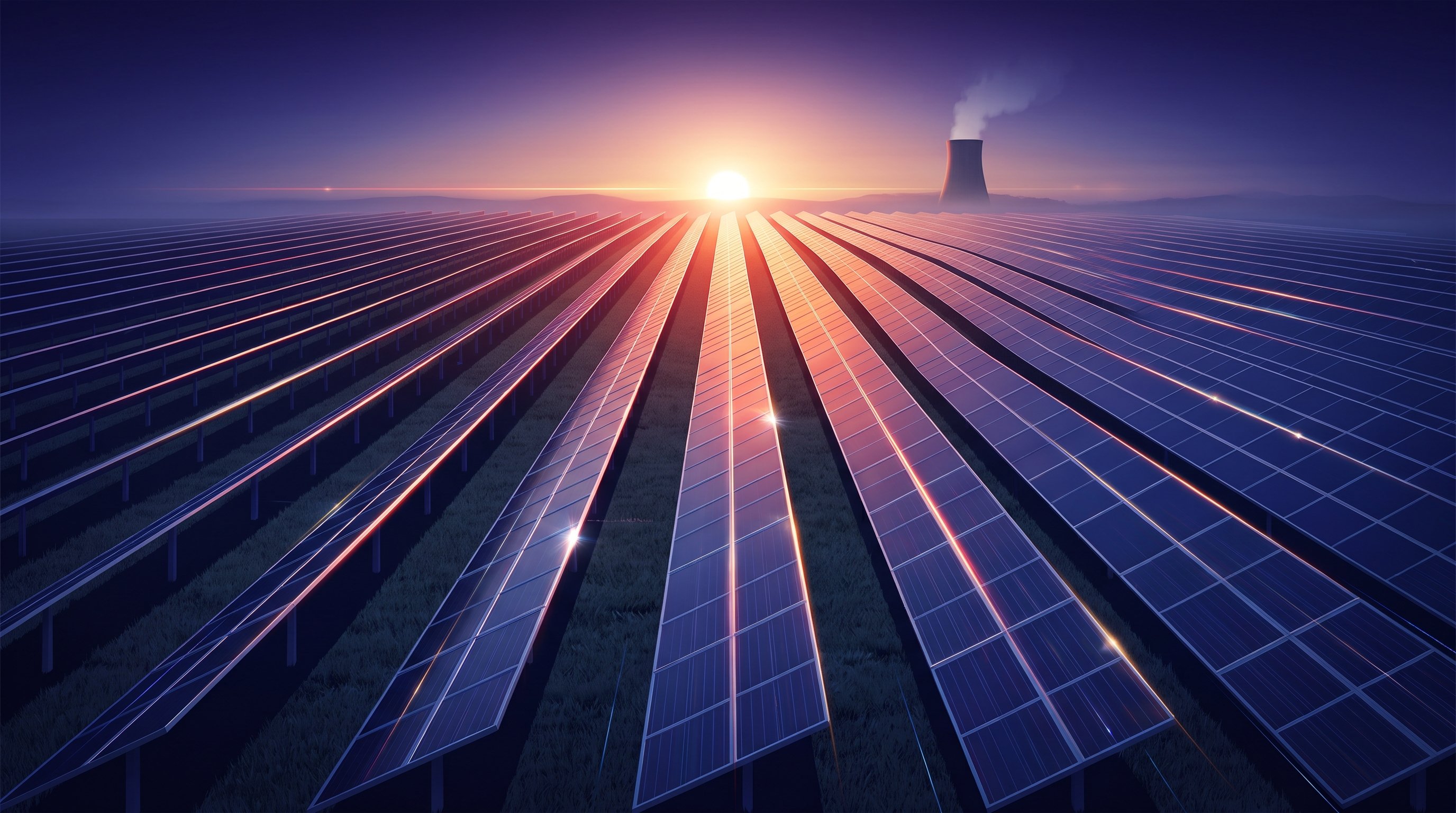
Solar power has overtaken nuclear power worldwide. According to the World Nuclear Industry Status Report (WNISR) 2026, solar panels generated more electricity than all nuclear power plants combined over a full year for the first time in 2025. The WNISR is an independent annual report on the nuclear industry, led by the French consultant Mycle Schneider.
The British energy think tank Ember, which tracks electricity figures worldwide, came out slightly lower in its own review of 2025 and expected solar to catch up in 2026. By now the lead is clear: according to a BBC analysis of Ember figures, solar panels generated about 13% more electricity than nuclear plants in the twelve months up to September 2026.
On a monthly basis, it happened earlier. Wind power overtook nuclear power in March 2025, and solar power did so a month later. From March 2025 to June 2026, solar or wind generated more electricity than nuclear every month; in March, April and May 2026, both of them did.
Record growth for solar, standstill for nuclear
According to Ember, electricity from solar panels grew by 30% in 2025 to 2,778 terawatt-hours, the fastest growth in eight years. A terawatt-hour is a billion kilowatt-hours. Solar covered three quarters of the extra electricity the world needed; together with wind, it was 99%. As a result, electricity from coal, gas and oil fell slightly (by 0.2%), for the first time since 2020. For the first time in modern history, renewable sources together (33.8%) also generated more electricity than coal (33.0%).
For nuclear power, the WNISR sees a different picture. Nuclear's share of all the world's electricity fell to 8.8%. That is the lowest level in about 45 years and roughly half of its peak of 17.5% in 1996. In 2025, four reactors started up and seven closed, the first fall since 2021. New construction happens mainly in China and Russia: of the 52 reactors whose construction started between 2020 and 2025, 51 were of Chinese or Russian make.
Why solar is growing so fast
Price is the main driver. According to experts the BBC spoke to, a solar panel now costs well under 100 dollars, and it supplies electricity for decades without any fuel. Large factories in China have brought prices down sharply. On top of that, batteries became another 45% cheaper in 2025, according to Ember. This means solar power from the daytime can also be used in the evening: the batteries installed in 2025 can shift 14% of the new solar power to other hours.
Countries all over the world are making the switch. According to the BBC, Pakistan went from less than 2% solar power in 2019 to about a quarter now, largely paid for by households themselves. India installed more solar panels than the United States for the first time, and in Australia more than four million homes have solar panels.
The real growth is probably even faster than the WNISR shows. The report counts 510 gigawatts of new solar panels in 2025, but the solar programme of the International Energy Agency (IEA PVPS) arrives at about 690 gigawatts. According to the researchers, the next challenges are no longer the price of panels. They are the power grid, storage for the winter and the speed at which cars, heating and factories switch to electricity.
What does this mean for the road to the singularity?
Computing power, robots and factories all need electricity, and the cheaper and more plentiful that electricity is, the faster they can grow. Solar power, together with ever cheaper batteries, is now one of the largest sources of electricity in the world. That means a fast-growing supply of clean, affordable energy for data centres and for an economy that runs more and more on electricity. The next step is a power grid that can deliver that energy everywhere, at any time.
What is the technological singularity? Read the explanation →