Nederlands
In mice, the brain selectively takes in proteins from the blood
The blood-brain barrier is more than a wall. In mice, it selectively lets 92 proteins from the blood through and delivers them to specific brain cells, researchers in San Francisco found. In mice with Alzheimer's, this supply already falters at an early stage.
Between the blood and the brain there is a strict border: the blood-brain barrier. This layer of cells in the walls of the blood vessels keeps harmful substances in the blood away from the brain.
For a long time, scientists thought that large proteins, the building blocks and workhorses of the body, could hardly get through it. Researchers at the Gladstone Institute in San Francisco now show that this is not the case.
The team led by Andrew Yang followed 861 proteins from the blood of mice. The barrier actively brought 92 of them inside and delivered them to particular types of brain cells. Most of these proteins are made far away from the brain, mainly in the liver. The study was published on 11 November 2026 in the scientific journal Cell.
A protein from the liver
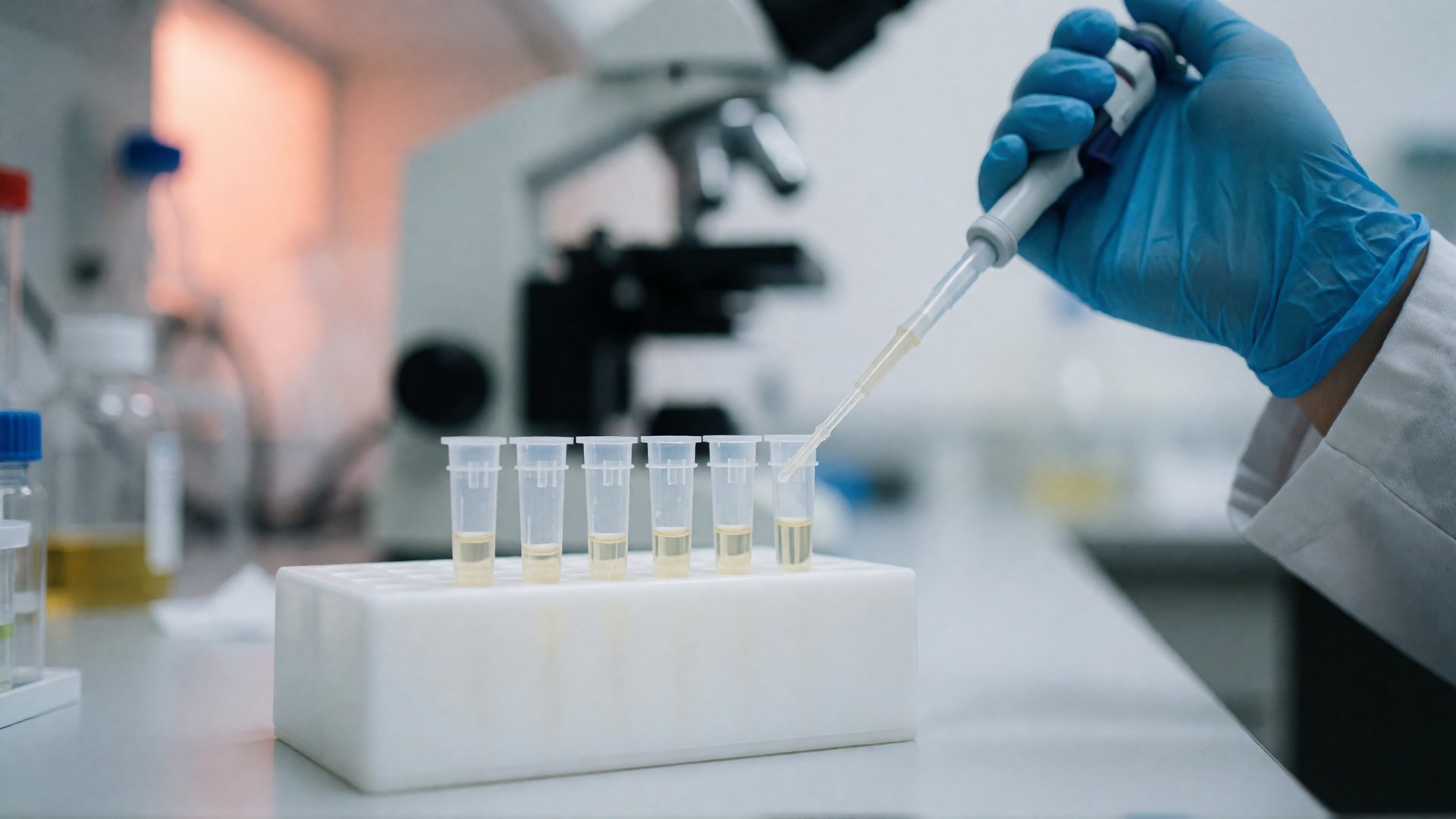
To see this, the researchers gave every protein in the blood of mice a chemical label. They then injected that blood back and looked at which labelled proteins ended up in the brain tissue.
One of these proteins is APOA1, which is made in the liver. It goes to astrocytes, star-shaped cells that support the nerve cells in the brain. There, according to the researchers, APOA1 switches on a process that keeps the connections between nerve cells healthy. Earlier research has shown that the risk of Alzheimer's is higher when this process does not work properly.
What goes wrong with Alzheimer's
In mice with a form of Alzheimer's, the researchers saw that this supply already works less well at an early stage, even before the barrier itself is damaged. At the same time, connections between nerve cells disappeared and the behaviour of the mice changed. In mice whose liver made extra APOA1, more of the protein reached the brain, and these mice showed fewer signs of Alzheimer's.
According to Yang, this means Alzheimer's may not start only in the brain itself. The study was done in mice. The researchers write that the next step is to find out whether the same holds for humans and for other brain diseases.
What does this mean for the road to the singularity?
Medicines for the brain often get stuck at the blood-brain barrier: they cannot get through. If the barrier itself has a fixed route for certain proteins, researchers can try to bring medicines in along that same route. Yang's team now wants to develop such carriers. In addition, the list of 92 proteins gives a new place to look for what goes wrong early in Alzheimer's, and so for where a treatment could start.
What is the technological singularity? Read the explanation →