Nederlands
Nobel Prize in Physics goes to pioneers of artificial neural networks
John Hopfield and Geoffrey Hinton win the Nobel Prize in Physics for their work on artificial neural networks, the basis of today's machine learning. Hinton has long warned about the risks of more powerful AI.
STOCKHOLM, OCTOBER 2024 - This year's Nobel Prize in Physics goes to two researchers who laid the foundations of today's machine learning. On 8 October, the Royal Swedish Academy of Sciences announced that the prize goes to John Hopfield of Princeton University in the United States and Geoffrey Hinton of the University of Toronto in Canada. They receive it for "foundational discoveries and inventions that enable machine learning with artificial neural networks". The prize is 11 million Swedish kronor, about 1 million US dollars, and is shared equally.
A computer that remembers
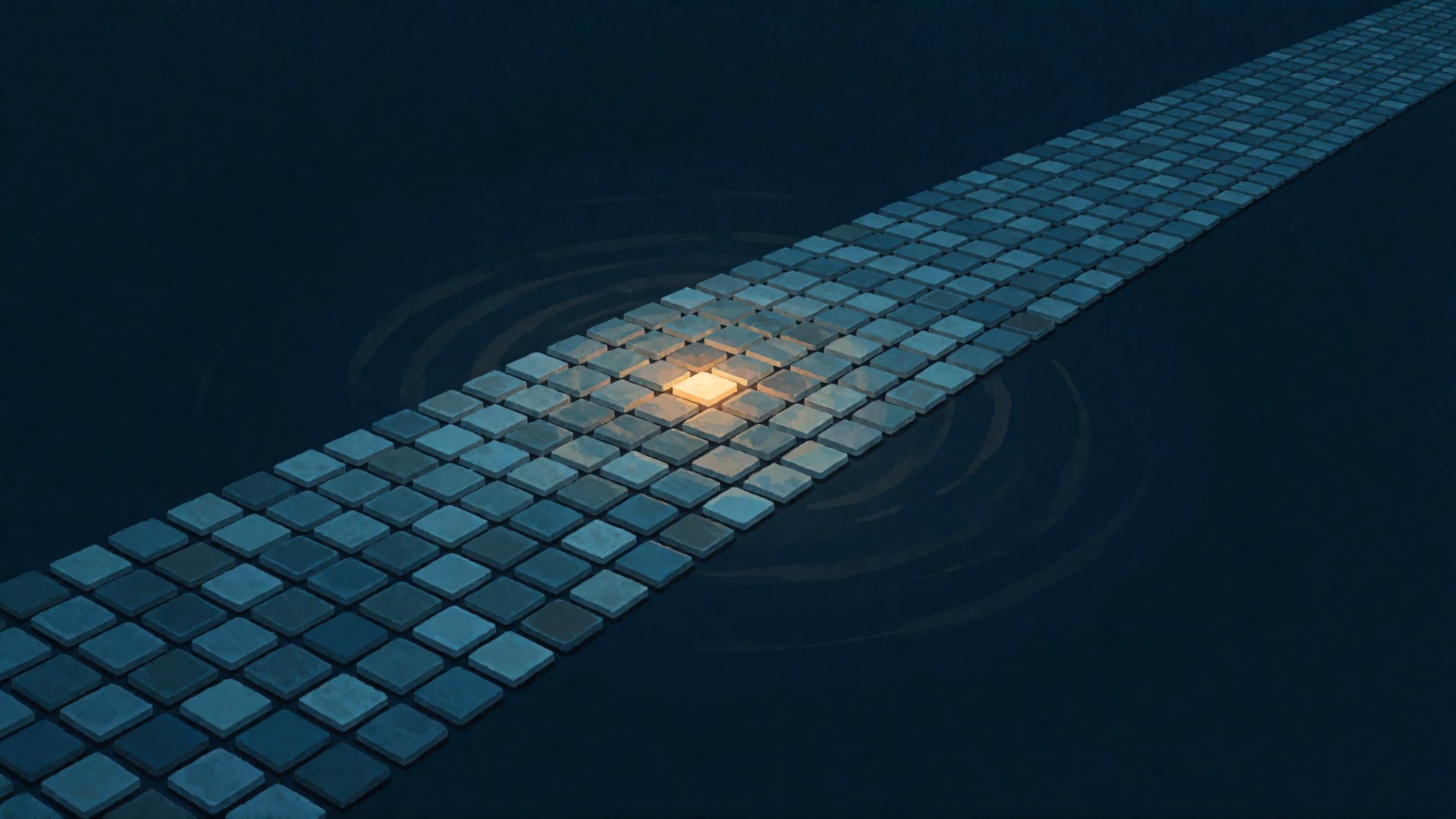
An artificial neural network is a program that loosely resembles the brain. It consists of many small nodes that are connected to each other. The strength of those connections decides what the network does, and that strength can change. This is how it learns.
In 1982, Hopfield designed a network that can remember patterns, for example a picture. You can think of the nodes as the pixels of that picture. The connections are set so that the stored picture has a state of low energy. He borrowed that concept from physics, where it applies to magnetic atoms: each atom behaves like a tiny magnet, and the whole system tends towards the state with the least possible energy.
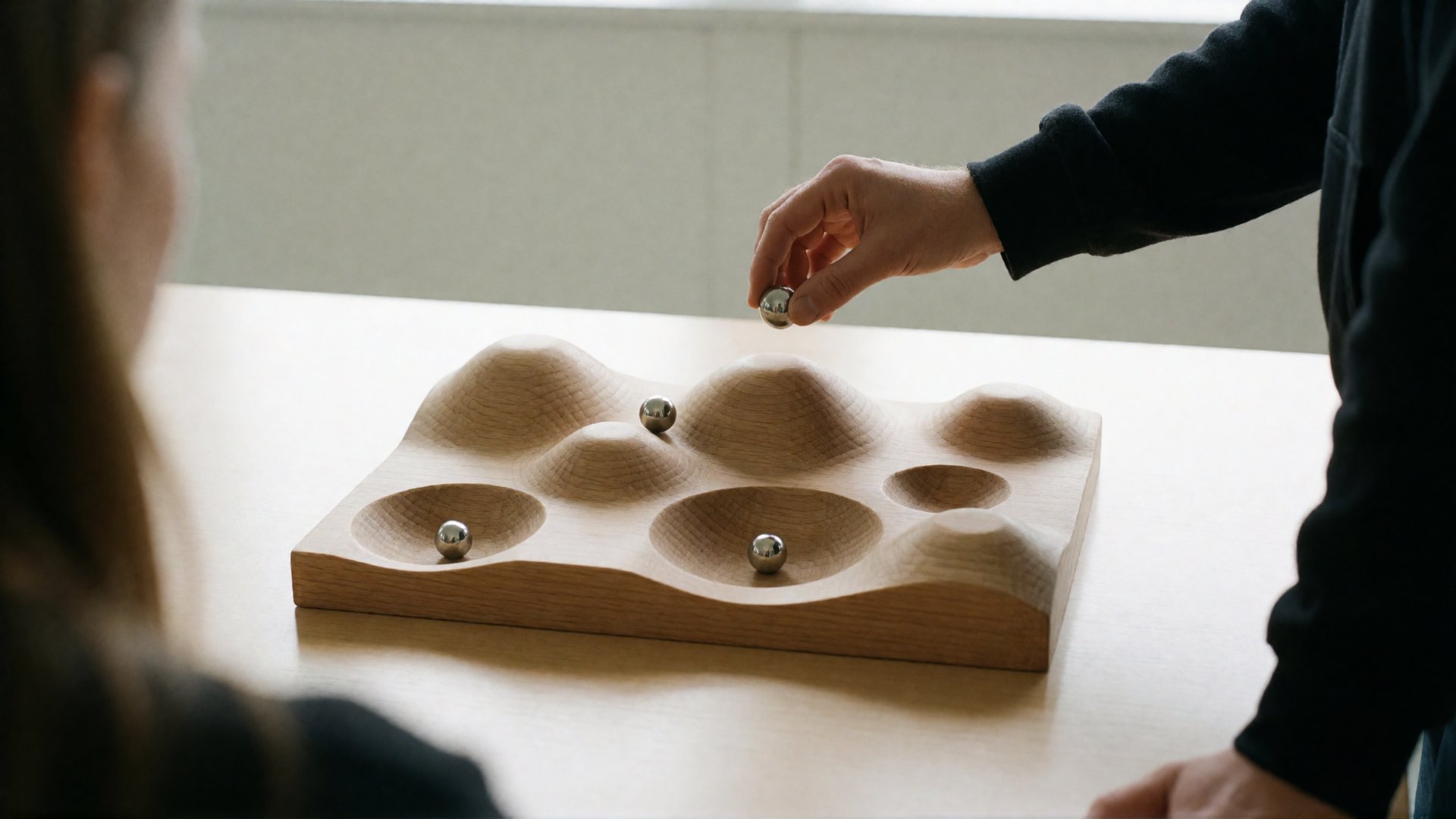
If you give this network a damaged or partial picture, it works step by step. Each time, one node adjusts itself so that the energy of the whole goes down. This continues until the network reaches a resting point, and that resting point is the stored picture that looks most like the damaged one. You can compare this with a ball rolling to the lowest point of its valley in a hilly landscape. Each stored pattern is a valley, and the damaged picture is the place where the ball starts. In this way the network "remembers" the whole picture from a small part of it.
From remembering to learning
In the 1980s, Hinton built on this idea, together with David Ackley and Terrence Sejnowski, among others. His Boltzmann machine also uses ideas from statistical physics, the branch of physics that describes systems made of many identical particles. The machine does not just store a picture. It learns which kinds of features often occur in a certain kind of data. For this, the nodes are not fixed as on or off, but switch with a probability: states with low energy are more likely. By training the connections, states that look like the training data get a low energy. Such a network can sort new pictures into groups and create new examples that resemble what it has seen.
Later, Hinton stacked such networks on top of each other, in layers, which is one of the best-known methods in deep learning. In 1986, he and colleagues published a method for training networks with several layers. In 2012, a network that he built with his students Alex Krizhevsky and Ilya Sutskever won a major image recognition competition.
Why physics?
Ellen Moons, chair of the Nobel Committee for Physics, points out that physicists now use artificial neural networks in many fields, for example to develop new materials with specific properties.
Hinton worked at Google from 2013 to 2023 and left so that he could speak freely about the dangers of AI. After the prize, he called for quick research into how we can control AI systems that are smarter than we are.
Looking back from 2026
The prize came at a time when neural networks had become known to the general public through ChatGPT. The next day, on 9 October, the Nobel Prize in Chemistry also went to research with AI, the work on proteins by Baker, Hassabis and Jumper.
For the road to today's AI, this is the beginning: networks that learn from examples instead of fixed rules. That this work was recognised with a Nobel Prize shows how important it has become for science.
Sources
- NobelPrize.org: The Nobel Prize in Physics 2024, press release
- Royal Swedish Academy of Sciences: The Nobel Prize in Physics 2024
- Wikipedia: Hopfield network
- Wikipedia: Boltzmann machine
- Wikipedia: Geoffrey Hinton
- Science News: The discovery of tools key to machine learning wins the 2024 physics Nobel
In the glossary: AI safety, Machine learning, Protein