Nederlands
NVIDIA releases decoder for research into error correction in quantum computers
NVIDIA has released TCBP-JOBS, software that speeds up research into error correction for quantum computers. According to the company, it was 10 to 7,400 times faster than an existing decoder in tests, and up to 13,000 times faster than that decoder's most thorough setting.
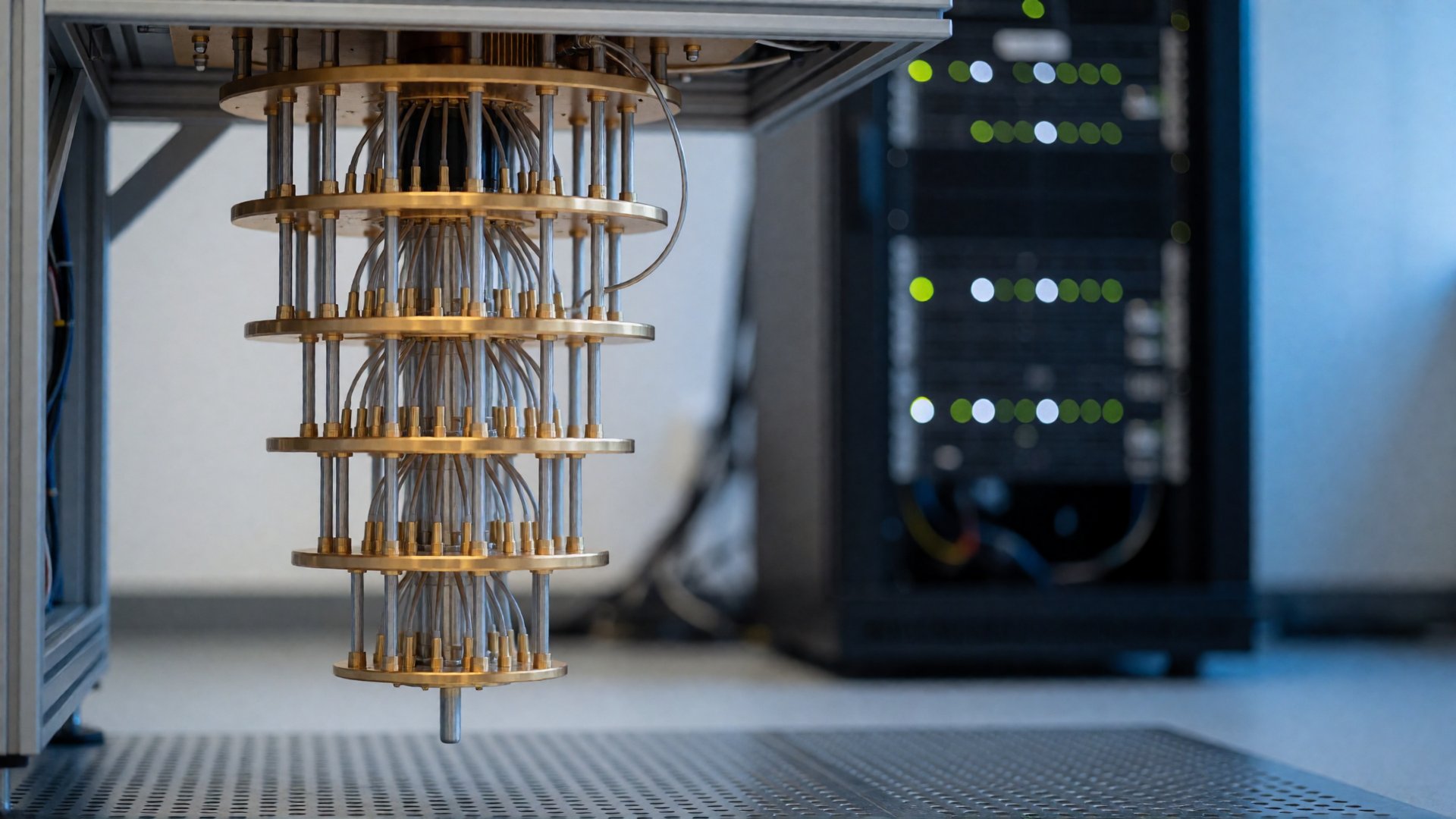
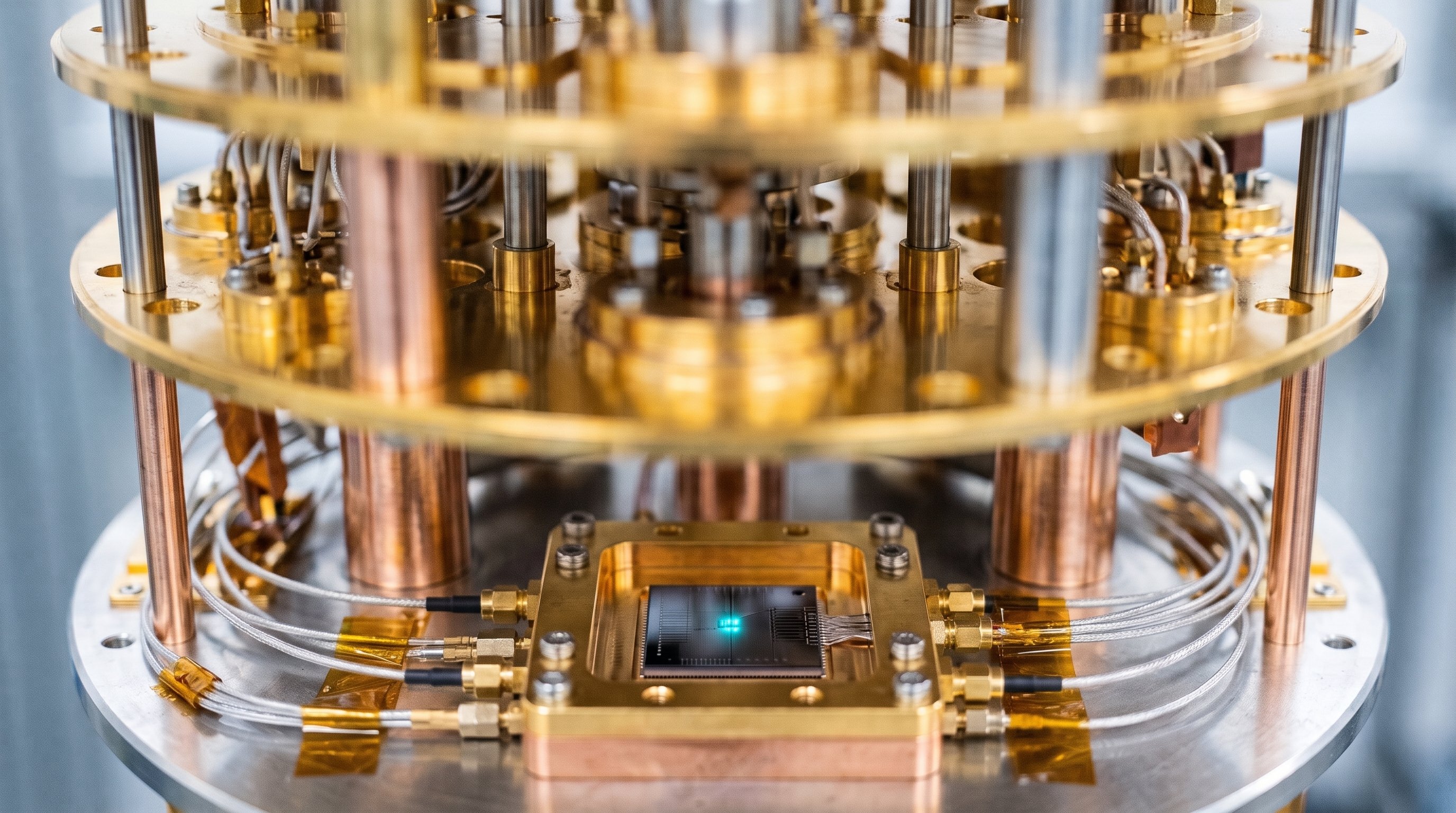
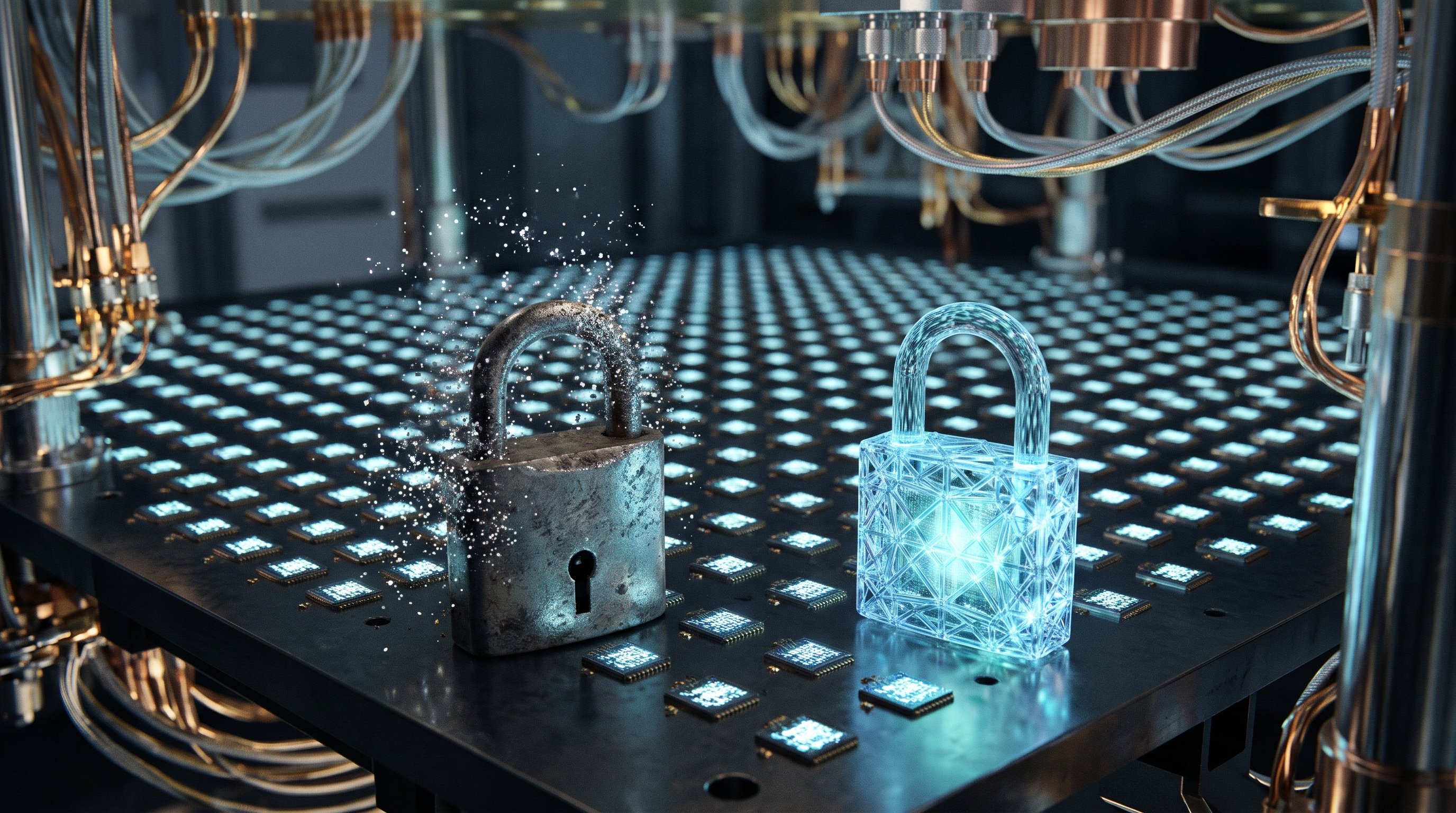
A quantum computer calculates with qubits, computing units so sensitive that a tiny amount of heat or vibration is enough to cause an error. That is why researchers spread one piece of information over a group of qubits and keep measuring whether that group is still correct. An ordinary computer then has to work out from those measurements which error was most probably made, so that it can be fixed. The program that does this is called a decoder.
To find the best way of doing error correction, researchers run a decoder millions of times on simulated errors. That takes a lot of computing time, and usually the rule is: the more accurate the decoder, the slower it is.
Learn first, then search with focus
NVIDIA's TCBP-JOBS tackles this in two steps. In a few quick rounds, the first part estimates where the errors are, and it learns from those rounds how likely each possible error is. The second part uses those probabilities to check a very large number of possible explanations at the same time on graphics processors (GPUs).
According to NVIDIA, TCBP-JOBS was 10 to 7,400 times faster in tests than the standard settings of Tesseract, an existing decoder that searches for the most likely error. Compared with Tesseract's most thorough and slowest setting, it was up to 13,000 times faster for one type of error-correction code. The number of errors left over stayed close to Tesseract's. NVIDIA says this cut a computing job for research into new quantum designs from twelve weeks to 45 minutes.
The algorithm is part of version 0.9.0 of CUDA-Q QEC, NVIDIA's software library for error correction, and it is on GitHub, where researchers anywhere in the world can download it. It is a research tool and does not show that quantum computers already calculate without errors. According to the researchers, it is already fast enough for slower quantum computers to respond within milliseconds during a real calculation.
It fits with earlier work by NVIDIA in Europe: together with the German research centre Jülich, the company simulated a quantum circuit of 104 qubits, including the errors of real hardware. That work was about simulating the quantum computer itself. TCBP-JOBS speeds up the other part: the ordinary computer that has to recognise those errors.
Collaboration with IBM and Fermilab
NVIDIA, IBM and Fermilab, an American laboratory for research into the smallest particles, also announced plans for a shared platform on which quantum computers and ordinary supercomputers are designed together. For this, NVIDIA supercomputers will be placed next to IBM quantum computers, including ones with Nighthawk, which IBM calls its fastest quantum processor so far. The researchers want to test error correction and decoders there, as well as applications in particle and nuclear physics. They are also looking at how the ordinary computers can keep up when several quantum computers are linked together.
NVIDIA is also extending Slurm, a free program that decides in data centres which job runs on which computer and when. With this extension, which IBM is helping to build, data centres can schedule a quantum computer in the same way as their ordinary processors.
What does this mean for the road to the singularity?
A quantum computer never consists of qubits alone. There is always an ordinary computer next to it that reads the measurements and fixes the errors, and the bigger the quantum computer, the heavier that work becomes. NVIDIA does not build quantum computers itself, but wants to supply that ordinary half. By putting the decoder into its own software, which anyone can download, the company makes it attractive to work with NVIDIA chips. That is how it already went with AI: many researchers ended up with NVIDIA because the software was ready there. If the same happens with quantum computers, it becomes hard for other chipmakers to still win a place next to the quantum computer.
If a design can be worked through in minutes instead of weeks, teams can try out many more error-correction methods before they run expensive experiments on real quantum computers. If that trend continues, the day comes closer when a quantum computer can calculate reliably for long enough to simulate molecules and materials that an ordinary computer cannot handle. Such a machine could help in the search for better batteries, catalysts or medicines, and so speed up the science that AI in turn builds on.
What is the technological singularity? Read the explanation →