Nederlands
OpenAI: AI models improve parts of AMD chip design by up to 14%
According to OpenAI, its AI models found up to 14 per cent improvement in parts of AMD's flagship GPU design, which AMD engineers had refined for years. Some of the changes are already in a design that has been sent to the factory.
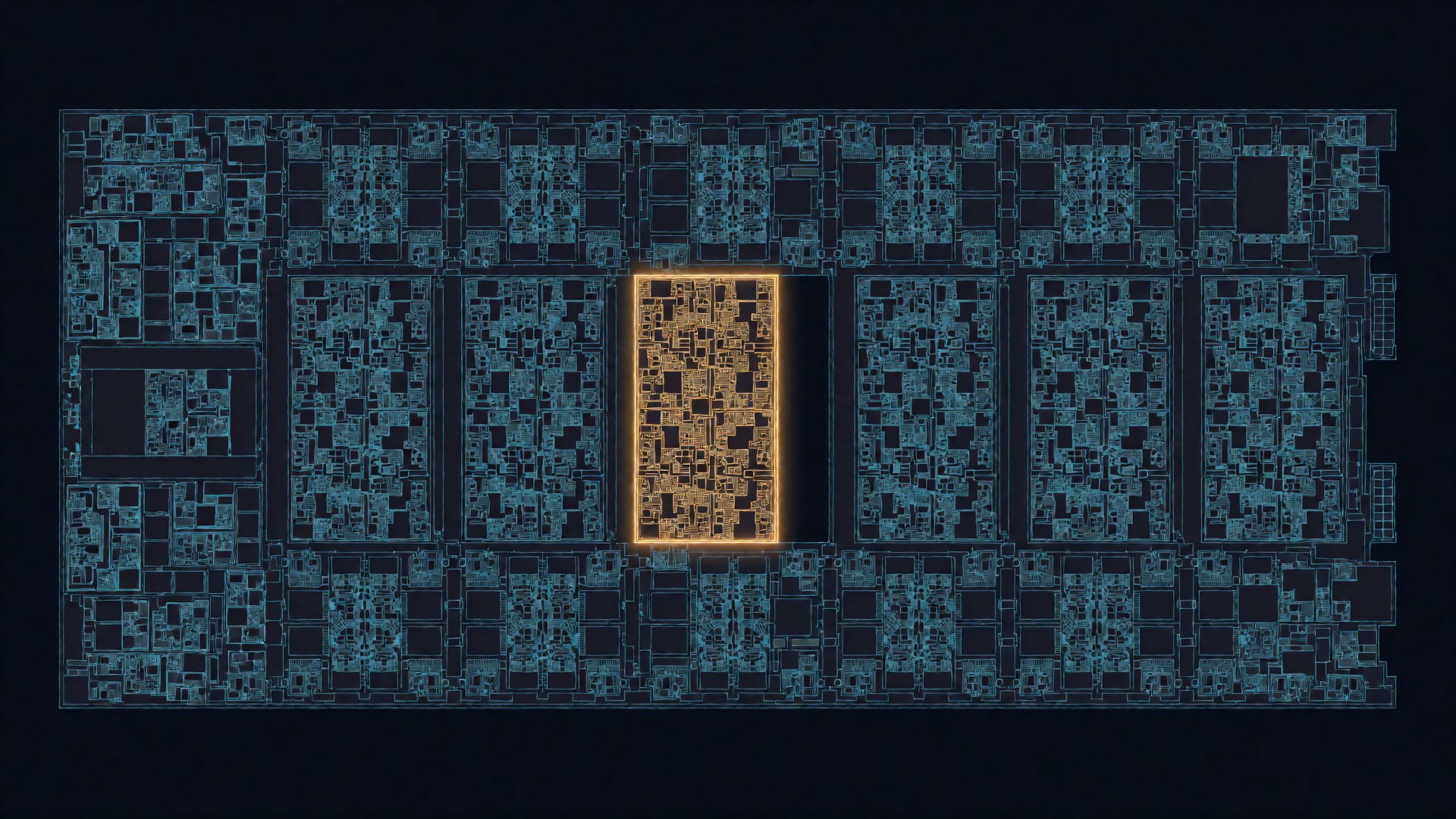
A chip starts out as code. Designers use a special language, such as SystemVerilog, to describe which circuits a chip has and how data moves between them. That description is called RTL code. The smarter the code is set up, the less power the chip uses, the faster it calculates and the less space it takes up on the silicon. Chipmakers refer to the three together as PPA, short for power, performance and area.
, OpenAI announced that its AI models had rewritten this kind of code for AMD. According to OpenAI, the models found up to 14 per cent improvement in PPA for a number of circuits in AMD's flagship GPU design. That is the best result for individual parts, not a GPU that is 14 per cent better as a whole. The starting point was designs that AMD engineers had refined for years. The work took less than five months; OpenAI compares that with about a year of normal progress.
Some of the changes are already in a design that has been sent to the factory, while others are in the design files of later versions. For the next generation of AMD's flagship processor (CPU), too, AMD found improvements of a few per cent in important parts with designs written by the models.
How it works
Every rewritten version was checked with software from the chip company Synopsys: does the new code do exactly the same as the old code? Only then were power use, speed and area measured. This way a model can try many variants without an error creeping into the chip.
OpenAI used the same approach on Jalapeno, its own chip for running AI models. In the first tests with real chips, the circuits in two computing units came out about 13 and 10 per cent smaller. Together with Synopsys, OpenAI is working on GPT-Synopsys, a model that operates Synopsys's design software, so that other chip designers can also use this way of working.
OpenAI does not say which model did the work for AMD. In a separate test with the open designs of two small processors, OpenAI had five of its models improve or rebuild a design almost ten thousand times. In that test, GPT-6.2 Astra, a recent OpenAI model, scored best on average.
A party with an interest
The figures come from OpenAI itself, and OpenAI also has a financial interest in AMD. In October 2025, the two companies signed a multi-year deal for 6 gigawatts of AMD chips for OpenAI's data centres. As part of it, OpenAI received the right to up to 160 million AMD shares, almost 10 per cent of the company, as the chips are delivered.
It is the second time this month that an AI company has shown what its models can do with AMD chips. , Anthropic reported that its model Claude Mythos got the Claude models running on AMD chips in about three days. That was about software that has to run on existing chips; this is about the design of the chips themselves.
What does this mean for the road to the singularity?
AI has been used in chip design for some time. What is new is that an AI model rewrites the design code itself, and that it still found gains even in designs that experienced engineers had worked on for years. If that succeeds more often, the speed at which chips get better will depend less on the number of engineers a chipmaker employs.
That creates a loop. Better chips do more calculations with the same amount of power. This makes AI models cheaper and stronger, and those models in turn help to design better chips. Chipmakers can hardly afford to fall behind: anyone who does not use such models delivers a chip that needs more power than the competitor's. That is why working with Synopsys makes sense. If the method is built into the software that chip designers already use, even a small design firm can make use of it, and not only the largest companies benefit. If that line continues, phones, cars and data centres will get more efficient chips, and more computing power will become available for the same power use.
What is the technological singularity? Read the explanation →